
Council approves Gateway Cities regional fiber agreement; city to receive two dark-fiber strands
Get AI-powered insights, summaries, and transcripts
Sign Up Free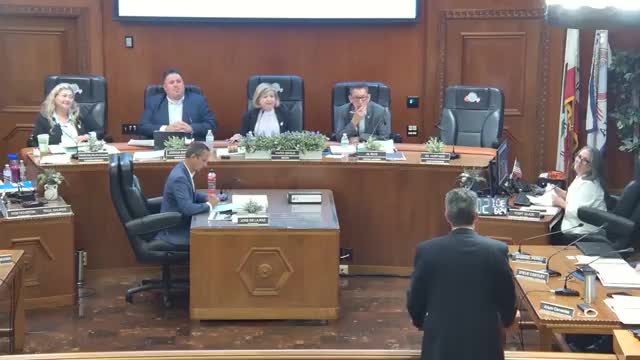
Summary
South Gate joined a 24-city regional middle-mile fiber project funded by the state. The council approved an agreement that will provide two dark-fiber strands into city facilities and a primary redundant route, at no construction cost to the city.
The South Gate City Council voted June 24 to join the Gateway Cities regional fiber-optic network, authorizing an agreement that will connect the city to a state-funded “middle mile” system and deliver two dark-fiber strands for city use.
Hector, executive director of the Gateway Cities Council of Governments, told the council the project has secured roughly $104 million for construction and will connect 24 cities; South Gate’s route is included in the first phase. The strands delivered to city facilities are “dark fiber,” meaning the city must provide electronics to “light” and use the line, but the network owner will construct and route the cables at no cost to South Gate. The project director said the network is expected to be built by December 2026 and a ceremonial groundbreaking is scheduled in Compton the day after the meeting.
Council members and staff said the city could use the strands to improve redundancy for city servers and video feeds, to reduce ongoing commodity Internet costs, or to extend service to civic campuses or commercial corridors over time. The network also identifies several underserved neighborhood “pockets” that, according to the presenter, will be targeted for future resident connectivity under the state plan.
The council approved the right-of-way agreement and authorized the mayor to sign a form acceptable to the city attorney; staff said minor language edits would be coordinated with the city attorney before final signature. The vote was recorded in the affirmative by roll call.
The city will still need to select an Internet service provider to operate services over the network, and any internal connections from the fiber route to other municipal facilities would be at the city’s expense. Councilmembers and the project representative said the state-owned middle-mile design addresses redundancy and could reduce long-term Internet costs when the city adopts equipment and operations plans.
No additional funding was requested at the June 24 meeting; staff and the COG representative said the network’s state grant funded construction and the city’s primary near-term cost would be equipment to use the two strands.