Get email alerts on the Zoning topic
No spam. Unsubscribe anytime.
Council narrows R3 higher‑density study to two California‑street change areas after reconsideration
Summary
After discussion and two motions, the council decided to study the higher (R3‑D2) density option only for two California‑street change areas (California–Ortega and California–Latham–Rengstorf). Earlier efforts to expand study to additional change areas failed.
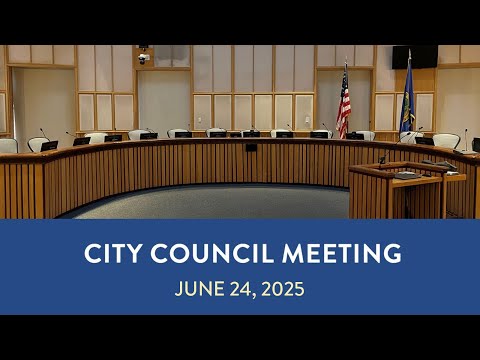
Following a reconsideration motion on upzoning options in the R3 zoning district, the City Council voted on June 24 to limit study of the higher‑density R3‑D2 option to two change areas in the California Street corridor (identified in staff materials as California–Ortega and California–Latham–Rengstorf).
The item traced back to previous study sessions where council had directed staff to evaluate two density options for 13 change areas. At the June 24 meeting Councilmember Ramirez proposed studying the higher‑density option for four additional change areas beyond those previously identified; that motion failed. Councilmember Clark then moved to study the higher‑density option for only the two California Street corridor areas; that motion passed.
Staff explained that CEQA and ordinance work will proceed for the change areas chosen for the higher‑density study and that additional outreach and technical work — including commercial strategies and small‑lot approaches — will focus first on the areas where density was increased for study. Councilmembers emphasized the importance of public process and asked staff to maintain outreach as the environmental review and code drafting proceed.
The final council direction keeps the remaining change areas on the lower‑density study track while focusing the high‑density envelope work on the two California Street corridor change areas. Staff will carry forward the environmental analysis and return with draft standards for council consideration.
AI generated
The text on this page is AI generated. Summaries, highlights, analysis, and video transcripts are all produced from the original source material.
AI can make mistakes, so if you spot one, and we will fix it for everyone.
Note: the source content is unaltered by us. Any content source we link to, be it a video, an audio recording, or a document, is presented exactly as its publisher released it. That publisher is usually a government body, sometimes an individual official or another organisation.