Get Full Government Meeting Transcripts, Videos, & Alerts Forever!
Get email alerts on the Arpa Spending topic
No spam. Unsubscribe anytime.
Porterville council reviews ARPA allocations as members debate priorities and trade-offs
Summary
City staff presented a summary of American Rescue Plan Act spending and remaining projects; councilmembers debated trade-offs between one-time ARPA expenditures and ongoing liabilities such as unpaid golf-course costs and risk-fund shortfalls.
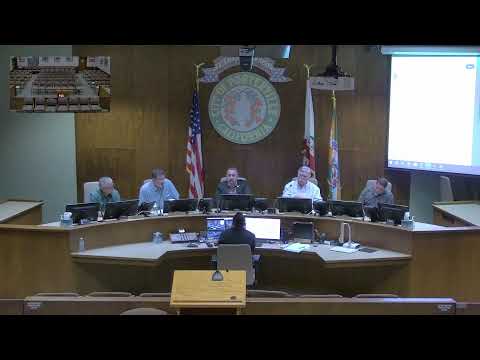
PORTERVILLE — City staff presented a summary of American Rescue Plan Act (ARPA) expenditures and remaining ARPA-funded projects at a Porterville City Council budget study session, prompting sharp debate among council members about priorities and opportunity costs.
Staff told the council a remaining package of ARPA-funded projects that must be spent in the next fiscal year includes the Fourth Street Community Center construction (about $4,260,000) and the Navigation Center expansion (about $2,800,000). The presentation also listed earlier ARPA-funded uses, including a vaccine incentive program, retention and premium pay for essential employees, and shelter-related projects. The staff accounting showed millions of dollars already expended under those headings.
Those items drew contrasting reactions from council members. Vice Mayor McCurvey said the city could have used some of the one-time federal money to address structural shortfalls and pointed to trade-offs in spending. “The big lesson for me is we could have used this money to keep the city healthy financially, and we didn't,” McCurvey said during the discussion.
Other council members noted legal and programmatic limits that shaped earlier ARPA decisions. One councilmember said ARPA spending rules and uncertainty in early 2021 constrained options and that federal guidance loosened over time, enabling a broader set of uses later in the award period. Staff noted the city retains discretion on some remaining ARPA projects but must meet federal timelines for expenditure and, in some cases, follow reimbursement procedures with county and federal partners.
Finance staff told the council there are approximately $6.8 million of ARPA-funded projects still planned for the next fiscal year and reminded members the city will need to manage reimbursements and documentation, particularly for county ARPA allocations used in partnership with the city.
Councilmembers asked for more detail about specific ARPA expenditures and recommended bringing the COVID/ARPA committee or a staff memorandum to council for a deeper retrospective on how ARPA choices were made and whether alternative uses would have produced different long-term fiscal results.
No formal action on ARPA expenditures was taken at the study session. Councilmembers asked staff to provide a more detailed accounting and regular updates to council on the schedule and status for remaining ARPA projects, including progress reports for the Fourth Street Community Center.