Get Full Government Meeting Transcripts, Videos, & Alerts Forever!
Get email alerts on the City Budget topic
No spam. Unsubscribe anytime.
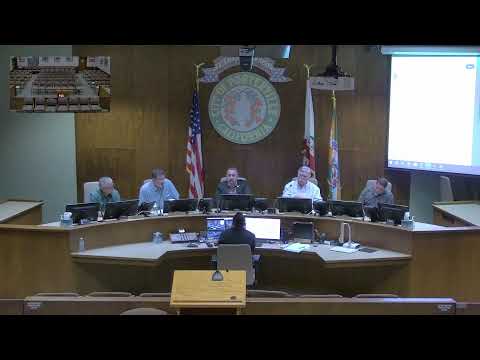
Porterville budget study: city manager flags $1.6 million operating shortfall, council reviews cost-cutting options
Summary
Interim City Manager Richard Tree told the Porterville City Council at a budget study session that the proposed 2024-25 operating budget shows revenues of just over $35 million and expenditures of nearly $37 million, leaving a deficit of about $1.6 million.
PORTERVILLE — Interim City Manager Richard Tree told the Porterville City Council at a budget study session that the city’s proposed operating budget for the coming fiscal year shows total revenues of just over $35,000,000 and proposed expenditures of nearly $37,000,000, leaving a deficit of about $1,600,000.
The shortfall is one element of a larger set of long-term liabilities discussed in the meeting. Tree and department directors detailed several enterprise and internal funds carrying significant deficits or ongoing costs: the municipal golf course carries roughly a $3,000,000 enterprise deficit, the city’s risk-management fund is carrying about $10,000,000 in liabilities, the armory emergency shelter requires roughly $350,000 annually to operate, and maintaining the historic Zaled House costs about $40,000 a year, according to staff presentations.
The issue matters because the shortfall and the larger, mostly ongoing liabilities affect the city’s ability to maintain services without new revenue measures that would require voter approval. Tree told the council the budget is “not hiding from the problem” and that staff and council must consider both one-time and recurring solutions.
Tree said the administration built the proposed budget with three core principles: reduce costs, improve customer service and be results-driven. He outlined a menu of options staff will present to council for direction, including asking departments to find a minimum of 5% savings, adjusting fees to recover the cost of services, reorganizing departments to reduce duplication, using technology to streamline work, evaluating utility savings such as solar, and delaying nonurgent capital projects.
City staff provided a revenue breakdown that councilmembers used to probe the gap: property taxes roughly $10,000,000; sales and use tax about $7,800,000; utility tax about $5,200,000; municipal franchise fees approximately $1,000,000; licenses and permits about $931,000; intergovernmental revenues (grants, reimbursements) about $638,000; investment earnings and rentals near $970,000; fines and forfeitures about $21,500; and interdepartmental charges around $4,400,000.
Vice Mayor McCurvey urged transparency about the city’s accumulated shortfalls and struck a sharper tone on causes. “We’re going into this year with a $1,600,000 on the first layer of a budget deficit,” McCurvey said, adding that the city has, in his view, “dug a $13,000,000 hole for ourselves over the last 10 years.”
On the cost side, Janie, the finance director, told council the risk-management fund’s balance reflects a mixture of employee health insurance costs, workers’ compensation and litigation exposure; she said the city is “burning about $1,500,000 a year” on employee medical claims. Tree and the finance director also noted that prior audits and trend documents had flagged structural pressures (pension and benefit cost increases, slow revenue growth) but that the city had relied on one-time fixes that deferred rather than solved problems.
Councilmembers and directors said the budget review would continue. Tree asked department directors to limit individual presentations at the study session and told the council staff will continue to refine assumptions and meet frequently with council members. The council set a July 22 meeting to focus on the capital improvement program and to further review project-level impacts on long-term fiscal health.
No formal votes were taken at the study session; the meeting was a working presentation and question-and-answer forum. Staff said the proposal will return for additional direction and formal action as the budget is finalized.
For now, the city’s next steps include continued refinement of revenue projections, efforts to identify sustainable recurring savings, and a follow-up capital discussion scheduled for July 22. Tree told the council that the goal is to move away from “stopgap fixes” and towards a structurally sound budget.