Get Full Government Meeting Transcripts, Videos, & Alerts Forever!
Get email alerts on the Curriculum Health Education topic
No spam. Unsubscribe anytime.
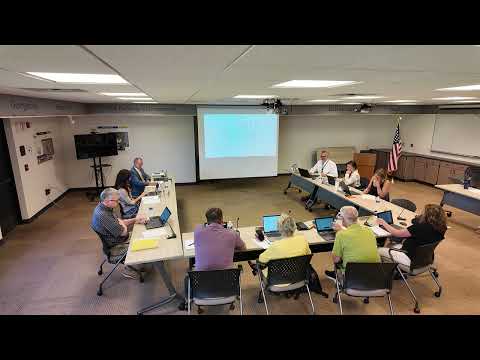
Education advisory board reviews reproductive-health program data, recommends new members
Summary
Hudsonville’s education advisory board presented a program evaluation of reproductive-health instruction and recommended additions to its membership after reviewing three years of MDE and local survey data.
The Hudsonville Public School District’s education advisory board reviewed program evaluation data for reproductive health and wellness instruction and presented results from state and locally administered surveys.
A district presenter said the family health elective for juniors and seniors shows evidence of increased student knowledge on the course’s stated learning objectives; the presenter noted the elective had a 0% opt-out rate reported in the materials. Middle-school and elementary-level data were presented at a higher-aggregate level: middle-school results were reported without item-level breakdowns for puberty, anatomy or sexually transmitted infection topics, and elementary reporting was limited to participation and opt-out tracking rather than knowledge assessment.
The board reviewed results from the Michigan Department of Education (MDE) survey series. Presenters said the advisory board found no statistically significant concerns in most items over the three-year trend, but flagged two final survey questions that asked about topics not currently included in Hudsonville’s curriculum; those two items showed relatively higher parental preference not to have those topics taught in school. The presenter said the advisory board will post updated materials on the district website after the board’s review.
On membership, the advisory-board subcommittee recommended adding six parents, one administrator, one additional teacher and three student representatives to fill open seats; presenters said the selection process used a rubric intended to achieve representative sampling across district buildings and to satisfy legal membership obligations for roles such as clergy and health professionals. A board speaker confirmed the recommended membership list will appear on the consent agenda for approval at a subsequent meeting.
Quotes and data were presented by district staff leading the health-education advisory work; the board’s discussion focused on how survey response rates and question wording can affect trend interpretation. A presenter cited higher survey response counts in 2023 and 2025 compared with 2018 and suggested increased technology access (one-to-one devices and mobile-friendly surveys) may have raised response rates.
What’s next: updated advisory-board materials and the membership recommendations will be posted on the district website and presented for formal board approval via the consent agenda at a later meeting.