Get Full Government Meeting Transcripts, Videos, & Alerts Forever!
Get email alerts on the Student Devices topic
No spam. Unsubscribe anytime.
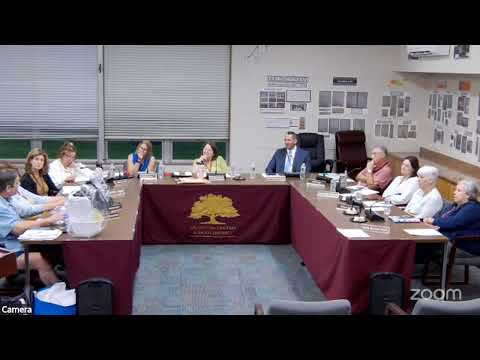
Arlington board hears detailed plan to implement New Yorkstate"bell-to-bell" ban on internet-enabled devices
Summary
Arlington Central School District administrators told the board they are preparing procedures to comply with a New York state law that will ban students from using internet-enabled devices "bell to bell" starting in September and that the district must file its plan with the state by Aug. 1.
Arlington Central School District administrators told the board on a lengthy agenda item that they are preparing procedures to implement a New York state law that will prohibit students from using internet-enabled devices "bell to bell" when school resumes in September. The district must submit its plan to the state by Aug. 1.
The district convened a committee of administrators, teachers, parents and students to draft procedures after the state budget included the device restriction. "This is a New York state law. It is going into effect in September, and we, as a district, have to submit our plan to the state by August 1," said John Murphy, the administrator leading the districtdevice-policy effort. Murphy said the law covers cellphones, smartwatches, tablets and gaming devices but allows exceptions for students with IEPs or 504 plans and for true emergencies.
Why it matters: The change alters a long-standing local approach that previously allowed varying phone use by zone or time of day. Administrators said the shift will be most disruptive at the high school, where some practices and staff routines will change, and that the district is aiming for a graduated, supportive implementation rather than an across-the-board physically pouched model.
Principals and department leaders have reviewed draft procedures, Murphy said, and the district has solicited teacher and student feedback. "It is a bell to bell from from when the students get off the bus until they get back on the bus... it is no Internet connected devices," Murphy said. He described planned exceptions for device use: students with documented needs in IEPs or 504 plans, English-language learners who require translation, and verified medical uses.
On enforcement, the district favors a tiered response rather than immediate, mandatory pouching for all students. Murphy described a sequence: encourage student compliance, offer voluntary secure pouches for students who request them, provide pouching for students who repeatedly cannot keep devices off and away, and finally have administrators retain devices for repeated noncompliance. He said the district has been consulting vendors and reviewed options that range from vendor-mandated whole-school solutions to smaller, needs-based inventories. "Yondr will only sell you a pouch if you buy them for everyone," Murphy said, noting other vendors that allow districts to buy smaller quantities.
Board members and administrators discussed student anxiety, family communication and emergency procedures. Sofia Bonet Hollis asked how the district will support students who experience anxiety from device restriction. Murphy said some studies show decreases in student anxiety after reducing phone use, but acknowledged parents will feel "anxiety" about losing direct contact and recommended building community communication pathways. "All of our students have Chromebooks," Murphy noted, and said parents can still contact students through district-managed channels in many cases.
Security and emergency concerns figured in the planning. Murphy said district security consultants warned that phones in some emergency situations can create safety and operational problems, including risks when students livestream during an incident. "You cannot read something and listen at the same time," Murphy said, arguing students staring at phones may miss emergency instructions.
Teachers, supports and technology: The district is exploring short-term, low-tech tracking and reporting tools so teachers can log noncompliance without submitting dozens of formal referrals. Mike Keeley and the technology team have begun conversations with SchoolTool about an easy classroom-level reporting button, though Murphy cautioned that an integrated solution would not be ready for September.
Exemptions and documentation: The district will flag English-language learners and students with accommodations in its student information system. Administrators said they will review 504 and IEP requests for device-related accommodations and noted some requests may not meet medical criteria. "We don't need to be approving 504s or IEP requests that don't actually require a cell phone, within reason," Murphy said.
Next steps: The policy text was placed on the board's agenda for first reading; administrators said they will bring a second reading for board action before the school year begins and will submit the district plan to the state by Aug. 1. The district also plans summer communications and recommended that families try limited-device days at home to ease the transition.
The board did not vote on the policy at the meeting; administrators said they will bring the second reading and recommended procedures for final approval later this summer.