Get Full Government Meeting Transcripts, Videos, & Alerts Forever!
Get email alerts on the City Budget topic
No spam. Unsubscribe anytime.
City adopts FY 2025–26 budget with $4 million draw on reserves; council defunds 33 vacant positions
Summary
After four study sessions and public comment, Glendale’s City Council adopted a balanced FY 2025–26 budget that uses $4 million of general fund reserves, defunds 33 vacant positions as a temporary hiring measure, defers several capital projects and raises parking fees to close a projected shortfall.
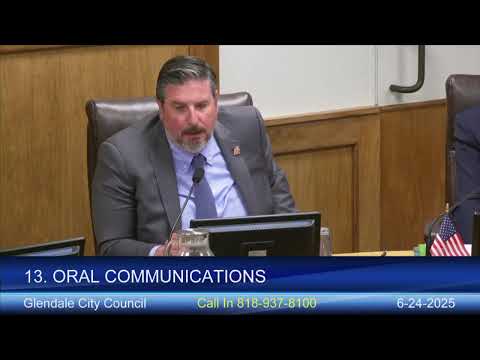
Glendale’s City Council adopted the fiscal year 2025–26 citywide budget at its June 24 public hearing, approving a package of revenue and expenditure changes that reduces an initial staff-projected $34.3 million shortfall to a $4.0 million use of general fund reserves.
City Manager Rubi Galanian and interim Finance Director John Taktalian presented the budget overview and recapped four public study sessions totaling roughly 11 hours. Staff said the original gap was driven primarily by a drop in sales tax (about $6.9 million), lower landfill host/tipping fees (about $3.0 million), reductions in permitting revenue (about $1.7 million) and a $1.0 million drop in utility users tax, among other factors. On the expenditure side, departments faced higher non-discretionary costs including a roughly $5.0 million increase for police overtime and maintenance, and $2.5 million in salary adjustments and IT/project costs.
To bridge the shortfall staff and council agreed on a set of one-time and ongoing changes: departments produced $4.2 million in operating reductions; the city deferred or canceled $9.0–$10.0 million in transfers to the capital improvement program and other internal funds (including reductions to fleet and building maintenance transfers); parking rate increases were projected to yield roughly $968,580 in additional revenue; and a list of 33 vacant positions was placed in a non‑departmental unfunded account (a temporary defunding/hiring freeze) to save approximately $3.4 million annually. Staff characterized the vacancy actions as temporary and said positions can be re‑funded later if fiscal conditions permit.
The adopted budget includes several other items approved at the hearing: a Gann appropriations limit resolution for FY 2025–26, a reduction in the GWP electric transfer for FY24–25 to the general fund (staff estimated an FY24–25 transfer of about $29.75 million and projected a higher transfer for FY25–26 under current rates), and an appropriation for the Public Benefit Charge / Low Carbon Fuel Standard programs totaling about $9.3 million (staff will return with program refinements). The council also approved several classification and compensation housekeeping items and five new positions in GWP that are funded by the utility (not the general fund), including cross-connection control titles required by state law and additional line mechanic crew capacity.
Council debate emphasized the structural nature of the city’s budget gap and the limited durability of one‑time fixes. Councilmembers and several public speakers urged a focus on revenue generation (options discussed included future sales‑tax measures, parking and real‑estate/leasing strategies and other enterprise revenue opportunities) and expressed concern about deferring maintenance and capital projects. One councilmember voted against final passage, citing concerns about process and program cuts; the motion to adopt the budget passed 4–1.
Public comment during the hearing reflected concerns about both cuts and revenue: speakers urged exploring broadband and rental‑registry revenues, opposed multiyear professional services agreements that carry forward obligations to future councils, and urged staff to maintain service levels and public safety. Staff repeatedly emphasized the one‑time nature of many of the closing measures and said additional revenue measures — including a possible quarter‑cent sales tax proposal — would require separate council direction and voter approval.
By adopting this budget the council instructed staff to implement the approved transfers, fee changes and vacancy defunding and to return as needed for any subsequent appropriations or for programmatic changes tied to future revenues or grant awards.