
Waynesboro holds public hearing on 2025 CDBG plan; staff recommends $163,791 for pedestrian design work
Get AI-powered insights, summaries, and transcripts
Sign Up Free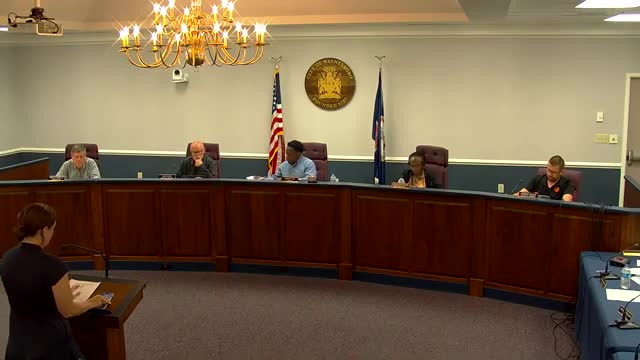
Summary
City staff recommended using the 2025 Community Development Block Grant award of $163,791 to design and engineer pedestrian mobility improvements in low-to-moderate income areas; public comment period runs through July 10 and council will consider the plan July 14.
At the June 23 Waynesboro City Council meeting, Miss Tate, director of community development, opened a public hearing on the draft 2025 Community Development Block Grant (CDBG) annual action plan and recommended using the city's $163,791 award to design and engineer pedestrian mobility improvements in low-to-moderate income areas.
The CDBG program, created by the Housing and Community Development Act of 1974 and administered by the U.S. Department of Housing and Urban Development (HUD), provides formula funds to address housing and community development needs for low- and moderate-income residents. Miss Tate said the program's national objectives require funded activities to primarily benefit low- to moderate-income persons, prevent or eliminate blight (capped at 30 percent), or address urgent health needs.
Miss Tate told council that the city's 2025 award is $163,791 and that, because of federal administrative requirements and the small award size, staff recommends using the funds for design and engineering of sidewalk and intersection pedestrian improvements rather than direct construction. "This amount of funds, relatively small amount of funds, is difficult to administer through the federal program," Miss Tate said, noting design work is easier to complete within a one-year grant period.
Council materials show the design work would cover multiple intersections located largely inside census tracts the city identifies as low-to-moderate income; the packet included a map of proposed locations. Miss Tate said the city has more than $800,000 already awarded through the Virginia Highway Safety Improvement Program to construct intersection improvements, but that those construction funds were insufficient to pay for the engineering and design for all planned locations.
A council member asked whether the improvements would be similar to work the city previously completed on Fourth Street. Miss Tate said the work would include full Americans with Disabilities Act-compliant curb ramp upgrades where sidewalks are missing, signal modifications at some locations, and other pedestrian accommodations as needed.
No one signed up to speak during the hearing; council closed the public hearing at the meeting and took no final action. The 30-day public comment period for the draft plan ends July 10. Council is scheduled to consider approving the annual action plan at its July 14 meeting; the city must submit the plan to HUD by Aug. 15 to have funds available beginning Oct. 1.