Get Full Government Meeting Transcripts, Videos, & Alerts Forever!
Get email alerts on the School Budget topic
No spam. Unsubscribe anytime.
Revere City schools budget rises $5.28 million; district to cut 35 classroom positions to balance books
Summary
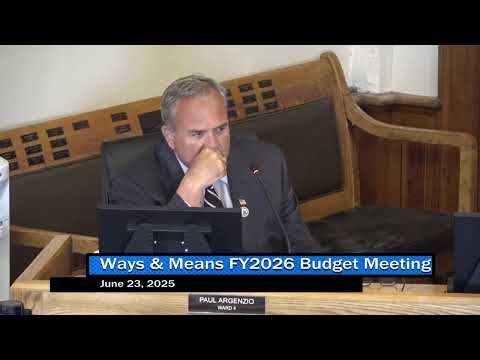
At a June 23 Ways and Means meeting, Superintendent Diane Kelly outlined a FY26 school department budget that increases by $5,282,420 and will rely on carryforward and reserves while reducing 35 classroom teaching positions; the plan preserves special-education transportation and shifts some nonrequired bus service to MBTA passes.
Revere City Superintendent Diane Kelly told the Ways and Means Committee on June 23 that the proposed fiscal 2026 school department appropriation will rise by $5,282,420, driven largely by negotiated salary increases and higher special-education costs.
Kelly said the district will use an anticipated $5,250,000 from carryforward funds and just under $1,700,000 from the district reserve to balance the budget, leaving roughly $7 million mobilized to cover the FY26 gap. “We are activating $5,250,000 from carry forward,” Kelly said.
The budget summary in the committee packet shows a 3% increase in salary spending from $89.7 million to $92.7 million and a 6% non‑salary increase of about $2.2 million, most of which Kelly said pays for outside tuitions and contracted services for students with special needs.
To achieve balance, Kelly said the district will eliminate a number of positions, primarily teacher leadership roles that will return to classroom teaching, and that the net effect will be 35 fewer classroom teachers next school year than this year. She said the district avoided any reduction in force and that layoffs were accomplished through attrition and internal reassignments.
“We haven’t had to do a reduction in force at all,” Kelly said, adding the district moved staff within their licensure fields where possible. She also said two health tech positions and one maintenance position are being eliminated through retirement.
Enrollment figures used for the budget were 7,700 students, Kelly said. She provided a high‑school headcount of 2,087.
Committee members pressed Kelly on administrative staffing and program impacts. Councilor Zambuto said he was concerned that administrators had been retained while teaching positions were cut. “I think we need teachers more than we need administrators,” Zambuto said. Kelly replied that the district has added some administrative posts over recent years—including assistant principals and a third assistant superintendent focused on equity—and argued the workload at schools has changed, requiring more administrative time for hearings, discipline processes and other duties.
On transportation, Kelly described a change the school committee approved that will reduce district‑run yellow‑bus service for some grades not required by state law and instead provide unlimited MBTA passes for eligible students. Kelly said the city will purchase MBTA passes (she referred to them in the meeting as “M 17” or “m7” cards) for students who no longer receive district bus routes; the mayor has committed $100,000 for high‑school passes and $50,000 for each middle school, a combined $250,000 startup commitment. Kelly said the change is expected to reduce transportation costs by roughly $1.2 million.
Kelly stressed that elementary transportation and special‑education transportation will not change under the plan. She said the district will work with the MBTA to ensure routes and capacity are adequate before notifying families.
Committee members also questioned the status of Junior ROTC. Kelly said the program currently has 160 students signed up for next year and that the district will not fill a third instructor position that recently opened; she said the Department of Defense typically pays about 50% of JROTC instructor salaries. Kelly described program adjustments—shifting service mission activities and classroom duties—to preserve accreditation and access to JROTC scholarships.
Kelly described broader fiscal context, including an “ESSER cliff” as pandemic grants wane and the Student Opportunity Act funding schedule. She said the legislature placed $250 million in the supplemental budget to study student transportation costs and has convened a Chapter 70 formula committee that could affect state school aid in coming years.
The committee made no formal vote on the school budget during the session. Kelly said the district expects to end this year with a reserve that will be drawn on in FY26 and possibly in subsequent years as the district works through declining state pandemic aid.
The meeting included multiple council questions about class size, lottery assignment rules, boundary reviews and legal costs; Kelly said the school committee has authorized a summer review of the district’s lottery and boundary practices and that legal fees vary year to year depending on bargaining and special‑education needs.
Revere City officials and the school department will return to further budget discussions and subsequent committee votes as the fiscal process continues.