Get Full Government Meeting Transcripts, Videos, & Alerts Forever!
Get email alerts on the Water And Sewer Rates topic
No spam. Unsubscribe anytime.
Revere approves 9.7% increase to FY‑26 water and sewer rates
Summary
The Committee of the Whole approved a 9.7% increase in water and sewer rates for fiscal year 2026 to stop relying on one‑time revenues and restore the enterprise fund balance, after extended discussion about impacts on seniors and low‑income residents.
Revere’s Committee of the Whole voted to adopt a 9.7% increase in the city’s water and sewer rates for fiscal year 2026 on June 23, after officials said the hike is needed to stop using one‑time funds to cover recurring utility costs.
The rate action, council order 25161, was presented by Chief Financial Officer Rich Vasquez, who said Revere has relied on one‑time revenue sources — including American Rescue Plan Act funds and the water/sewer stabilization account — to hold down rate increases in recent years. "Short of using one‑time revenues again, it is the user rates [that] bring in the money to pay for the direct and indirect cost," Vasquez said during the meeting.
Vasquez told the council the city used about $3 million of ARPA funds and roughly $3 million from stabilization and retained earnings over the last three fiscal years to maintain a lower rate structure; he said the city used $2 million from the stabilization fund this year, leaving the stabilization balance at "about $3½ million," and that retained earnings were "about $70,800." He recommended the 9.7% increase to align recurring revenues with recurring expenses without drawing further on one‑time funds.
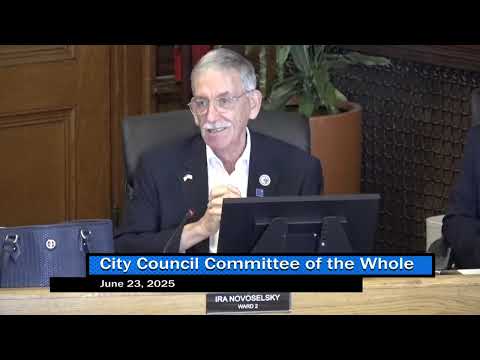
Councilors pressed for details about alternatives, relief and timing. Councilor Novoselski said the increase would force some residents to consider leaving their homes: "I cannot afford a 9 and a half percent increase in water … I am gonna have to sell my home and move out of the city and rent." Councilor Zambuto warned the increase could “kill people on a fixed income.”
Councilors asked about options to reduce the burden on seniors and low‑income households. Vasquez said the city would research whether state law permits a separate senior rate and would look into expanding programs that could help pay installation costs for hard‑piped deduct meters for outdoor irrigation. He also said the city is exploring a tiered rate structure and monthly billing as possible tools to target relief to low‑use households, but that any change in rate design would require additional study.
During the discussion city staff and consultants explained the water and sewer enterprise’s connection to a long‑running consent decree with state and federal regulators. City staff — including Chris Charamella and Nick Rystrom — said rehabilitation of the sewer system is largely complete and that remaining work focuses on conveyance projects; they said the consent decree schedule currently runs into the mid‑2030s and that some capital work tied to that decree affects rate needs.
The council approved the rate change by voice vote. The ordinance was presented as a one‑time reconciliation to restore the enterprise fund so future increases would be smaller, officials said.
The council directed staff to report back on possible targeted relief (including whether senior discounts are legally permissible), the costs and timelines for hard‑piped deduct meters and options to evaluate a tiered rate structure. Vasquez said staff will monitor the first months of FY‑26 to determine whether contingency amounts are needed and to refine budget forecasts.
The increase takes effect as part of the FY‑26 budget process; the council approved the rate ordinance during the Committee of the Whole and moved the FY‑26 budget forward later in the meeting.