Get Full Government Meeting Transcripts, Videos, & Alerts Forever!
Get email alerts on the Medicaid Reconciliation Federal Budget topic
No spam. Unsubscribe anytime.
County officials warn Senate reconciliation changes could sharply cut Medicaid funding and hit Santa Clara health services
Summary
Federal budget reconciliation negotiations in the House and Senate include proposed Medicaid financing changes — notably cuts to provider taxes and state-directed payments — that county health leaders say could mean hundreds of millions to more than $1 billion in lost revenue for Santa Clara Valley Health.
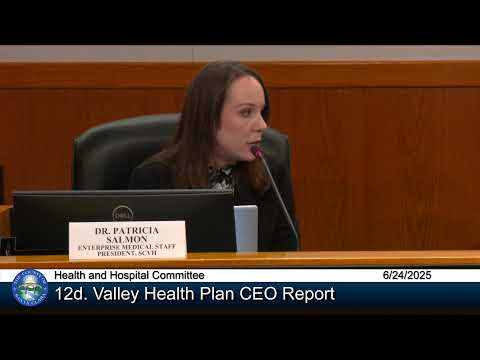
County officials and outside budget advisers told the Santa Clara County Health and Hospital Committee that recent Senate Finance Committee changes to the congressional budget reconciliation package could substantially reduce federal Medicaid funding available to the county and its public hospital system.
"On May 22, the House passed its version of budget reconciliation by a vote of 215 to 214," said Bert Magone of the Magone Group, summarizing the federal picture for the committee. "That bill included roughly $800,000,000,000 in Medicaid cuts over a 10‑year period. The Senate Finance Committee's version appears to add roughly another $200,000,000,000, bringing the total toward a trillion dollars in cuts over 10 years."
Magone and Santa Clara Valley Health leaders told the committee the Senate plan would change two financing tools the county relies on: the provider tax and state‑directed payments. "The Senate Finance Committee is squeezing down the amount of provider tax that could be collected starting in 2027," Magone said, and its draft would roll back state‑directed managed‑care payments by roughly 10% per year until they return to an earlier, lower cap.
Why it matters: Santa Clara County and its hospital system use provider taxes and state‑directed payments to support services for Medi‑Cal and other vulnerable patients. Committee members and county health executives said the difference between the House and Senate proposals — and whether measures survive parliamentarian review in the Senate — could change the county's Medicaid revenue outlook by hundreds of millions or, cumulatively, more than $1 billion.
"We are looking at hundreds of millions of dollars in ongoing revenue impacts to our county health system," said James Williams, speaking for Santa Clara Valley Health. "When you stack federal proposals, state changes, disenrollment and work‑rule proposals together, we are looking in the range of a billion or more."
Magone and Williams outlined other federal‑level dynamics that could alter outcomes, including a possible rural hospital stabilization fund under discussion in the Senate and the Byrd rule review by the Senate parliamentarian. They also described the reconciliation process timeline: the Senate may try to move quickly, but negotiations with Republican senators and parliamentarian rulings could change or strike provisions.
Local impact and timing: Committee staff provided county figures used by presenters: roughly $1.9 billion in Medicaid funding for the current year, with a baseline estimate of about $2.3–$2.4 billion for the upcoming year. Committee members were told the specific fiscal impacts would play out in stages — through legislation, regulation and state implementation — and could affect the county budget over months to years rather than immediately on Oct. 1.
Committee action: The committee voted to receive the report from staff and presenters.
The county said it will continue to monitor the reconciliation process and keep the Board updated as congressional action and any subsequent state rulemaking clarify actual fiscal effects.