Get Full Government Meeting Transcripts, Videos, & Alerts Forever!
Get email alerts on the Heirs Property topic
No spam. Unsubscribe anytime.
Presenter warns heirs' property can block home repairs, explains ‚ladybird' deed option
Summary
At an East Side neighborhood meeting, a community educator explained how heirs' property can prevent homeowners from accessing tax exemptions, loans and permits and recommended recording a ladybird (enhanced life estate) deed to transfer property at death without probate.
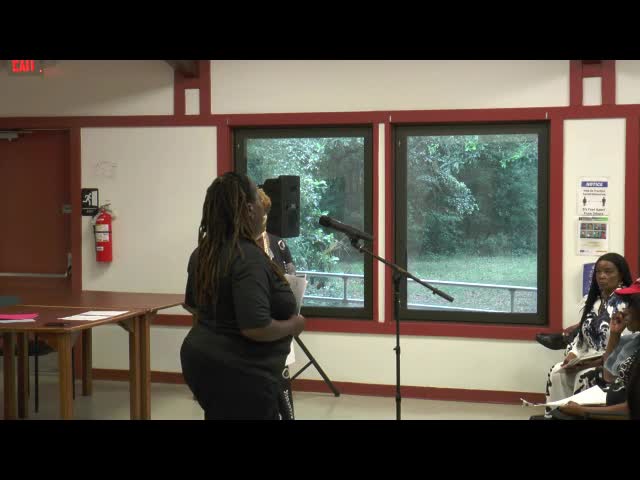
Miss Latimore, a community educator associated with the Historic Eastside Community Development Corporation, explained to residents how heirs' property can create barriers to homeownership and home repair and described the clerical tool known locally as a “ladybird” deed.
“When you don't have a will in place, the property becomes heirs property,” Miss Latimore said. She told residents that heirs' property often prevents households from obtaining a homestead tax exemption, certain income‑based tax credits and homeowners insurance and can block the ability to pull building permits or get loans to repair or upgrade a house.
Miss Latimore said heirs' property can leave a relative who has lived in a house for years vulnerable if another heir sells an undivided interest; a sale can force a sheriff or court sale that displaces occupants. She recommended the ladybird deed as a way to avoid probate and to transfer title cleanly to a named beneficiary after death.
“A ladybird is recorded at the courthouse while you are alive,” Miss Latimore said. “You still have all the decisions concerning the home. Once you pass, whoever you left the home to takes the needed documents to the courthouse and the deed is transferred without the home going through probate and they don't have to pay the inheritance tax.”
She invited interested residents to follow up with the Historic Eastside Community Development Corporation about home‑repair and restoration programs and to sign up at the meeting for additional assistance.
The remarks were made during a community announcements segment before a longer discussion about the Community Benefits Agreement and neighborhood organizing. Organizers also encouraged residents to provide email contact information to receive follow‑up on legal‑document clinics and neighborhood project committees.