Lifetime Citizen Portal Access — AI Briefings, Alerts & Unlimited Follows
East Side organizers outline $300 million CBA package, set oversight and timeline
Loading...
Summary
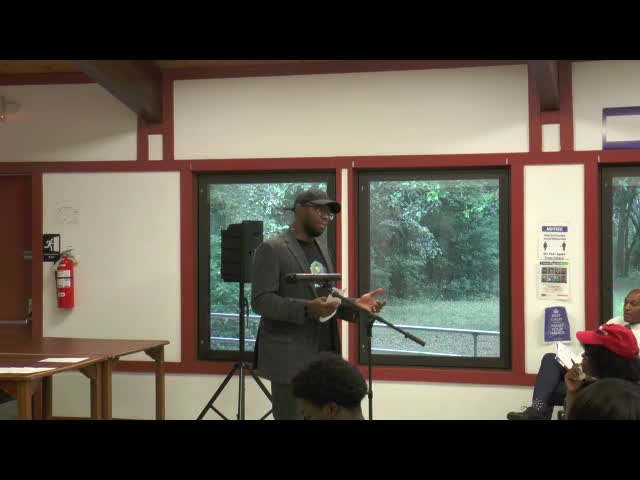
Travis, a Lift Jax organizer, told an East Side neighborhood meeting on Tuesday that the Community Benefits Agreement tied to the Jacksonville Jaguars stadium will route roughly $300 million of public and private investment across the city, with the city committing about $40 million for East Side projects to be spent within seven years and a Jaguars contribution of $75 million spread over 30 years once the stadium is finished in 2028.
Travis, a Lift Jax organizer, told an East Side neighborhood meeting on Tuesday that the Community Benefits Agreement tied to the Jacksonville Jaguars stadium will route roughly $300 million of public and private investment across the city, with the city committing about $40 million for East Side projects to be spent within seven years and a Jaguars contribution of $75 million spread over 30 years once the stadium is finished in 2028.
The funding and governance details matter because the city contribution will be available quickly but the Jaguars' portion is tied to stadium completion, a timeline that could delay some promised benefits. “The city contribution is $40 million over seven years. The Jags contribution was $75 million over 30 years,” Travis said, adding that the East Side portion “has to be spent within seven years and it starts in fiscal year 2025‑26.”
Organizers described a proposed oversight structure intended to balance nimbleness with public-accountability requirements. The recommended board would include five East Side stakeholders, one city council appointee, a Jaguars appointee and one mutually agreed appointee, Travis said. He and other speakers said the board would use a competitive application process similar to the city’s cultural council model, require annual reporting and be subject to audits and sunshine (transparency) rules.
“The structure helps to keep the right people at the table to manage and oversee, but it also has East Side represented at the decision‑making table,” Travis said. He emphasized that the board and staff would need to build a competitive application and review process and that records would be publicly accessible.
Speakers and staff identified priority uses for East Side funds: home repairs, housing development, small business and job creation, streetscape and corridor improvements along key gateways and mitigation for heirs' property. Travis said neighborhood priorities include concentrated investment along the gateway corridor so dollars are visible and demonstrate impact rather than being diluted citywide.
City staff appearing at the meeting said some implementation details remain to be finalized. The neighborhoods department director, who said she was appointed by the mayor and confirmed by city council, told residents the department can support neighborhood-led work and help connect community groups to city programs, historic-preservation resources and existing home-repair loans.
Tax Increment Financing (TIF) also featured in the discussion as a potential source of long‑term infrastructure funding. Travis said the committee that reviewed the plan recommended exploring a TIF to finance streets, sidewalks and other capital needs and described the possibility of capturing a percentage of future tax increments for neighborhood infrastructure.
Speakers cautioned that several administrative and political steps remain. Travis and others noted the special committee that was drafting governance language had canceled recent meetings, which could delay finalization. They also warned that some council decisions — including the final funding schedule and board composition — would require additional council action and mayoral recommendations.
Residents asked whether projects tied to the funding would be prioritized for East Side residents and whether nonprofit or private individuals with relationships to the city could serve on the board. Travis and city staff said the intent is to ensure community representation but that committee application and conflict‑of‑interest rules will be part of the board’s governance and subject to review.
Implementation timing depends on several conditions, including the city’s budget calendar and completion of the stadium. Travis said the city dollars are scheduled to start in fiscal year 2025‑26 and that some East Side projects could begin late in the current year or next year once the oversight organization is in place and begins reviewing applications.
The presentation closed with a call to sign up for ongoing community engagement; organizers provided an email (travis@liftjacks.org) for residents seeking more information or to join steering committees.