Get Full Government Meeting Transcripts, Videos, & Alerts Forever!
Get email alerts on the Clean Energy Procurement topic
No spam. Unsubscribe anytime.
SFPUC approves larger not‑to‑exceed payment for Clean Power SF’s share of CC Power G&A over remaining 23 years
Summary
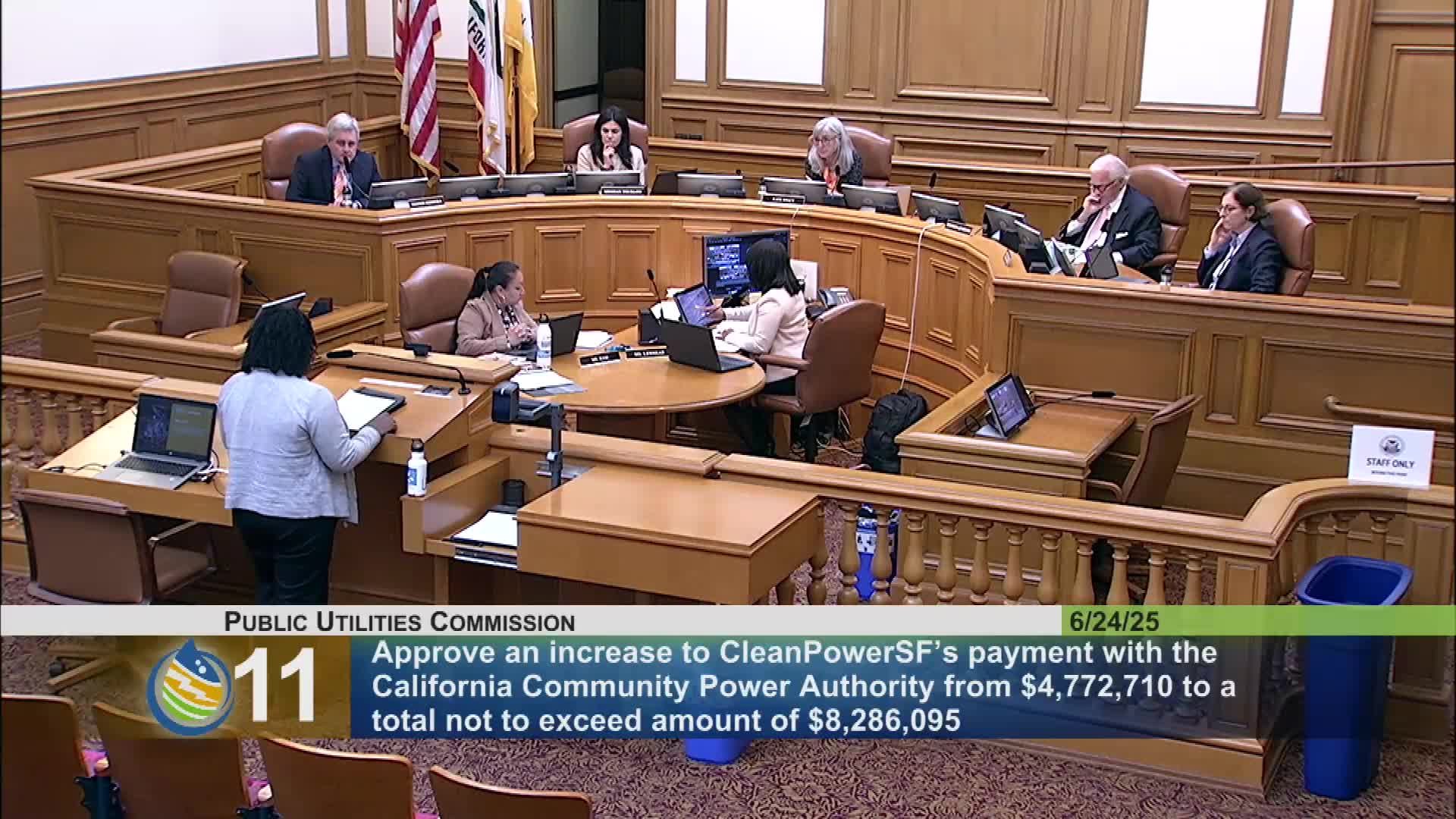
Commission approved increasing Clean Power SF’s not‑to‑exceed payment for its share of California Community Power Authority general and administrative costs from $4,772,710 to $8,286,095 for the remaining 23 years of funding approval; staff said the increase covers staffing, market intelligence subscriptions and early‑stage project work.
Cheryl Taylor, operations manager for Clean Power SF, asked the commission to approve an increase in the not‑to‑exceed payment for Clean Power SF’s share of ongoing general and administrative costs to the California Community Power Authority (CC Power) from $4,772,710 to $8,286,095 for the remaining 23 years of funding authority previously approved by the commission.
Taylor described CC Power as a joint purchasing organization formed to combine community choice aggregator purchasing power for renewable energy supplies and related services. She said CC Power’s requested near‑term fiscal 2025–26 budget is about $1.5 million to cover staffing, services and operating reserves and that Clean Power SF’s equal share of near‑term operating costs is estimated at roughly $173,000 for that year. The not‑to‑exceed figure is based on an estimated $200,000 annual share escalated at 5% per year across the remaining 23 years to provide headroom for unexpected costs.
Taylor said CC Power’s work helps members comply with California Public Utilities Commission procurement orders, aggregate buying power for firm clean resources and long‑duration storage, and access market intelligence and services that would be more expensive for an individual agency to procure. She told the commission CC Power has nine members representing roughly three million customers across nearly 150 municipalities.
Commissioner questions addressed how costs are allocated (Taylor said G&A is split equally among members while project costs are allocated by project share and opt‑in) and how the organization’s work would be matched to future CPUC procurement requirements.
Ending: the commission approved the increase and authorized the general manager to seek Board of Supervisors approval if required.