Get Full Government Meeting Transcripts, Videos, & Alerts Forever!
Get email alerts on the Affordable Housing Redevelopment topic
No spam. Unsubscribe anytime.
Committee forwards $1 million UDAG loan for CEVA redevelopment to full council
Summary
The Tacoma Community and Economic Development Committee voted to forward a resolution to city council that would authorize a $1,000,000 UDAG loan to CEVA Redevelopment LLC to fund tenant improvements for street-level retail in a downtown mixed‑use historic rehabilitation that preserves 78 affordable housing units.
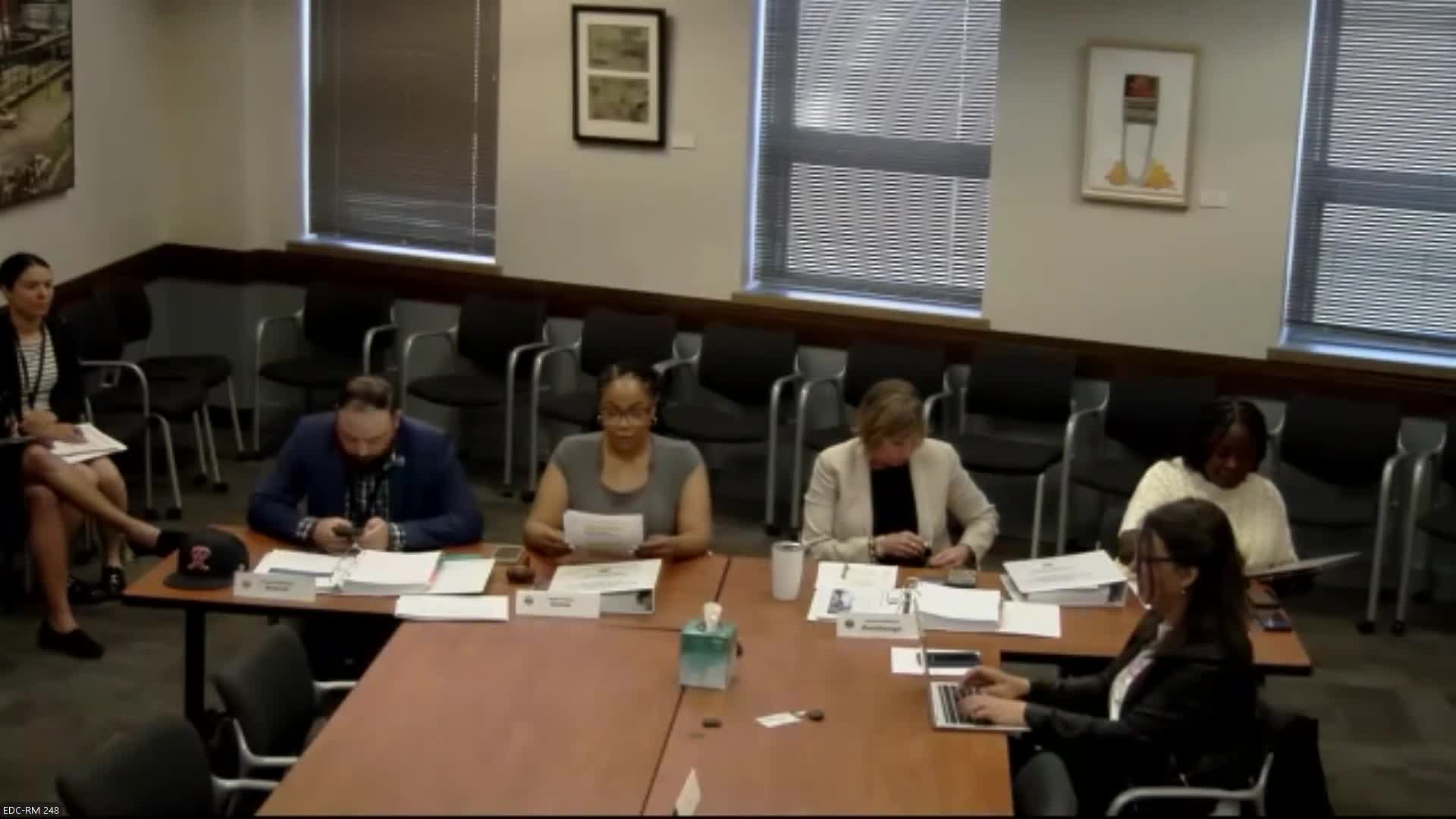
Deputy Mayor Jared Daniels chaired the Community and Economic Development Committee meeting on June 24, 2025, where the panel moved to forward a resolution to the full City Council authorizing a $1,000,000 Urban Development Action Grant (UDAG) loan to CEVA Redevelopment LLC for tenant improvements on street‑front retail in a downtown historic rehabilitation.
The loan is part of a larger $9.5 million capital redevelopment of three properties along St. Helens, Market and Ninth Avenue that the developer purchased in September 2024 for $6 million. Debbie Bingham, with the community and economic development department, told the committee the UDAG loan “is for tenant improvements for those retail spaces” and that the redevelopment aims to preserve 78 affordable housing units and rehabilitate 8,500 square feet of street‑front retail.
The nut graf: Committee members said the project addresses long‑standing vacancy and safety concerns along St. Helens and Market streets by reactivating ground‑floor commercial space and investing in building rehabilitation, while preserving affordable housing stock through extended voucher contracts.
Debbie Bingham said the UDAG fund is a revolving loan fund created from 1970s federal UDAG awards and used strategically to leverage private investment and create jobs. She described the proposed CEVA loan as focused on tenant improvements and technical assistance to help small businesses occupy the retail spaces. Katisha Atterberry, a project lead with Urban Black Community Development, described the project as a mixed‑use, historic rehabilitation and said the developers expect to sign leases for multiple small businesses and community organizations, many led by women or minority entrepreneurs.
Project details provided at the meeting include: - Loan request: $1,000,000 (UDAG revolving loan fund) - Total project cost: $9,500,000 - Property purchase: September 2024 for $6,000,000 - Housing preserved: 78 units (mix of studios and one‑bedrooms; target populations cited include seniors, veterans and single parents) - Commercial space: approximately 8,500 square feet of ground‑floor retail (eight street‑front spaces) - Affordability target for housing: roughly 30–50% area median income (AMI) for the affordable units, as stated by the presenters - Anticipated living‑wage jobs from project: about 31–40
Developers and staff flagged infrastructure and operational constraints that could affect tenant mix: limited electrical capacity, grease‑trap and kitchen exhaust challenges for food businesses, and absence of gas service in some spaces. Panel members and developers discussed potential solutions for solid‑waste receptacles and parking enforcement near the site to make retail leases more marketable.
Committee member Provo moved to forward the request for a resolution authorizing execution of the loan agreement with CEVA Redevelopment LLC to the full council; the committee adopted the motion by voice vote. The committee also asked staff to distribute the project packet and follow up with council members who were not present ahead of the full council consideration.
The committee did not adopt the loan at this meeting; it forwarded the request to the full City Council for consideration of a resolution that would authorize the loan agreement. Committee members and staff discussed next steps, including sharing the presentation packet with absent council members and coordinating follow‑up questions.
The CEVA redevelopment team identified Urban Black Community Development as the general partner and Great Expectations as a development partner; staff said underwriting and feasibility review with an outside agency concluded in March with a positive outcome. The developers reported early tenant interest and said some leases were close to execution.
What happens next: the committee forwarded the resolution to full City Council for consideration; no binding loan agreement was executed at the committee meeting. Staff said they would provide materials to absent council members and be available to answer questions before the council vote.
Ending: Committee members praised the project’s focus on revitalizing underused storefronts and preserving affordable housing while noting remaining operational and infrastructure issues that will require coordination if the full council approves the loan and the project proceeds.