Get Full Government Meeting Transcripts, Videos, & Alerts Forever!
Get email alerts on the Food Safety And Licensing topic
No spam. Unsubscribe anytime.
Toledo health officials outline food-operator licensing process after public push on expired permits
Summary
Lucas County health staff explained the state-mandated plan-review and licensing process for restaurants and mobile food units, defended a recent publicity drive that cut outstanding renewals from over 200 to eight, and described an upcoming statewide online portal for permits.
The Lucas County Health Department detailed how food-service operators obtain and maintain licenses and defended a recent public posting of expired permits after hundreds failed to renew.
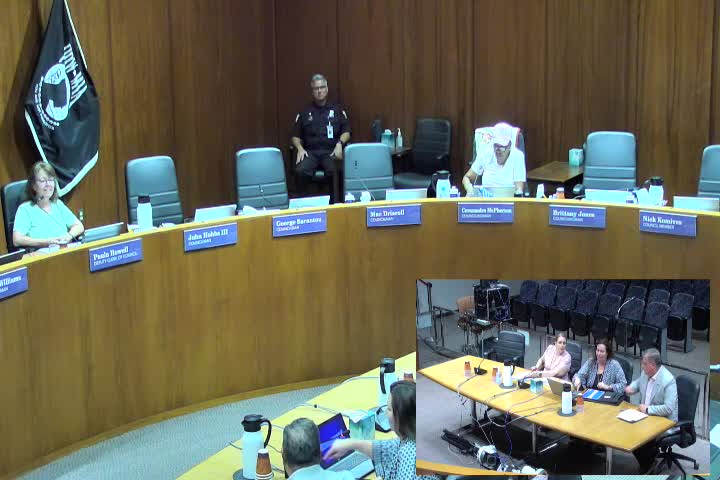
Health officials told the City Council Parks, Education, Workforce and Health Committee that plan review and licensing are governed by state law and described the step-by-step process for new restaurants and mobile food units. They also said an aggressive publicity push this year produced a rapid increase in renewals.
The health department said the first step for a new food operator is submitting a complete set of drawings and a menu, plus an equipment list (make and model), required education certificates and fees. Sarah Becker, an environmental health specialist, said inspectors use the menu to verify the facility layout and equipment are appropriate: “education is primary prevention,” Becker said, adding that the department provides packets and a flowchart to help applicants prepare. Becker said the department has 30 calendar days to review plan submissions under state law and that an approval letter is valid for one calendar year.
Jennifer Gostock, environmental health director, said the department had not previously publicized lapsed permits at this scale. “We have never publicized it as much as we did this year,” Gostock said, and added the outreach included social media and press notices. She said the effort prompted many operators to come in to pay; the number of outstanding licenses fell from “over 200” to eight, Gostock said, and the remaining eight are being referred to legal.
Public health commissioner Kareem placed the program in a statewide context, saying Lucas County licenses roughly 4,000 facilities and that the food-safety program operates on behalf of the state. “A lot of the stuff we do…is prescribed in ORC,” Kareem said, referring to the Ohio Revised Code; he added the county carries out state-authorized inspections and licensing.
Becker described inspections and timelines: after plan approval and building, the operator obtains a certificate of occupancy and fire inspection; the health department then performs a pre-licensing inspection (no food present) to confirm the facility matches the approved plans. For mobile units the process is similar but adapted to trailer, pushcart or teardown units; Becker said mobile operators must still meet handwashing and warewashing requirements and typically need a fire inspection even if building inspection does not apply.
On fees and renewals, Gostock said the department uses a formula in local code to calculate fees (hours spent, number of inspectors, inspection time) and that this year’s fee increases returned rates to pre-COVID levels. She also said the state is launching a new online portal (referred to in the presentation as the ACA/Acela portal) that will let operators create accounts, receive linked invoices and pay electronically, eliminating paper applications.
Committee members asked about enforcement, cottage-food and farmers-market rules, and whether the publicity campaign was effective. Kareem said the publicity was effective and fair to operators who paid on time. On cottage-food and farmers-market exemptions, health staff said rules come from the Ohio Department of Agriculture and that the department distributes state fact sheets and follows state definitions.
The committee also asked how inspections of mobile units are scheduled; Becker said inspectors have assigned neighborhoods and that each mobile receives at least one operational inspection per year, sometimes scheduled around festival dates or performed when an inspector encounters a unit in the field.
Clarifying details: Becker said review time is legally 30 calendar days; approvals last one calendar year (source: Sarah Becker). Kareem reported the county licenses about 4,000 food facilities (source: Kareem). Gostock said outstanding licenses dropped from over 200 to eight after publicity and follow-up payments (source: Jennifer Gostock). The transcript noted about 250 mobile licenses countywide (source: Sarah Becker). The department said fee increases returned rates to pre-COVID levels (source: Jennifer Gostock).
The presentation concluded with staff offering application packets, site visits before submission, and written letters when additional information is required. Staff said the department will move to the statewide online portal for permit issuance and payment next year.