Get Full Government Meeting Transcripts, Videos, & Alerts Forever!
Idaho Falls council reviews broad update to impact fee study — policing, fire, parks and roads in focus
Summary
Idaho Falls city leaders reviewed a proposed update to the city’s impact fee study and capital improvement plans, including police vehicle purchases, fire apparatus and stations, a 23‑year parks plan and transportation lane‑mile needs, with staff scheduling further work sessions and a likely public hearing in September.
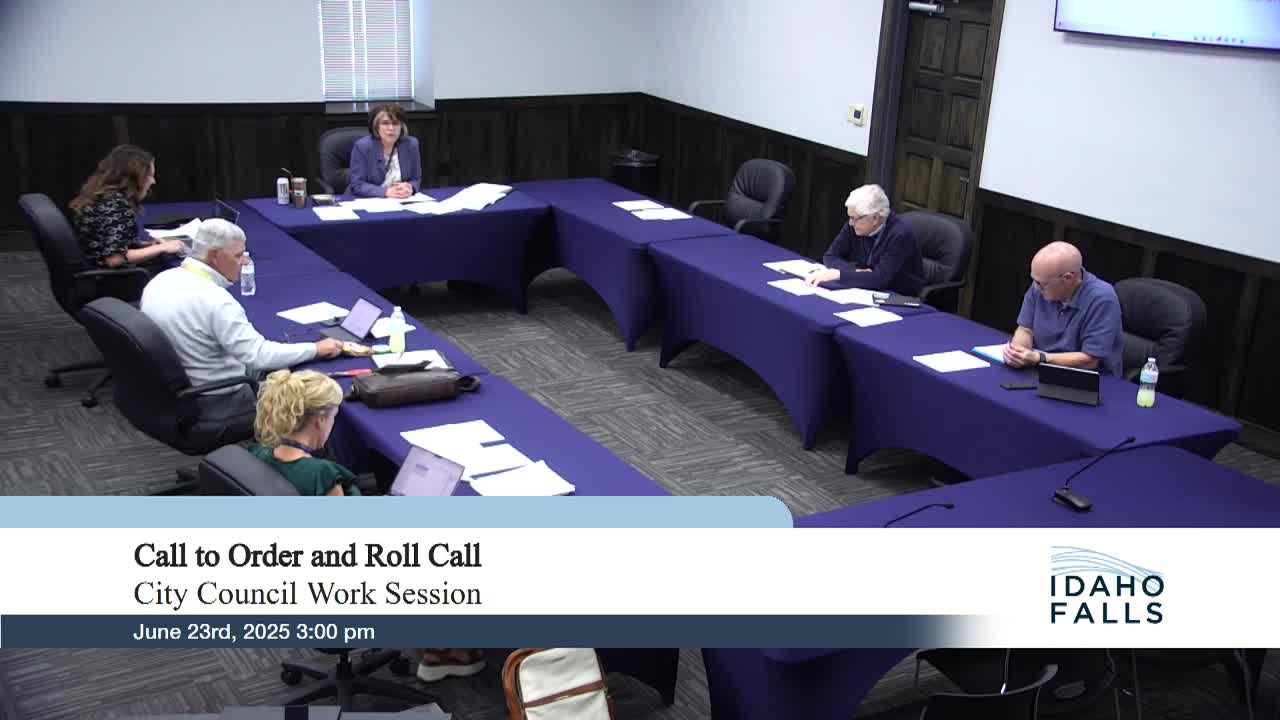
Idaho Falls — City officials on Tuesday spent roughly an hour reviewing a proposed update to the city’s impact fee study and associated capital improvement plans, focusing on how new growth will be charged for police vehicles, fire apparatus and stations, parks and recreation, and transportation improvements.
The work session brought department directors and a consultant from TischlerBise online to walk through the capital projects list that underpins the impact fee calculations and to answer council questions on timing, eligibility and accounting.
Why it matters: The impact fee study determines which capital items new development can be charged for and therefore shapes what facilities the city can afford as it grows. The council’s choices — including how to define building square footage and whether to include or relocate an affordable‑housing incentive — affect fee levels, how fees can be used, and whether developers will opt to build public improvements under reimbursement agreements.
Key points from the discussion
- Police: The police capital list includes repayment of debt for the police facility and vehicle additions. Staff said the department currently estimates a fleet “unit” of 11 patrol vehicles related to growth and anticipates acquiring 1–2 impact‑fee‑eligible patrol vehicles per year. Vehicle cost estimates were given at roughly $65,000–$68,000 each, producing an estimated impact‑fee capital cost in the neighborhood of $1,045,000 for the projected fleet increment. Police staff recommended keeping patrol vehicles on a shorter replacement cycle than 10 years; a 7‑ to 8‑year lifecycle was described as more consistent with industry practice for patrol vehicles.
- Leasing vs. purchase: The police chief and staff described an industry trend toward five‑year lease/lease‑back programs that include guaranteed buyback/resale value and continuous warranty coverage. The chief said the city’s current practice of holding vehicles longer increases lifecycle costs and lowers resale returns, and staff plan to present a financial comparison of the current practice versus a five‑year lease model in several months.
- Fire: The fire capital list shows apparatus and station work tied to the planned Station 6 construction and related equipment. Staff reported that apparatus (engine, ambulance) have been ordered but delivery remains a few years out. Impact‑fee revenue slotted to Station 6 was described as about $3 million toward that facility, with a remaining portion available for storage and related site work; a storage building was projected to receive roughly $729,000 in impact fee funding over the 10‑year plan. A separate, plan‑based calculation covers training facility design (noted as $80,000) and staff recommended careful accounting for plan‑based fees because those funds are collected and…
Already have an account? Log in
Subscribe to keep reading
Unlock the rest of this article — and every article on Citizen Portal.
- Unlimited articles
- AI-powered breakdowns of topics, speakers, decisions, and budgets
- Instant alerts when your location has a new meeting
- Follow topics and more locations
- 1,000 AI Insights / month, plus AI Chat