Get Full Government Meeting Transcripts, Videos, & Alerts Forever!
Get email alerts on the Economic Development topic
No spam. Unsubscribe anytime.
Council adopts final project and financing plan for downtown tax increment reinvestment zone
Summary
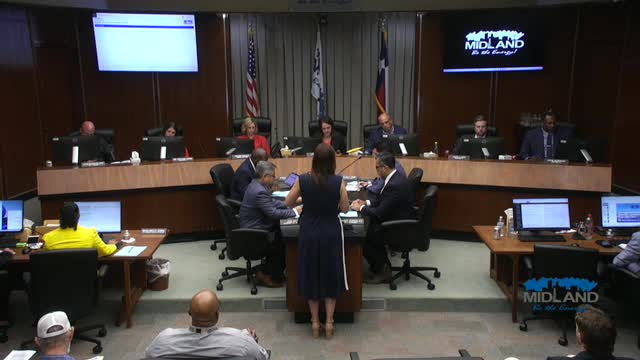
The Midland City Council unanimously approved the final project and financing plan for Tax Increment Reinvestment Zone No. 2, clearing the way for a 30-year program to reinvest downtown tax increment in infrastructure and development projects.
The Midland City Council voted unanimously to adopt the final project and financing plan for Tax Increment Reinvestment Zone (TIRZ) No. 2, the downtown district created under Chapter 311 of the Texas Tax Code.
City staff said the TIRZ is intended to concentrate reinvestment in downtown Midland to spur private development and improvements such as parking, transit, pedestrian enhancements and public utilities. Staff emphasized the plan is a guideline: any specific expenditures from the TIRZ fund will require approval first by the TIRZ board and then by the city council.
Elizabeth Triggs and other staff briefed council on key plan features. The plan projects roughly $124 million in taxable increment over a 30-year life for the zone and lists categories where the increment could be spent. City staff stressed the $124 million figure is a cap in the plan; if the tax increment exceeds that amount, no dollars beyond the cap can be spent without formally amending the plan.
The TIRZ will include municipal participation alongside the county, the college and the hospital district; Midland ISD is not participating, staff said. Staff said sales tax, hotel occupancy tax and school district base revenue are not committed to the TIRZ; the plan captures only incremental real property tax revenue generated after the zone’s base year.
Council members asked how administrative and staffing costs would be managed. Staff said the city will administer the TIRZ and that staff time and program administration could be paid from TIRZ administrative allocations; any positions or budget commitments would be considered through the normal annual budget process.
The TIRZ board, which includes representatives of the participating taxing entities, had unanimously approved the plan earlier; the council’s action completes the statutory two-step approval required by state law. The motion to approve the final project and financing plan carried unanimously.