Get Full Government Meeting Transcripts, Videos, & Alerts Forever!
Get email alerts on the County Budget topic
No spam. Unsubscribe anytime.
Commissioners direct staff to draft budget-policy change on health-insurance budgeting; utility-tax and solid-waste options returned for more review
Summary
At a budget workshop briefing, commissioners agreed to a policy change to budget vacant full-time positions at an actuarial average employee cost rather than the maximum health-insurance tier; they also asked to bring proposed utility-tax and solid-waste-exemption changes back for further review.
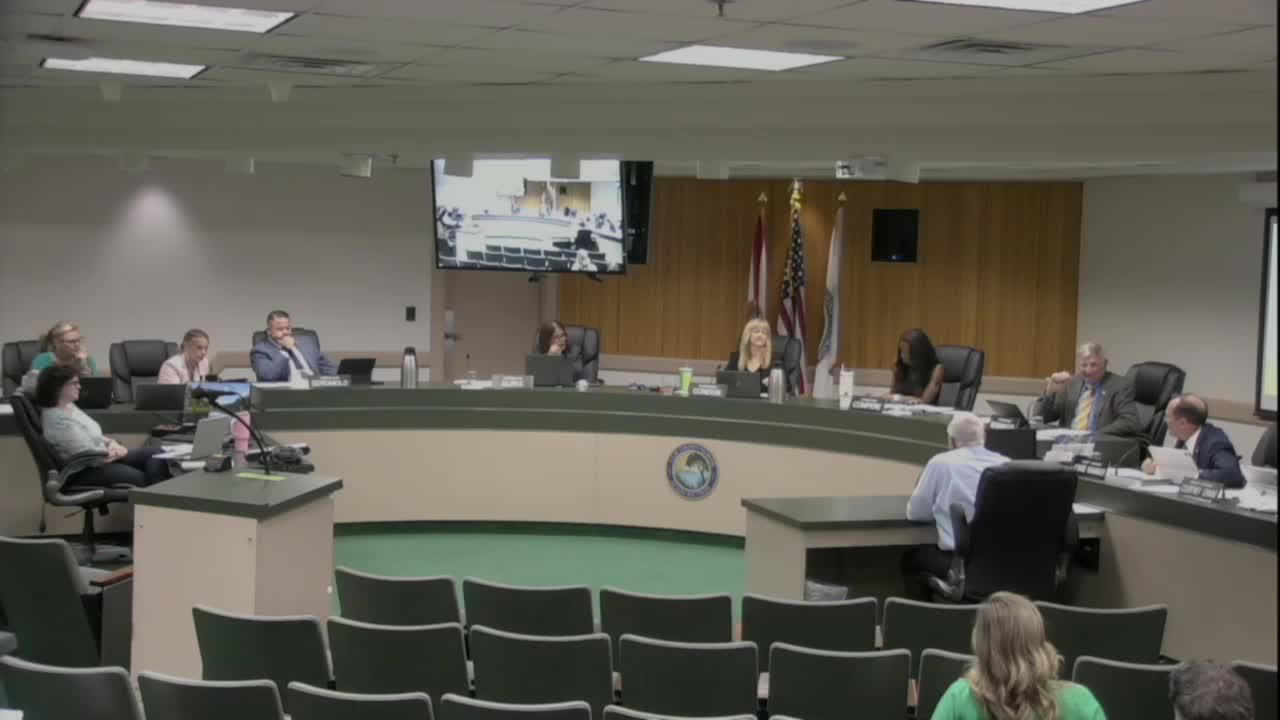
Clay County commissioners on June 24 reviewed three budget items and gave staff direction to bring formal resolutions or ordinances back for board action: a proposed budget-policy revision on how vacant positions are budgeted for health insurance, a set of options to reduce solid-waste collection and disposal exemptions, and an advertised utility-tax proposal to revisit at the July 8 meeting if the board wishes to proceed.
Budget manager Reg Kanter presented the staff-recommended policy change to alter current practice of budgeting all full-time vacant positions at the county's highest possible insurance cost toward using the current-year actuarial average member cost instead. Staff said the change would reduce the vacancy-related budget liability; preliminary estimates discussed at the meeting ranged between about $1.8 million and $2.0 million in potential savings compared with the prior approach, and county staff requested consensus to prepare a resolution for the board to adopt.
Commissioners generally supported moving from the maximum-tier budgeting approach to the actuarial average and asked staff to draft the formal resolution. Staff told the board the actuarial calculation is provided by the county's actuary (the Bailey Group).
On solid-waste exemptions, environmental-services director Milton Tallinger presented several options that would reduce exemptions and produce savings. Staff outlined options including ending collection-and-disposal exemptions, reducing exemptions to 50% or 25% of the current level, or retaining only the hardship exemption; estimated savings ranged from roughly $647,000 to $1.2 million depending on which option the board chose. Commissioners asked for more study and agreed to discuss the items further at the next workshop.
Finally, staff presented an advertised timeline and revenue table for a potential utility tax. Commissioners agreed by consensus to bring the item back for consideration at the July 8 meeting, giving staff time to run public-advertising deadlines and finalize details; staff said the earliest collection would begin January 1 if the board adopted an ordinance tonight, and that a mid-year adoption would reduce first-year receipts.
Board members asked staff to return with formal drafting and ordinance/resolution language for each item at future meetings.