Get Full Government Meeting Transcripts, Videos, & Alerts Forever!
Get email alerts on the School Safety topic
No spam. Unsubscribe anytime.
Newark police describe scope, training and early results of school resource officer program
Summary
Sergeant Shannon Todd of the Newark Police Department updated the liaison committee on the city's school resource officer (SRO) program, describing the officer's duties, training, selection process and a year-over-year increase in documented calls for service since the position was refilled.
Sergeant Shannon Todd of the Newark Police Department presented an update on the city's school resource officer program to the Newark Unified School District Liaison Committee, describing the job's mission, selection and training and saying the presence of an SRO has produced more documented calls for service since the role was reinstated.
The SRO program places a police officer at Newark Memorial High School to "create and maintain a safe learning environment for students, teachers and staff," Sergeant Todd said. She identified Officer Brandon McEwen as the current SRO and said he was attending basic SRO training at the time of the meeting.
Todd told the committee that the SRO serves as a liaison between the police department and the district, investigates crimes on or near campus, helps deter disruptive behavior at school events and provides training on campus safety and juvenile issues. She said the role also includes informal counseling, participation in student counseling sessions and coordination with social services.
"SROs are committed to relationship building with students, and they see it both as a responsibility and as a privilege," Sergeant Todd said.
Why it matters: the committee discussed how an on-site SRO can change how incidents are handled and how the city and district measure campus safety. Todd said the SRO's familiarity with district discipline procedures makes diversion and school-based discipline more likely than immediate arrest in many cases, which the department argues can reduce the risk of a student acquiring a criminal record for incidents that can be handled within the school system.
Key facts and figures - The department reported 82 calls for service at the high school in the 2023-24 school year (when there was no SRO) and 135 calls in 2024-25 after Officer McEwen was assigned. Todd cautioned that an increase in calls does not necessarily indicate more crime; the SRO may proactively generate reports or handle matters that previously would have been handled informally by school staff. - Top categories of calls with an SRO on campus included EMS/wireless 911 calls, battery/disturbance reports (school fights), and welfare checks or psychiatric holds. - The SRO assignment is voluntary, requires officers to submit a memo of interest and a resume, and includes oral-board review and supervisor approval. - Officer McEwen holds additional certifications the department highlighted: first-aid and CPR instructor, crisis intervention training, and membership on the crisis negotiation team; Todd said he also was named the department's 2024 Officer of the Year by the Optimist Club.
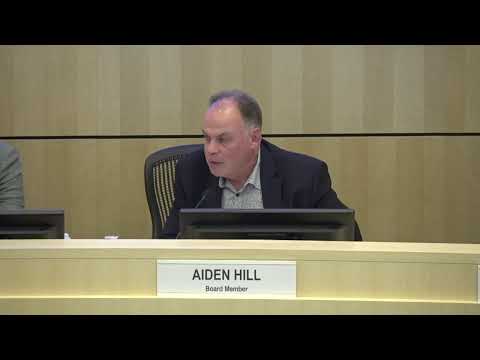
Committee questions and follow-up Committee members pressed for more granular metrics from the department. Member Hill asked whether the department could share specific counts and categories so the board and the public better understand trends rather than relying on social media reports. Sergeant Todd said staff will work during the summer to identify which quantitative metrics the committee would like reported routinely and implement that tracking in the new school year.
Superintendent (name not specified) and committee members said they support the increased reporting and emphasized collaboration between district staff and the police department on welfare checks, student interventions and off-campus follow-ups.
Background and history Todd described the program's long history in Newark: the first SRO was assigned in 1988 with cost-sharing between the district and the city; the junior-high/middle-school program was later suspended because of staffing and financial constraints. The SRO position at the high school was suspended during a prior staffing shortage and during COVID; the department refilled the assignment in August 2024 after recruiting and training new officers.
What the committee directed No formal committee vote was taken on the SRO program at this meeting. Members asked the superintendent and police leadership to return with more detailed, routine metrics (for example: counts of welfare checks, medical calls, disturbances, diversion outcomes and incidents resulting in arrest) so the liaison committee and the public can better understand how the role is being used.
Taper: Several committee members and the superintendent praised Officer McEwen's rapport with students and said they view the current SRO assignment as a positive presence on campus. The department also described plans to expand active-shooter run-hide-fight training and other safety instruction to additional district sites in the coming year.