Get Full Government Meeting Transcripts, Videos, & Alerts Forever!
Get email alerts on the Public Safety Contracts topic
No spam. Unsubscribe anytime.
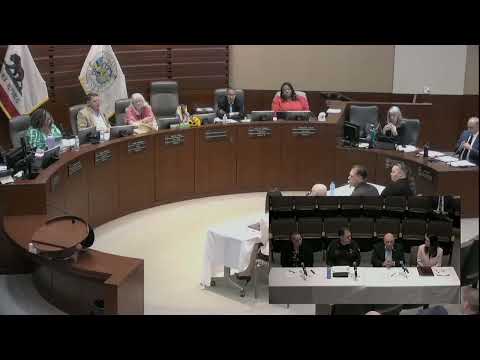
Solano supervisors delay Valeo policing contract after CalPERS audit risks laid out
Summary
The Solano County Board of Supervisors voted 4–1 to continue consideration of a one-year law-enforcement contract with Valeo (Vallejo) until a July 22 meeting after county officials warned a CalPERS audit could force termination of long-serving retired annuitants and sharply raise county costs.
The Solano County Board of Supervisors voted to continue consideration of a proposed short-term contract to provide sheriff services to the city of Vallejo until a July 22 meeting, after sheriff’s staff and county attorneys warned a recent CalPERS audit may force the county to remove retired-annuitant deputies by July 1.
The decision followed more than two hours of discussion at which the county’s sheriff explained that CalPERS has concluded some court bailiffs and retired annuitants have worked “more than three years,” which triggers termination under the retirement system’s rules. The sheriff said enforcement could expose affected retirees to large financial penalties and require the county to replace retired annuitant positions with full‑time deputies, raising costs and stressing patrol staffing countywide.
Why it matters: The county is weighing a proposal to provide supplemental policing services in Vallejo funded in part by the city and a private partner. County staff and supervisors said the sudden CalPERS findings, the time needed to hire and train replacements, and uncertainty about whether CalPERS will grant exceptions mean the board should delay final approval until legal, personnel and contracting questions are clarified.
County and staff explanation
Sheriff (role listed in transcript as “Sheriff”) told supervisors that CalPERS is enforcing both an annual-hours limit (960 hours) and a separate maximum‑years rule; the SB 1379 legislation that increased the hourly limit will not resolve the multi‑year issue because the county has not yet executed a Valeo contract that would have triggered the statute’s exception. “The max hours exemption doesn’t help us address our current issue with the bailiffs that we’ve had for so many years,” the sheriff said, summarizing CalPERS’ findings and the department’s predicament. The sheriff added that if the county must stop using eight retired annuitants by July 1, it would need to hire and train dozens of deputies to avoid pulling deputies from patrol and other assignments.
Supervisor Monica Brown and other supervisors pressed staff about mitigation options, including (1) asking CalPERS for temporary relief, (2) terminating affected retirees administratively and rehiring them quickly if legal relief arrives, and (3) short‑term operational steps such as seeking mutual‑aid support or deploying a small number of county cars as an interim measure. County counsel and the county administrator’s office said legal analysis and discussions with CalPERS were required before the board could safely finalize a contract.
Public safety and budget implications
Supervisor Vasquez and board members emphasized both public‑safety needs in Vallejo and the fiscal exposure to the county. One supervisor summarized the scale: the county has been subsidizing court‑security and related services by roughly $2 million already, and replacing retired annuitants with top‑step full‑time deputies would “put costs through the roof,” the sheriff warned. The board discussed emergency procurement, the county’s ability to purchase and outfit patrol cars quickly, and whether a short continuance would provide enough time to resolve personnel and CalPERS issues.
Board action and next steps
The board made a procedural motion to continue the Valeo matter to July 22, and the motion passed with a 4–1 vote; Supervisor James cast the lone recorded opposing vote. Supervisors directed county staff, the sheriff’s office and counsel to pursue three parallel tracks: contact CalPERS to seek clarification or relief, continue meet‑and‑confer negotiations with the deputy bargaining unit (DSA), and explore emergency purchasing or temporary operational measures to shorten the January 4 service start date if the contract moves forward.
Quotes
“[CalPERS] is telling us that we have been exceeding the number of years,” the sheriff said, summarizing the audit’s findings and the limits of the SB 1379 hourly exemption. Supervisor Monica Brown urged rapid, collaborative problem‑solving: “If we can give them some breathing room and all the stars line, for 12 months it will help.”
Ending
Supervisors left the matter open for further legal review and negotiations and scheduled a July 22 hearing to revisit the contract if staff can provide updated CalPERS guidance and labor‑negotiation progress. The board instructed staff to prepare options that include short‑term operational steps to reduce immediate public‑safety risk if retiree terminations are required.