Get Full Government Meeting Transcripts, Videos, & Alerts Forever!
Get email alerts on the Water Groundwater Ag To Urban topic
No spam. Unsubscribe anytime.
House approves 'Ag-to-Urban' groundwater bill after debate over replenishment obligations
Summary
The Arizona House passed Senate Bill 16-11 (substituted for HB 2298) on a 35-20-5 vote, creating a voluntary program to transition irrigation groundwater use to urban development. Supporters cited housing and conservation benefits; opponents warned the state's groundwater replenishment system may be unable to meet added obligations.
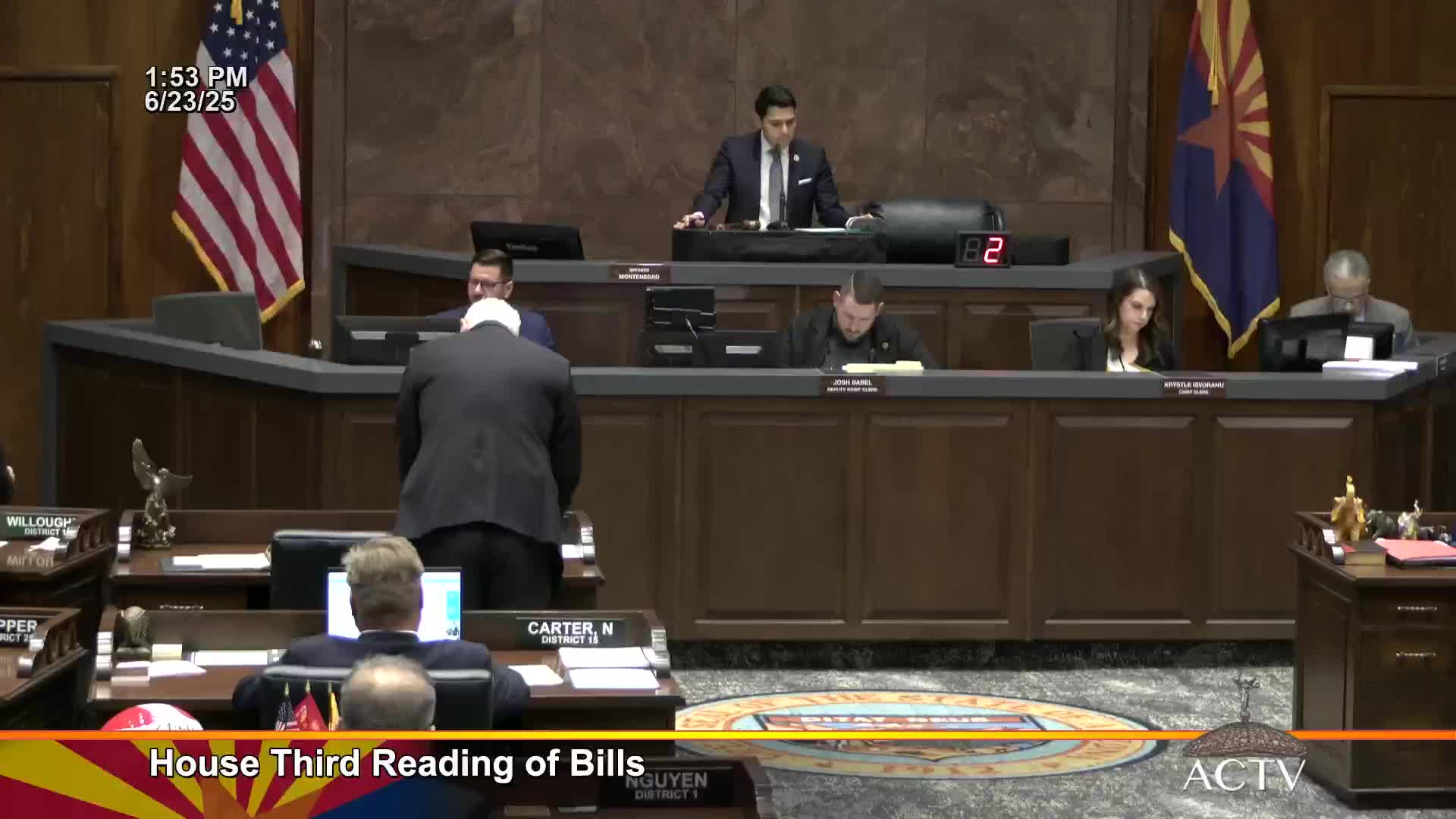
The Arizona House of Representatives on June 23 passed Senate Bill 16-11, substituted for House Bill 22-98, by a vote of 35 ayes, 20 nays and 5 not voting. The bill authorizes a voluntary "ag to urban" mechanism intended to move some irrigated acreage into urban development while providing groundwater replenishment and related program authority to state agencies.
Supporters called the measure a tool to address the state's housing shortage while conserving groundwater. Representative Jennifer Griffin, who carried the legislation in the House, said, "It's a win win win for the agriculture community, a win for the, for the housing crisis that we're in. And then it's a win for the aquifer." The bill previously received a floor amendment in committee that lawmakers described as technical in nature.
Opponents questioned whether the Central Arizona Groundwater Replenishment District (CAGRID, also called the GRD) and other replenishment systems can absorb the added obligations the bill would create. Representative Manuel Mathis said the bill "relies heavily on a ground water accounting system that I believe is already fully subscribed, if not oversubscribed, and thus easily structurally compromised," and said he could not "vote to continue building on a foundation I believe is likely already at or near its structural limit." Mathis and other members cited concerns that the bill could add an estimated 15,000 to 20,000 acre-feet of replenishment obligations to existing commitments.
Other lawmakers who supported the bill, including Representative Stacey Travers and Representative David Volk, said the program is voluntary and could produce substantial water savings while also adding housing supply. Travers—who noted she has served on the governor's water policy council—said the bill includes "guardrails" and urged action rather than inaction.
Debate also touched on administrative discretion. Some members said the measure vests substantial authority with the Arizona Department of Water Resources (ADWR) and that implementation details will determine whether expected savings materialize.
The House approved the bill and the clerk instructed that it be conveyed to the Senate. The bill was discussed in the House Additional Committee of the Whole earlier and returned with recommendation as amended before the final floor vote.
Procedure and next steps: the House voted to pass SB 16-11 as amended; the bill record shows it will be sent back to the Senate as required by legislative process.