Get Full Government Meeting Transcripts, Videos, & Alerts Forever!
Get email alerts on the Energy And Environment topic
No spam. Unsubscribe anytime.
Planning commission opens multi‑month review of alternative energy regulations; hydrogen, commercial solar and battery storage prioritized
Summary
Dickinson County planning staff reopened a multi‑topic review of alternative‑energy land‑use rules, prioritizing hydrogen (ongoing local surveying), utility‑scale solar and battery energy storage systems, and invited an experienced Saline County planning commissioner to present at a future meeting.
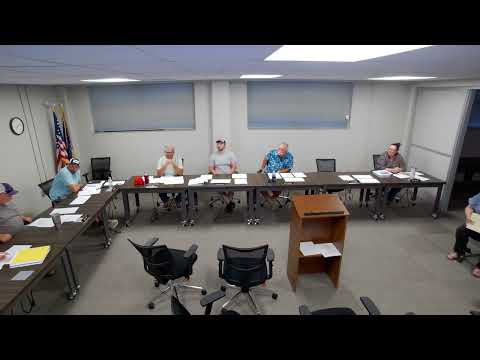
The Dickinson County Planning Commission reopened discussion on possible updates to county land‑use regulations for alternative energy, focusing initially on hydrogen activity reported in the county and then on commercial solar, battery energy storage systems (BESS) and cryptocurrency data storage facilities.
Tim, planning staff, told commissioners the county’s moratorium on alternative energy proposals (except uses already addressed in the zoning regulations) was adopted last year and is scheduled to expire in August 2026. Staff proposed a phased review: (1) hydrogen (given ongoing surveying activity), (2) commercial solar (large‑scale and smaller community projects), (3) battery energy storage systems and (4) cryptocurrency/large data‑center cooling impacts. Staff invited Paul Fennell, a Saline County planning commissioner who helped craft that county’s solar and BESS rules, to present experience at a future meeting.
Staff described concerns that commonly arise with BESS and similar facilities: large energy and water demands for cooling, site proximity to electrical substations (which constrains siting), potential fire and hazardous‑material risks, and questions about appropriate setbacks and acreage caps. Tim summarized Saline County’s approach as an example: staff said Saline set an effective project‑size cap for solar projects (staff recounted a 600‑acre threshold used there) and limited BESS sites to smaller acreage in some approvals; commissioners discussed whether similar numerical caps, buffers from residential areas, or distance‑based rules should be considered in Dickinson County.
Several commissioners voiced caution. One commissioner recalled the commission’s experience with a prior wind‑energy application and said the commission felt constrained after earlier zoning provisions were adopted; that speaker urged a deliberate, evidence‑based review and suggested Dickinson County commission staff and commissioners obtain independent studies of risks and benefits before adopting new regulations. Commissioners also asked staff to consult federal guidance (EPA, DOE) as a baseline for technical standards and to confirm how federal and state rules interface with local land‑use authority.
Staff noted Saline County has already adopted solar provisions and is considering BESS rules, and that inviting Saline’s planner could offer practical lessons on acreage caps, setbacks and permit conditions. Commissioners discussed specific policy options cited in the staff overview: acreage limits for utility‑scale solar and wind projects, caps or limits per landowner, minimum separation distances for BESS relative to residences (staff said some places use a multiple‑mile buffer while another local example aimed for a two‑mile residential radius), and base requirements for water supply and fire protection for high‑cooling installations.
No formal motions were made to adopt policy changes at the meeting. Commissioners directed staff to continue research, to seek federal technical guidance and to attempt to schedule the Saline County planning commissioner for a future hearing. Commissioners also discussed the option to extend the moratorium while regulations are drafted; staff said two‑year moratoria are common but emphasized that moratorium expiration does not force a particular outcome — rather it would mean the county should have a regulatory pathway in place if new applications arrive.
The commission requested that staff circulate draft language and smaller technical edits to the packet in advance of the next meeting so members can propose specific amendments. The commission plans a multi‑month review that will combine external testimony, staff research and potential consultant input before drafting formal ordinance language.