
Council hears pre‑considered bill to streamline stormwater permitting; DEP and developers seek faster reviews
Get AI-powered insights, summaries, and transcripts
Subscribe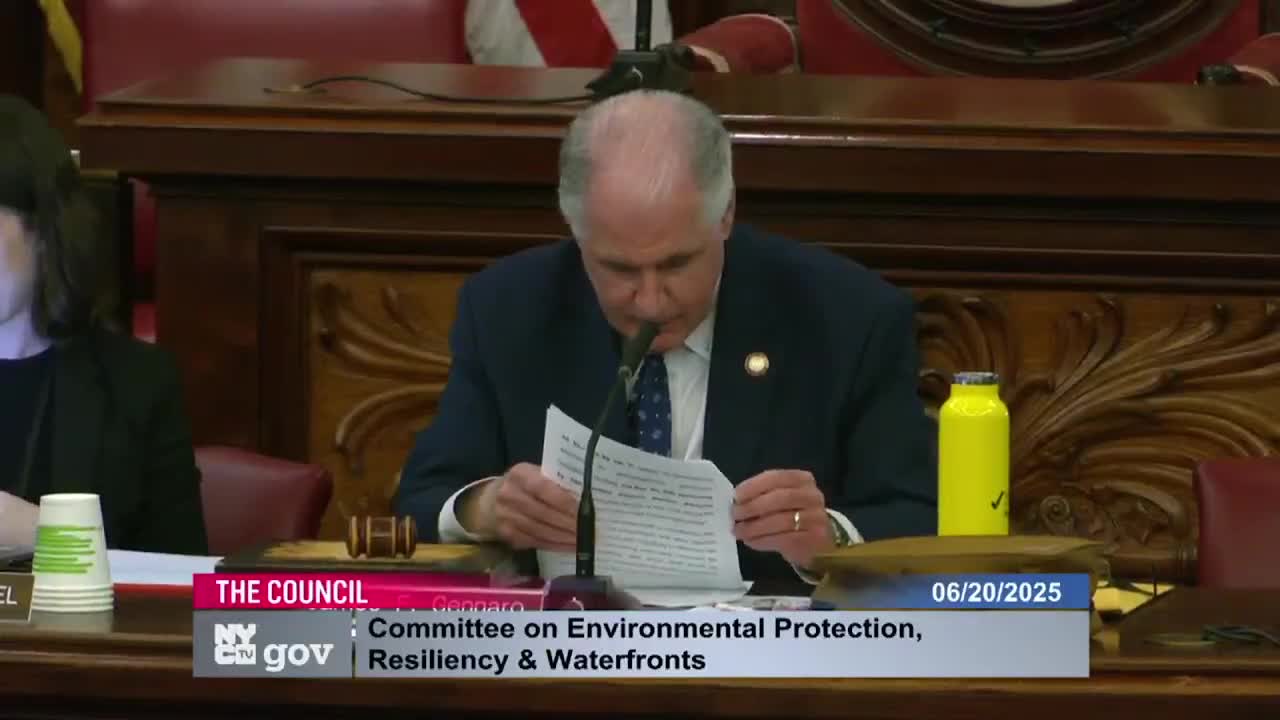
Summary
A pre‑considered introduction would allow stormwater construction permits to be issued before recording maintenance easements and make other process changes intended to shorten review time. DEP and developers said the unified stormwater rule is essential but current permit review can take seven to nine months and requires process improvements.
The committee heard a pre‑considered introduction to streamline the stormwater construction and maintenance permitting program (often referenced as the unified stormwater rule, SWIP). The change would allow applicants to obtain a stormwater construction permit before executing and recording a maintenance easement; the maintenance easement would remain a condition for receiving a stormwater maintenance permit.
Angela Licata, deputy commissioner for sustainability at the Department of Environmental Protection (DEP), told the committee the pre‑considered bill “would make 2 straightforward changes to improve the stormwater management permitting process and strengthen DEP’s enforcement of water pollution controls.” DEP detailed the history and purpose of the program: the agency launched the stormwater permitting program in 2019 to meet the MS4 permit requirements from New York State and later expanded it in 2022 to achieve unified stormwater rules that apply across combined and separate sewer areas.
Nut graf: DEP, industry and advocacy groups told the council that the unified rule is essential to control runoff and reduce combined sewer overflows, but the permitting process has “growing pains.” DEP said typical current review times are roughly seven to nine months and described process reforms including a one‑pass erosion and sediment control review and greater emphasis on field inspections.
Industry representatives said the bill is an important step. Robert Altman of the Queens and Bronx Building Association said the intro “represents an excellent first step in addressing everyone’s concern about the length of time to get approvals on stormwater pollution prevention plans.” The SWIM Coalition urged adequate DEP staffing and recommended permit fees be used to hire staff to administer the program; Michelle Lutke, program manager for SWIM, said “the unified stormwater rule is a strong defense against future flooding and must be preserved.”
DEP said it has invested more than $1,400,000,000 in green infrastructure since 2011 and noted regulatory thresholds changed (the qualifying soil disturbance threshold was lowered from 1 acre to 20,000 square feet) to capture more typical redevelopment sites in the city. Licata said inspection and enforcement — bolstered by increased penalties for water pollution control code violations — are central to protecting water quality while streamlining permitting.
Ending: The committee took testimony and asked follow‑ups but recorded no vote. DEP and stakeholders signaled willingness to collaborate on regulatory drafting and process improvements.