Get Full Government Meeting Transcripts, Videos, & Alerts Forever!
Get email alerts on the Property Tax Budget topic
No spam. Unsubscribe anytime.
Ivins officials outline budget shortfall and weigh property-tax increase to fund services
Summary
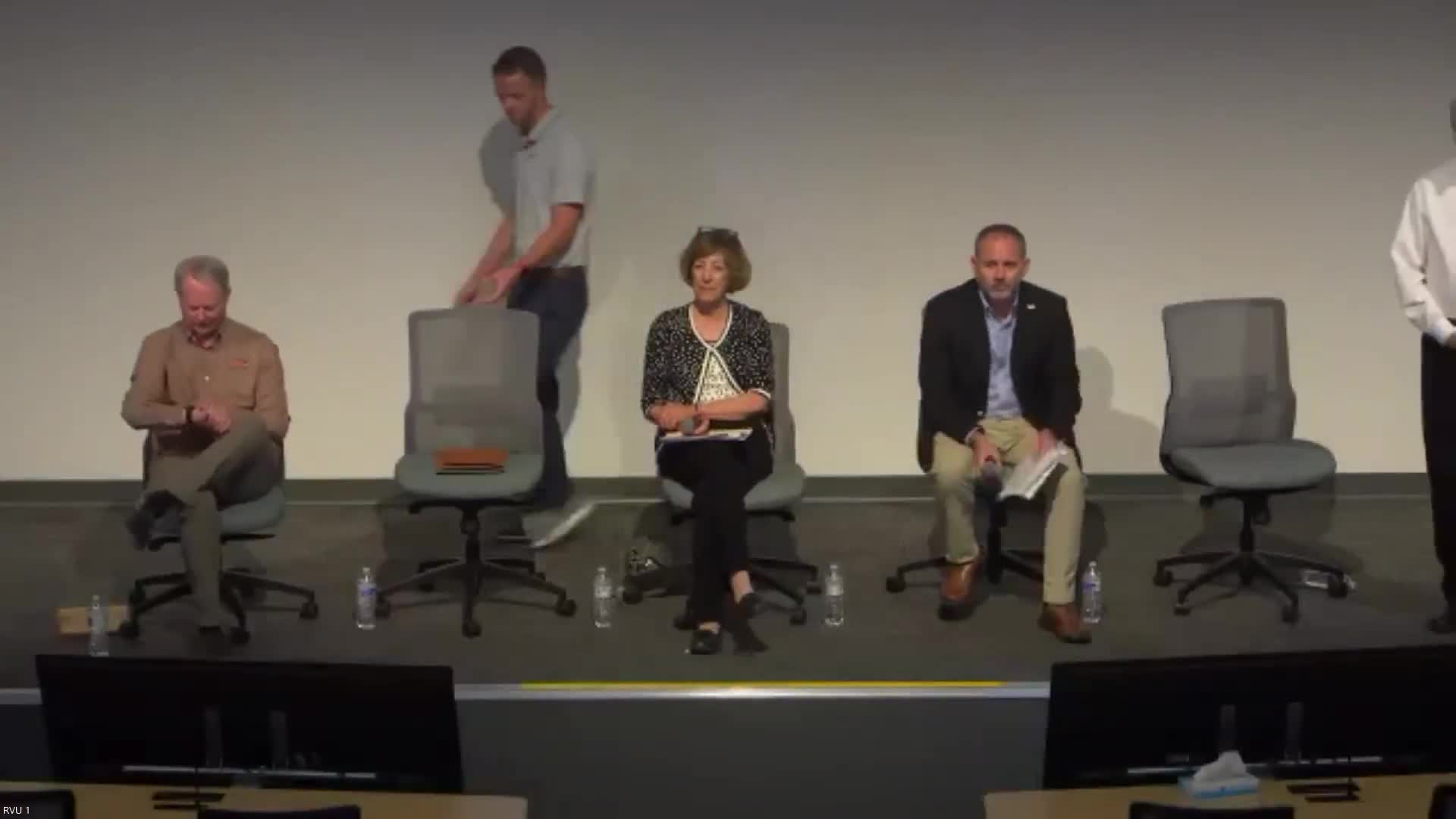
Ivins city leaders and the Washington County clerk‑auditor laid out the mechanics of property tax and the city’s budget shortfall at a public forum, then answered residents’ questions about timelines, possible tax increases and revenue from nearby resort development.
Ivins city leaders and the Washington County clerk‑auditor laid out the mechanics of property tax and the city’s budget shortfall at a public forum, then answered residents’ questions about timelines, possible tax increases and revenue from nearby resort development.
At the meeting, Washington County Clerk‑Auditor Ryan Sullivan explained how the assessor sets property market values each Jan. 1 and how the county produces certified tax rates; Ivins Finance Director Kate Visser and Council member Mike Scott reviewed the city’s finances and three scenarios for a property‑tax increase to cover operating and capital needs.
Sullivan said the system is designed so entities collect roughly the same operating revenue year to year unless they go through a formal truth‑in‑taxation process. “I am not an advocate for raising taxes. I’m just gonna talk about how the process works,” he told the audience. He described the valuation and appeals process, the importance of the July evaluation notice (the green paper mailed to owners) and the role of “new growth” — added taxable value from newly built homes or commercial property — in increasing overall revenue automatically.
Why this matters: Ivins has not adjusted its municipal levy in more than a decade, council and staff said, while costs and expectations for service have increased. Officials presented three illustrative revenue targets: about $540,000 (covers basic operations in 2026), about $860,000 (covers operations and identified capital needs for the next five years and rebuilds reserves) and about $1,350,000 (the amount council members said would fully offset inflation since 2010). Mike Scott summarized his view: “I think the middle road of about a $860,000 increase is appropriate.”
Most important details - How tax bills are built: county appraisers set market values on Jan. 1; the assessor issues valuation notices in July; certified tax rates are adjusted so an entity generally collects the same revenue as the prior year plus revenue from new growth unless it pursues truth‑in‑taxation. Sullivan said homeowners should check the July notice for property type (primary residence vs. nonprimary) and market value. - Deadlines and relief: Sullivan said owners have until Sept. 15 to correct a property’s classification as a primary residence for that tax year; Visser said the county’s property‑tax relief application deadline is Sept. 1. Residents were directed to the county auditor’s webpage for relief information. - Example and scale: Sullivan gave a 20‑year example: a house with an assessed market value of $458,900 in 2006 and $804,800 in 2025 saw Ivins’ municipal rate fall about 38%, producing a roughly $31.50 increase in the city portion of tax paid by that property over 20 years. That example was used to show that rising values don’t necessarily mean large revenue gains for the city unless the city opts into additional levy revenue. - Budget drivers: Visser said the city has become increasingly dependent on interest and one‑time revenues in recent years, and that operating costs have risen because of converting volunteer fire/EMS to professional service, separate city manager and city attorney roles, added staffing requests and general inflation. Visser said the council will decide a cap on any proposed levy increase at its next meeting.
What officials proposed and discussed - Staffing and services: The draft budget under discussion lists five potential new hires the city would fund if it raises revenue: two parks workers, one animal control officer, one city planner and one storm‑drain coordinator. Visser said two parks hires would move the city closer to the national standard of one park employee per 13 acres (Ivins was described as roughly 16 acres per employee). Officials said animal control received more than 800 calls last year and staff reductions had stretched service. - Financial scenarios: Scott said a $540,000 increase would cover basic operations for 2026 but not rebuild reserves or fully fund capital projects. An $860,000 increase would cover identified capital needs over five years and rebuild reserves to a target (roughly four months of operating costs). A $1.35 million increase, Scott said, would “fully adjust for inflation since 2010.” Scott acknowledged the figures are choices for the council, not final actions. - Black Desert and other development: Officials said Ivins will receive property‑tax revenue from new developments when parcels are built out, but projected sales and transient‑room tax (TRT) revenue from the Black Desert resort has lagged earlier forecasts because construction and occupancy are incomplete. Staff said the city charges a 1% TRT (city receives the full 1%); sales/use tax is 1% but half of that is guaranteed to the city and half is distributed from a state pool based on population. The council discussed a possible resort‑community sales tax (up to 1.6%) but noted eligibility and thresholds apply.
Public questions and clarifications - Bonds and ballots: Sullivan said general‑obligation bonds must go to voters; a recent state law also allows some revenue bonds to be petitioned onto ballots with sufficient signatures. - Assessment appeals: Residents may appeal market value and receive a hearing; Sullivan advised homeowners to check the July valuation notice and appeal if valuation is inequitable. - Property classification: Sullivan said if a property is classified as “nonprimary improved” but is the owner’s primary residence, correcting that status before the deadline is critical because the primary‑residence exemption (45%) substantially lowers taxable value. - Projected timing: Visser and council members said the next concrete step is for the city council to set a cap on any proposed increase at its next meeting (Visser said “tomorrow night” during the forum) and that a public hearing on specifics will follow (staff mentioned a September meeting to discuss mandates and affordable housing). Officials encouraged residents to attend work sessions and council meetings or to request budget materials online.
Quotes from officials and residents (verbatim) - Ryan Sullivan, Washington County clerk‑auditor: “I am not an advocate for raising taxes. I’m just gonna talk about how the process works.” - Mike Scott, Ivins City Council: “I think the middle road of about a $860,000 increase is appropriate.” - Kate Visser, Ivins finance director: “If you don’t get all of your questions answered tonight, please swing by city hall or shoot me an email.”
Ending The council has not taken a formal vote. Officials said the immediate next steps are for council to decide a cap on any proposed levy increase at its next meeting and to hold a public hearing before finalizing a rate. Residents were urged to check Ivins’ online budget materials, the county auditor’s property‑tax relief page and the July valuation notice mailed to owners if they want to confirm classification and valuation ahead of appeal deadlines.