
Dr. Virginia Kane warns of Medicaid cuts, urges prevention and vaccinations; public-health staff outline local programs
Get AI-powered insights, summaries, and transcripts
Subscribe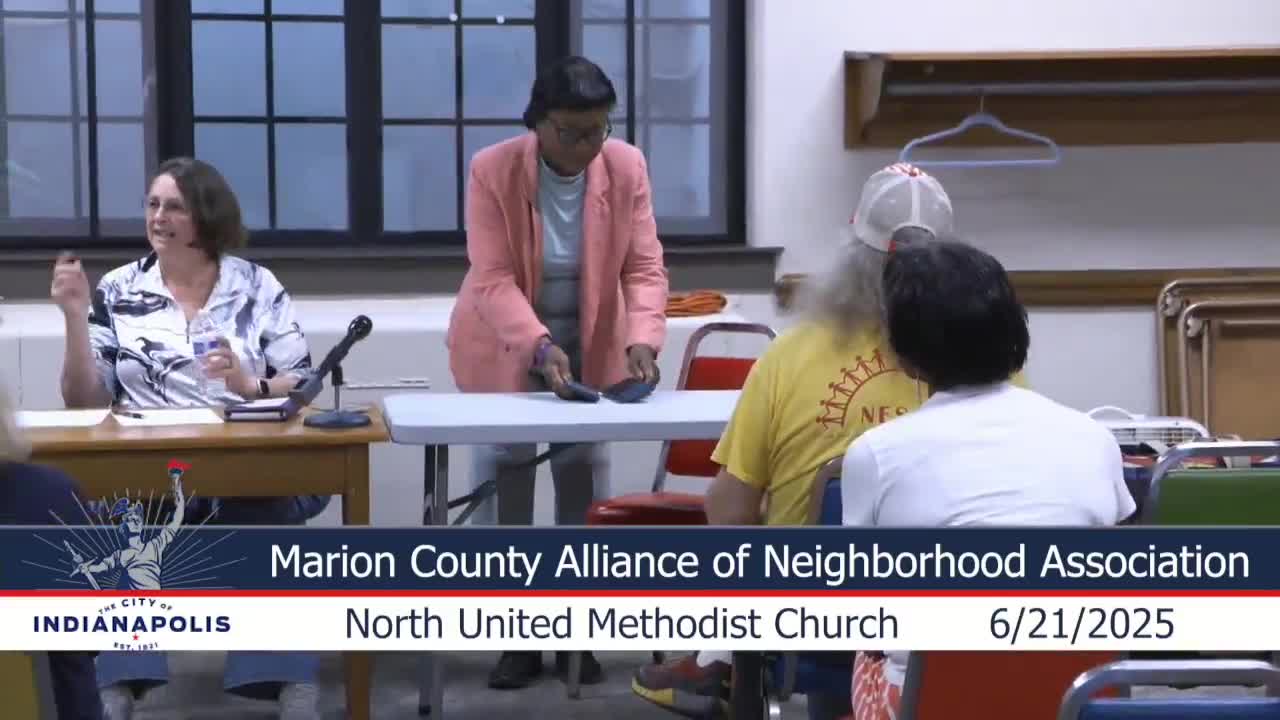
Summary
Dr. Virginia Kane gave a public-health briefing that warned of federal proposals to cut Medicaid funding, described potential impacts on hospitals and urged prevention and immunization; Marion County Public Health staff summarized local Healthy Homes, lead, asthma and bed-bug programs.
Dr. Virginia Kane, a public-health physician and guest speaker at the Marion County Alliance of Neighborhood Associations meeting on an unspecified date, warned that proposed federal budget changes and tariffs could sharply increase Indiana’s Medicaid costs and impair local health services.
Kane described a recent $1,000,000,000 Medicaid shortfall for Indiana and said tariffs and other pressures could increase the state’s Medicaid bill to roughly $2,300,000,000. She said congressional proposals under discussion could require states to make deep cuts and that one cited proposal would amount to an $880,000,000,000 reduction over a decade; she cautioned those figures as the estimates discussed at the meeting.
"We have to reserve our Medicaid benefits for our constituents. It's gonna save money. Economically, it's gonna save lives," Kane said, stressing prevention and screening as ways to reduce acute-care spending. She told the group that most Medicaid dollars are spent in acute care and argued earlier screening and immunization would reduce hospitalizations. Kane used pneumococcal vaccination as an example, saying a shot that lasts several years can prevent severe bacterial pneumonia and expensive intensive-care stays.
Kane also addressed immunization and infectious-disease preparedness, noting recent measles activity in multiple states and that Indiana had eight confirmed cases in a recent outbreak; she said rapid contact tracing and vaccination helped contain those local cases. She urged residents to consult trusted medical providers and to get recommended vaccines to protect children and immunocompromised community members.
Marion County Public Health Department administrator Kyler Dawson summarized the department’s Healthy Homes services, including lead inspections, an asthma program that works with referred families, a senior-care program that identifies household hazards, and bed-bug assistance for affected households. Dawson said lead inspections are free and that the public clinic offers blood-lead testing weekly on Thursdays; he provided a department contact number, (317) 221-2000.
Kane and Dawson urged residents to check on seniors, use cooling centers during the heat advisory, and contact public-health authorities for testing and referrals. Kane closed by asking constituents to tell elected officials that prevention and public-health funding matter.