Get Full Government Meeting Transcripts, Videos, & Alerts Forever!
Get email alerts on the Un Reform topic
No spam. Unsubscribe anytime.
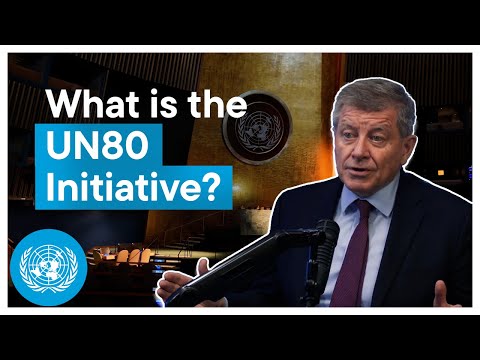
Officials outline UN80 reform push to trim mandates, strengthen multilateral impact
Summary
Speakers described UN80 as an initiative to review United Nations mandates, institutional structure and the 2025 program budget to reduce duplication and improve effectiveness without sacrificing development or human-rights work.
UN representatives described UN80 as an effort to sharpen the United Nations’ ability to respond to global challenges by reviewing mandates, institutional structures and budgetary priorities.
"UN 80 is designed to improve the impact and effect of multilateralism in the UN. We've had many political challenges going back a few years now, the financial constraints we're operating on, but also a certain questioning of, does multilateralism serve its purpose? The c 1 80 initiative provides the opportunity to subject ourselves to detailed scrutiny. This is not simply a cost cutting, downsizing effort. The objective is to make the UN better, to make it stronger, to enable us to respond effectively to the multiple challenges that are out there," Speaker 1, a UN official, said.
The officials said the review will look for overlap across the system and assess mandates and structures that have accumulated over roughly eight decades. "If you look at our program budget for 2025, it's based on no less than 4,000 different mandates. Let's take a look at them. Let's see where there may be duplication and find redundancies," Speaker 1 said. The statement framed the exercise as aimed at efficiencies within current institutional arrangements and at examining the substance of UN mandates.
One speaker cautioned that the effort should not weaken the UN’s development or human-rights work. "No sacrifice of development and human rights to what is indeed an important core mission of the UN, which is peace and security," Speaker 2, a UN official, said.
Officials noted limits and levers of authority. They said the secretary-general has some independent decision-making authority but that member states will determine the overall direction. Speaker 1 pointed to a recently adopted General Assembly initiative, described in the meeting as "a pact for the future," as a blueprint for reform priorities. "It was no small thing that the UN system was able to adopt in the general assembly last September, a pack for the future. It gives us a great blueprint of the things that we need to be focusing on, the types of substance that can make us a forward looking system," Speaker 1 said.
Speakers said the success of UN80 will be judged by the United Nations' measurable impact for the people it serves. "I think UNAT clicks into that. The success of UN80 will be judged by the impact that the United Nations is able to have for our end beneficiaries, the people who need the support of the UN," Speaker 1 said.
No formal votes or binding decisions were recorded in the provided transcript excerpt. The remarks in the excerpt focused on the goals and scope of the UN80 review and on identifying duplicative mandates and institutional complexity.