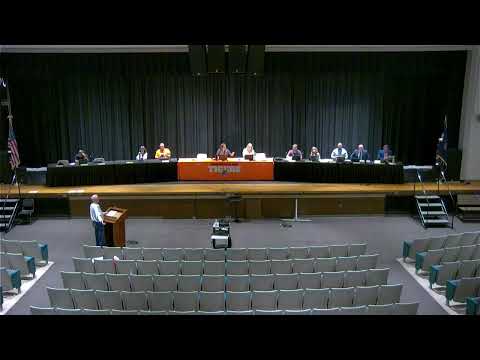
Tunkhannock Area School Board approves 3.984-mill tax increase amid budget gap and cyber-charter concerns
Loading...
Summary
The Tunkhannock Area School District Board of Directors voted to approve a final 2025-26 budget that includes a 3.984-mill tax increase, a move school officials said preserves current programs while using reserves to cover a roughly $900,000 shortfall.
The Tunkhannock Area School District Board of Directors voted to approve a final 2025-26 budget that includes a 3.984-mill tax increase, a move school officials said preserves current programs while using reserves to cover a roughly $900,000 shortfall.
Superintendent Paul Winseck told the board the district expects its fund balance to absorb remaining deficit pressure if the board adopts the increase. “Our current fund balance is sitting about $14,000,000,” Winseck said, and he described cyber charter costs and rising benefit obligations as the largest drivers of the budget gap.
Why it matters: board members stressed the vote responds to a combination of fixed cost increases (health care, retirement contributions and contractual salary steps), declining local tax base revenue and large payments to cyber charter schools. Officials said without the proposed increase the district would either have to cut programs, increase class sizes, or use substantially more of the fund balance.
Key figures provided by the superintendent and discussed by the board included: - Proposed tax increase: 3.984 mills (presented as roughly a 4.8% rate increase, reported to yield just under $1.2 million in additional revenue). - Expected remaining deficit after that increase: about $900,000. - Fund balance / reserve: about $14,000,000. - Health-care increase for next year: about $695,954 (described in discussion as “about $700,000”). - State retirement (PCERS) increase for the district: roughly $250,000 year-over-year (districtwide contributions cited as about $7,500,000 total sent to the system). - Cyber charter payments budgeted for next fiscal year: about $3,200,000 (described by staff as roughly 11–13% of the district’s tax base). Winseck said those payments averaged roughly $24,600–$28,272 per district student when included in the district cost calculations, and that a district’s in-house cyber program costs about $2,500 per student. - Per‑student amounts cited for cyber charters in the discussion: about $17,500 per general-education student sent to a cyber charter and about $38,000 for students identified as special‑education by some cyber providers.
On cyber charter funding Winseck said the current arrangement is “a gut punch.” He called it “absolutely ridiculous” that some cyber charters bill districts many times the district’s in-house cost and urged listeners to contact state legislators in support of “common sense cyber charter reform.” He also said, “It’s infuriating that they’re sitting on $600,000,000 of taxpayer money.”
Board members exchanged questions and warnings about tradeoffs if the board did not raise revenue. Several members said programs, extracurriculars and class sizes could be affected if revenue is not increased; others emphasized the need to protect the fund balance to meet future capital needs for aging buildings. One board member noted the district has eliminated dozens of staff positions through attrition over recent years and cautioned that more cuts would reduce services.
Votes at a glance (selected agenda actions and outcomes): - Approval of final 2025-26 budget (3.984 mills): Passed by roll call (Yes: Doctor O'Sharaq; Doctor Prabola; Mister Burke; Missus Eckard; Missus Goble; Mister Farr; Missus Arnold. No: Mister Franco; Mister Greenlee). The superintendent characterized the adopted budget as preserving current programs while still leaving an approximate $900,000 gap to be covered from reserves. - Homestead/Farmstead resolution tied to the 3.984-mill action: Approved by roll call (unanimous among those voting). - Pause on proposed solar project (building & grounds recommendation): Board approved a three-month pause and to revisit the project in September. - Increase in contractor bussing compensation and related contract adjustments: Approved by roll call (motion passed; roll call recorded multiple yes votes and two no votes). The board and staff said contractors will be paid at full capacity with a 10% adjustment to the cost index and that cameras will be managed and maintained as described in the agenda materials. - Bus and van contract payments and contract renewals: Approved as presented. - Intergovernmental agreement with LIU 18 for 2025-26: Approved. - Insurance coverage for 2025-26 with Assured Partners: Approved. - MOUs for facility use (Hands of Wyoming County, Luzerne County Head Start, LIU 18/Lighthouse Academy at the former Mahopany): Approved. - AP U.S. History textbook purchase: Approved (textbooks described as required AP materials). - Nursing and physician services contracts (bids/agreements): Approved (includes on-site and game‑rate physician services and a health-care staffing agreement for school nursing services). - Renewal of ParentSquare (Remind) messaging service for 2025-26: Approved at a cost noted in the agenda materials. - Contract with Children’s Service Center of Wyoming Valley for drug/alcohol prevention and student assistant specialist services: Approved. - Budget transfer for the high school ($16,000): Approved. - Flood insurance proposal for the high school and athletic fields (3,000,000 coverage at a quoted premium of approximately $90,965 with a $50,000 deductible): Motion to table passed; board asked staff and the insurance broker for additional details (including whether ordinary drainage backups would be covered and whether riders or other policies already provide protection). Staff said this was a non-budgeted item that had arrived the previous day and that further review was needed.
Discussion and next steps: The superintendent and multiple board members urged residents concerned about cyber charter funding to contact state legislators. Staff said the district has trimmed spending, used attrition rather than layoffs when possible, and will continue reviewing positions and programs as enrollment and revenues change. The board also asked staff to bring the gas-cap (fuel-cost cap for contractors) question back to the next meeting for discussion.
The board’s vote to adopt the 3.984-mill increase will be reflected in the district’s advertised rates and the homestead/farmstead action the board approved ties the district’s option among available Act 1 options to that millage level. The board scheduled a three-month revisit of the solar project and tabled the flood‑insurance proposal pending additional information.
Sources: Meeting transcript of the Tunkhannock Area School District board meeting (superintendent presentation and roll-call votes), agenda materials referenced in the meeting.