Tunkhannock Area SD committee recommends three-month pause on proposed district solar project amid federal tax-credit uncertainty
Loading...
Summary
Committee members recommended pausing a multi-site solar installation decision for three months while awaiting clarity on federal direct-pay tax credits. The district has received roughly $1.2 million in state grant awards and faces multi‑million-dollar project costs and financing choices.
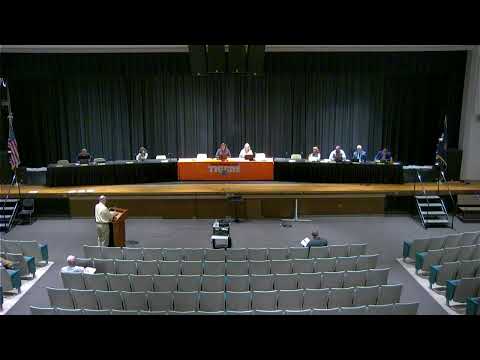
At a committee meeting, Tunkhannock Area School District officials recommended pausing a final decision on a proposed districtwide solar project for three months while federal tax-credit policy remains uncertain.
Superintendent Paul Doherty said the district has about $1.2 million in state grant awards and has been pursuing a multi-site solar installation for more than two years, but the "unknown around the federal credit is what really concerns me at this point." He told the committee the district is seeking direction from the board before committing capital or executing long-term contracts.
The discussion centered on project scope, financing scenarios and timing. The district applied for five project grants through the Pennsylvania Commonwealth Financing Authority; the grant awards presented at the meeting were: Primary Center $300,000, Intermediate Center $300,000, Mahoopany $133,605, High School $300,000 and District Office $142,289 (totaling about $1.2 million). Cost estimates for the full program ranged in the discussion from roughly $10 million to $13 million, with other independent reviews cited as high as about $23.4 million depending on market conditions and timing.
Doherty and outside advisers outlined projected financing outcomes if the federal direct-pay tax credits were not available. The district's financial adviser modeled a roughly $770,000 annual debt-service payment without the federal credit; under that scenario, Doherty said the district would see only minimal net present value savings in the first decade and would not realize significant cumulative savings until year 18. He summarized the trade-offs: "If there was not a federal credit and we decided to move ahead with 0 down, we'd be looking at about 18 years before we would see significant savings." He added that larger up-front contributions (for example, $1 million or $4 million) shorten that time to 15 years or about eight years, respectively.
Private-sector presenters described technical and market factors. Seth Berry of Solar Renewable Energy said each school project could be treated independently and that the installations would tie into the electrical rooms at each facility to reduce on-site electricity costs. Doug Nitek of Greenworks Development emphasized the long-term nature of the decision and urged the board to weigh energy‑inflation risk: "This is really a 40-year decision, not a decision for today," he told the committee, noting projected increases in U.S. electricity demand and price volatility.
The companies also addressed procurement and tax-credit strategy. The presenters and district counsel discussed using U.S.-made modules to qualify for an additional 10% domestic content incentive and a broader mix of credits under current federal proposals. Developers described a "safe harbor" purchasing strategy under discussion industry-wide — pre-purchasing panels to preserve eligibility for credits if Congress or the IRS requires demonstrable project steps — and said their businesses are placing large orders to secure that position. The presenters said they and the district's energy counsel were still awaiting definitive guidance on whether the district could rely on a 5% safe‑harbor payment to qualify for credits; the law firm representing the district has promised a memo but had not yet provided a binding answer.
Committee members pressed for clarity on specific sites and arrangements. Doherty said the Primary Center would include both roof- and ground-mounted arrays; the Intermediate Center, district office and high school would include roof arrays (the high school also includes ground), while Mahoopany currently has a small array sized to offset that building's use and could be expanded later as a lease/ground-mount project that might generate lease revenue. Seth Berry and Greenworks confirmed each site can be treated separately and that the current Mahoopany installation was designed mainly to offset the building's electricity use rather than to function as a large leased ground-mount farm at this time.
Officials noted permitting and property issues also affect timing. The high-school installation was initially declined by zoning because of a sewer easement; district staff are awaiting a survey and plan revisions to resubmit. Superintendent Doherty said he intends to accept the Commonwealth Financing Authority grant awards to preserve the funding option even if the district delays construction; the district is seeking the state's guidance on how long it can hold the grant funds before starting construction.
After discussion, the committee recommended pausing formal execution and major contract commitments for approximately three months while the federal tax-credit situation and related legal guidance clarify. Committee members present indicated support for that recommendation; several directors voiced that they preferred to "put it on ice" until Congress and the IRS produce clearer direction. The superintendent and advisers said the next formal steps, if the board opts to proceed later, would include executing power‑purchase/financing agreements and beginning construction and permitting work.
The committee did not take a binding board vote on project execution at the meeting; a recommendation to pause will be forwarded to the full board for consideration. The district's advisers will continue to pursue written legal opinions on safe harbor and direct-pay eligibility and will report back to the board when more definitive federal guidance or tax-law memoranda are available.