Get Full Government Meeting Transcripts, Videos, & Alerts Forever!
Get email alerts on the City Budget topic
No spam. Unsubscribe anytime.
Committee recommends 2026 Fayette-area operating budget with child-care rebate discussion added
Summary
Overland Park's Finance, Administration & Economic Development Committee reviewed the proposed 2026 operating budget and related funds for the Fayette goal area, approved a recommendation to the full council with two strategic-goal additions, and set a path to study expanding the property tax rebate pilot to in-home day-care operators.
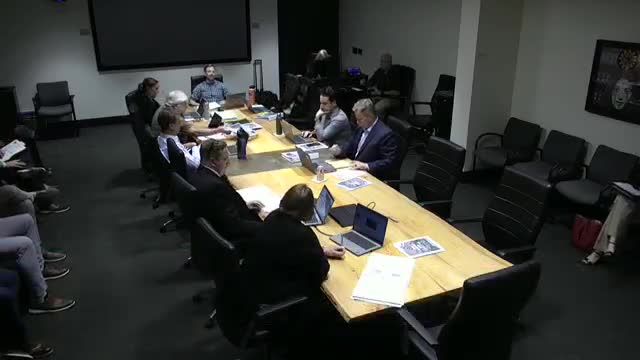
The Finance, Administration & Economic Development Committee on June 18 recommended that the Committee of the Whole forward the proposed 2026 operating budget, the 2026-30 capital improvements program and maintenance program, and strategic goals to the full City Council, with an amendment adding two strategic goals related to housing incentives and financial tools.
The committee heard a staff presentation summarizing the Fayette goal-area portion of the 2026 plan, which covers the city manager's office and the divisions that roll into what staff called the Fayette area: information technology, law, municipal court, finance and human resources. Staff said the city's total 2026 budget is about $354,000,000, a 6.5% increase over 2025, driven in part by a projected rise in beginning fund balance to about $120,500,000. The general fund remains the city's primary operating fund, accounting for about 70% of the operating budget.
Budget details presented by staff included: - General fund operating totals and drivers: sales tax (about 46% of current revenues) and property tax (about 35% of current revenues); staff projected sales-tax growth of 1.2% and property-tax growth of 3.7% for 2026. - Public safety consumes a majority of the general fund operating budget (roughly 53% of the general fund operating budget). - Bond and interest fund: 2026 budget $18,500,000 (about a 5% increase), with an assumed transfer of $13,300,000 from the general fund and $4,900,000 from the transient guest tax fund; staff noted a $500,000 contingency for a possible 2026 bond issue. - Economic-development grants and contracts funded from the general fund, including the Overland Park Economic Development Council ($635,000, a 6% increase), Downtown Overland Park Partnership ($100,000, an 11% increase), the Overland Park Historical Society ($100,000, no change), and a one-time $200,000 express-bus transit grant tied to World Cup travel. - Opioid settlement fund: total budget $1,700,000 for 2026 (a 31% increase from 2025 driven by a higher beginning balance); staff said the money must be used for prevention, treatment or mitigation and listed planned expenditures such as $146,000 for municipal court therapeutic treatment and $150,000 to Union Community Services. - Special alcohol-control fund: total budget $5,860,000 for 2026; staff described expected liquor-by-the-drink revenue of about $2,000,000 and an allocation of roughly $1,300,000 to the Drug and Alcoholism Council and around $1,000,000 for police operations, including a school resource officer and a new substance-abuse case manager split with the opioid fund. - Transient guest tax (TGT) funds: staff projected 2026 collections of about $12,400,000 (a 5% increase) and outlined transfers to TGT capital and operating funds for convention-center debt service, reserves and convention/visitors bureau contracts.
Staff also summarized proposed department-level changes within Fayette: two new positions (a deputy facilities engineer and a prosecutor in the law department), additional software maintenance funding in IT, and modest expansions for the property tax rebate pilot and emergency management certification and supplies. On personnel, staff said Fayette comprises about 16% of the city's headcount, much lower than public safety.
Property-tax rebate pilot and in-home day-care idea Council Member Matt Trishan (represented to the committee by another member) has been leading committee conversations about child care and asked staff and the committee to consider expanding the city's pilot property tax rebate program to include licensed in-home day-care operators. Speakers said in-home day-care counts in the city fell from 214 in 2010 to about 90 today and that a rebate could help stabilize those small businesses. Staff said the rebate pilot first-round applications were approaching 115 submitted (with roughly 109 more in progress) and that the program's average rebate figure used in early estimates was about $624 (staff said a full take of 90 in-home day cares at that rebate would total about $56,160). The committee discussed scheduling a program update once first-round application data are in (staff suggested August or an end-of-year update after a possible second round) and agreed not to finalize an expansion until that information is reviewed; several members supported adding money later if data demonstrate demand.
Strategic goals amendment The committee voted to amend the staff-proposed strategic goals to add two actions drawn from last year's list: "evaluate options for incentivizing the development of diverse and attainable housing options" and "support various types of financial tools to guide investment in strategic areas." Committee members said those topics fall naturally to this committee because of its pipeline and financial-policy role.
Committee action Committee members placed a motion on the table recommending the operating, capital and strategic goals as presented and then amended that motion to add the two strategic-goal items above. The committee approved the amended motion and passed it on to the Committee of the Whole for consideration (motion as presented: "recommend the Committee of the Whole approval of proposed 2026 operating budget, 2026-30 capital improvement program and maintenance program and strategic goals as presented"; amendment text recorded in committee minutes). Staff and committee members agreed to return with additional program data and implementation refinements (notably the property-tax rebate pilot) as requested by the committee.
Why it matters The Fayette-area budget and associated special funds contain the city's administrative, IT and facilities spending and a set of targeted economic-development commitments (partner grants, convention center and TGT supported projects) that shape services and downtown investments. Committee members emphasized the need to monitor limited-source funds (opioid settlement, special alcohol-control funds) carefully and asked staff to return with real data from the property-tax rebate pilot before expanding eligibility.
What comes next Staff will incorporate the committee's amendment into the materials for the Committee of the Whole and then the full council. The committee also requested an update on the property-tax rebate pilot after the first application round closes; committee members said they would consider an augmentation only after reviewing the actual first-round results and a discussion of policy design.