Get Full Government Meeting Transcripts, Videos, & Alerts Forever!
Get email alerts on the Open Meetings Brown Act topic
No spam. Unsubscribe anytime.
Assistant city attorney briefs Planning Commission on Brown Act requirements
Summary
Assistant City Attorney Craig Hardwick gave a 40-minute workshop on the Ralph M. Brown Act, explaining open‑meeting rules, limits on private communications among commissioners, closed‑session requirements and rules for public comment and teleconferencing.
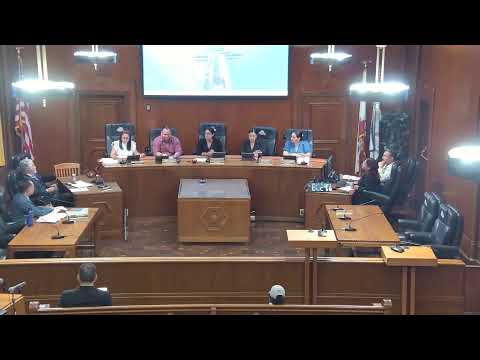
Craig Hardwick, the city’s assistant city attorney, told the South Gate Planning Commission on June 18 that the Ralph M. Brown Act requires most meetings of a legislative body to be open to the public and described the statute’s core principles and common pitfalls.
Hardwick opened the commission’s workshop by quoting the Brown Act’s opening language and stressing its purpose: “The people of this state do not yield their sovereignty to the agencies which serve them,” he said, adding that the law limits officials’ ability to withhold information from the public.
The presentation reviewed the Act’s definitions and practical effects. Hardwick said a “meeting” occurs whenever a majority of commissioners congregate to discuss public business, even outside the chambers, and that commissioners must avoid serial, private communications that amount to collective deliberation. He described permitted closed‑session subjects—personnel, litigation, real‑property negotiation and labor—and explained that actions taken in closed session must be briefly reported out to the public on return to open session.
Hardwick outlined public‑comment rules the commission may use, including reasonable time limits and the Brown Act’s requirement to provide twice the time for a speaker who needs a non‑simultaneous interpreter. He warned against disruptive behavior and said the chair has authority, after warning, to remove individuals who prevent the body from doing its business.
On remote participation, Hardwick said the city now primarily uses one‑way webcasting and does not routinely permit teleconferencing participation as during the pandemic; if a one‑way webcast fails, the meeting may continue in many circumstances so long as the public is not denied the ability to hear the proceedings. He also cautioned that internet‑based social media may not be used by a majority of the body to discuss matters of public business; even emojis or “thumbs up” reactions by multiple members can create a Brown Act violation.
Commissioners asked about the practical effects of teleconferencing failures, remote participation for medical absences and how to handle decorum in the chambers; Hardwick answered each item and encouraged commissioners to forward further questions by email.
Hardwick closed by reiterating the legal risk for knowing concealment of public information under the Brown Act: a misdemeanor, though he said prosecutions are rare.
The workshop was informational; the commission did not take a formal action on the Brown Act presentation.