Get Full Government Meeting Transcripts, Videos, & Alerts Forever!
Get email alerts on the Abc Store Operations topic
No spam. Unsubscribe anytime.
Woodfin ABC Board outlines sales, staffing and marketing challenges during council meeting
Summary
The Woodfin ABC Board presented year-to-date sales, distributions and staffing challenges to the Town Council and discussed steps to boost store sales and local awareness of the town revenue it generates.
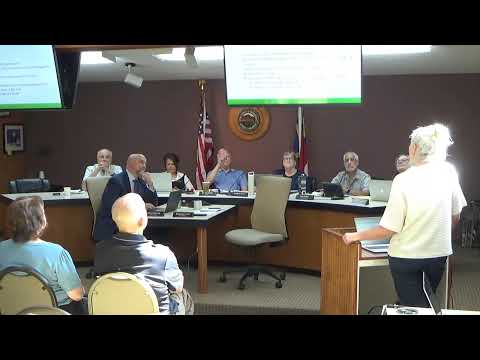
The Woodfin ABC Board presented its year-to-date financials and operational challenges to the Town of Woodfin Council during the June 17 meeting, and board members discussed steps to raise store visibility, improve allocations and explore modest store refreshes.
The presentation, given inside the council meeting by members of the ABC board, summarized sales through May of $2.277 million year-to-date and showed a decline versus the prior fiscal period. Board members said retail liquor sales were down modestly while mixed-beverage-related sales had fallen more—one local restaurant began buying from a neighboring town. The board reported distributions year-to-date of $60,000 to the town, $7,500 to alcohol education/rehab, and $4,500 to law enforcement; net income for the ABC store was slightly under $9,000 for the year.
Board members told council they face two main operational limits: statutory restrictions on promotion and marketing, and a staffing shortage that has reduced full-time roles and pushed some work to part-time employees. The board said turnover and the loss of a full-time employee have pressured payroll and service capacity; they reported a posted starting wage of about $18 an hour for new hires.
Council members and the board discussed allocation and ordering processes with the North Carolina ABC Commission. The board described two allocation methods the commission uses for limited-distribution products: a limited distribution (first-come-first-served) allotment for rare items and an equitable distribution based on prior-year sales volume. Board members said higher-volume stores in larger jurisdictions receive greater allocations. They also described operational constraints — limited case availability for high-demand bottles and an ordering process that can leave small boards short against bigger buyers.
Board members said they have ordered a small cooler and other modest in-store improvements and suggested a larger store refresh over time. They asked the council to help raise awareness that purchases at the Woodfin store generate revenue for the town. Council members said the town could help with editorial content, posting on the town website and social media, and other education efforts that comply with state rules.
After discussion, the council and the ABC board agreed to a recurring update cadence: ABC board representatives will return to the council to provide a progress update every four months (October, February and June was discussed). Board members said they would work with the store manager on targeted, statutory-compliant education and low-cost store improvements while the board benchmarks operations with nearby stores.
Board members and council also discussed other operational levers: possible ownership of the store building (which can affect overhead), special orders for customers, and ways to encourage local mixed-beverage purchasers to buy from Woodfin. The board said it will continue to benchmark expenses and revenue with similarly sized boards and explore permissible outreach within state limits.
The council did not take formal regulatory action on the presentation; councilors asked the board to return with updates and to provide any materials that the town could lawfully publish to raise local awareness.