Get Full Government Meeting Transcripts, Videos, & Alerts Forever!
Get email alerts on the Public Comment topic
No spam. Unsubscribe anytime.
Parents and former board members criticize trustees over AP course, legal counsel and transparency
Summary
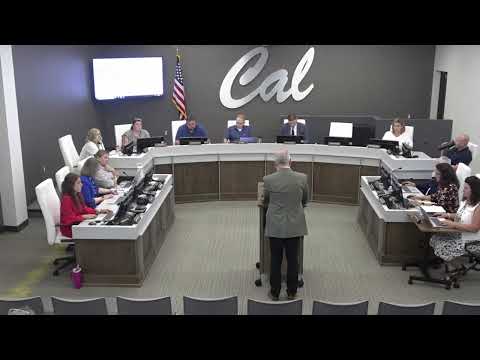
Multiple public commenters at the June 16 Caledonia board meeting urged the board to follow educators' recommendations on curriculum, questioned the board president's dealings with outside counsel and called for less politicization of schools.
Several residents used the board's public-comment period on June 16 to criticize recent board decisions on curriculum, raise transparency concerns about outside legal counsel and urge support for teachers.
James Ernest, a public commenter, criticized the board president’s conduct and alleged that emails obtained via FOIA show months of communications about inviting a law firm into the district. Ernest said, "He has not been transparent with us about these dealings" and recommended the board president resign to avoid a protracted removal process.
Jason Seel, a former board member, said trustees who override staff recommendations were eroding trust. Seel cited board policies by number and argued the superintendent and staff should lead textbook and course recommendations, saying in part that the superintendent "shall recommend to the board such courses of study" and that the superintendent is "responsible for the selection and recommendation of textbooks for board consideration." He said rejecting an Advanced Placement course based on outside reviewers who "never even heard of the subject" disrespected teachers and students.
Erica Mulholland, identifying herself as a parent, said the board should trust licensed educators and not replace an existing law firm with one she described as "known across the state for politicized causes and inefficiency." Mulholland said the board must "keep politics out of school" and urged members to support staff, including during contract negotiations.
Public comments also included calls for a districtwide "bell-to-bell" cell-phone ban for K–12. Jill Thompson, a parent, asked the board to implement a phone-free policy and cited other districts and a recent New York law as examples. Thompson said device-free school days can improve student engagement and mental health and asked the board to extend current building-level policies districtwide.
What the board said or did: the board heard the comments during the public-comment portion of the agenda; no board action on curricula or legal counsel was taken during the meeting. Several speakers referenced board policies by number; staff and trustees did not announce any immediate policy changes during the session.
Why it matters: commenters framed the issues around educator expertise, transparency in legal and policy decisions and student well-being. Several speakers asked the board to prioritize teacher recommendations and to avoid adopting decisions perceived as politically motivated.