Get Full Government Meeting Transcripts, Videos, & Alerts Forever!
Get email alerts on the Budget Finance topic
No spam. Unsubscribe anytime.
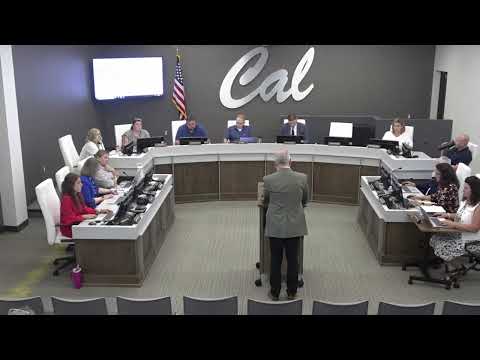
Caledonia board adopts June budget amendment; proposes 2025–26 budget with roughly $400,000 shortfall
Summary
The Caledonia Community Schools Board on June 16 adopted a final 2024–25 budget amendment and reviewed a proposed 2025–26 budget that projects a roughly $400,000 shortfall and relies on uncertain state funding.
The Caledonia Community Schools Board of Education on June 16 adopted a final 2024–25 budget amendment and reviewed a proposed 2025–26 budget that projects a roughly $400,000 deficit.
In a presentation to the board, Mr. Reeves, the district finance presenter, said the district expects "just over $72,000,000 in revenues" and about $72,200,000 in expenses for the current fiscal year, leaving a shortfall of "just over $200,000" and an estimated fund balance of about $11,800,000, or roughly 16.4 percent. The board voted to adopt the June final budget amendment during the meeting.
The district also presented a proposed 2025–26 budget that assumes $71.5 million in revenue and $71.9 million in expenses, which Mr. Reeves described as "just over a $400,000 shortfall" that would leave an ending fund balance reported in the materials at about 11.4 percent (15.9 percent of expenditures under the corrected calculation noted by staff).
Why it matters: the district’s budget depends in part on pending state decisions. Superintendent Dirk told the board the state’s revenue estimating conference projects a 2.1 percent increase in the School Aid Fund for next year, but differences among the governor’s, house and senate proposals leave material uncertainty for local planning.
Key revenue and spending items noted by staff - Transfers in: the district recorded an increase in transfers, including just over $1 million tied to special-education payments flowing through the Kent ISD and higher expected Medicaid revenue, raising estimated revenues about $1.3 million since the December amended budget. - Transfers out/public improvement fund: staff proposed a transfer of $1,100,000 (about 1.5 percent of the general fund) to the public improvement fund to replenish reserves for deferred maintenance and projects not covered by bonds. Reeves said the district plans to pull approximately $1.4 million from that fund this year for renovation of the old administration office space. - Expense variances: support services for instruction decreased by roughly $750,000, largely because of reductions in professional development costs and carryover of grant funds (noted grants: 23G and 31A). Athletics costs rose by about $140,000 for officials and fees. - 2025–26 budget assumptions: the proposed budget uses the governor’s proposed per-pupil increase (a $3.92 per pupil suggestion referenced by staff) and flat enrollment. It assumes contractual step increases for support groups and steps for teachers, administrators and transportation contracts that are expiring, but no general salary scale increase. Health insurance was budgeted with a 5 percent net increase based on January selections, and ancillary benefits were budgeted at 0 percent increase. - Staffing changes included as assumptions: possible savings from up to three teaching retirements (with one likely to be reinstated before school starts), reduction of two administrative positions, the addition of a 0.5 FTE resource-room teacher, a 0.4 FTE multilingual teacher, one school social worker and three part-time paraprofessionals.
State budget context and uncertainty Superintendent Dirk summarized differences among the governor’s, senate and house proposals and warned board members the state budget process remained unsettled. Dirk said the house proposal included a one-time $19.75 per-pupil payment created by rolling up multiple categorical grants and a much larger shift of higher-education costs into the School Aid Fund, moves that could create long-term volatility for K–12 funding. Dirk repeated that the district must adopt a local budget by June 30 but the state’s final decisions may not be resolved until well after that date, leaving local fiscal planning contingent on legislative action.
Board action and next steps The board adopted the June 2024–25 budget amendment and later approved the 2025–26 budget adoption resolution by roll call. Staff told the board the detailed budget documents would be posted to the district website. Because of the continuing state-level uncertainty, staff asked the board to treat the 2025–26 budget as contingent on final state actions and indicated they would return with updates when the legislature finalizes the School Aid Fund amounts.
Ending note: staff emphasized the district’s effort to preserve a multi-percent fund balance while aligning resources to student programming and required contractual obligations. The board’s approvals tonight establish the district’s local plan subject to future state changes.