Get Full Government Meeting Transcripts, Videos, & Alerts Forever!
Get email alerts on the Education Superintendent topic
No spam. Unsubscribe anytime.
Holyoke advisory team narrows recommendations for superintendent, will present summary to school committee July 21
Summary
Members of the Holyoke Community Advisory Team worked from a draft report and a “top 10” worksheet to synthesize recommendations for the school district and qualities sought in a new superintendent. They agreed to finalize a single recommendations list, attach full forum notes as appendices and ask members to attend the July 21 school committee.
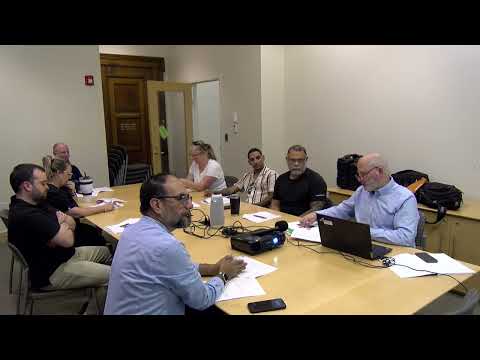
The Holyoke Community Advisory Team (CAT) agreed during a virtual meeting to synthesize the committee's draft report into a concise recommendations list for the school district and to present that summary at the School Committee meeting on July 21.
The decision to prepare a short executive-style summary, accompanied by fuller appendices (survey results, meeting recordings and community forum notes), came after participants reviewed a draft report and a worksheet meant to produce a “top 10–15” recommendations. The meeting included a readout of five report sections — what is working, what needs improvement, strengths of Holyoke public schools, areas for improvement and superintendent qualities sought — and a facilitator-read list of ten recommended priorities for the superintendent and district.
Why it matters: Holyoke is transitioning out of state receivership this summer, and committee members said they wanted a clear, community-grounded set of priorities to hand to the incoming local leadership and the next superintendent. Participants repeatedly identified teacher retention, stronger communications and culturally responsive practices as priorities they want reflected in hiring and district planning.
What the committee heard and prioritized
- The facilitator read a draft “top 10” list for qualities and priorities to ask of the superintendent, which participants approved to be carried forward into the recommendations. The list emphasized treating teachers as partners, preserving high‑quality existing programs, superintendent visibility in the community, addressing overtesting, hiring an experienced educator, transparent decision-making, prioritizing staff retention, intentionally reaching underserved parts of the city, partnering with local resources, and prioritizing student and staff safety.
- Discussion across participants reinforced the importance of the dual-language program, career and technical education (CTE), arts and AP offerings, and the newcomer program as strengths the district should maintain.
- Participants identified recurring problems they want the superintendent and district to address: inconsistent communications across schools, uneven support for English-language learners and students with IEPs (attributed in part to staffing shortages), excessive testing and limited instructional value, teacher burnout and low retention, limited after-school childcare options, and insufficient culturally responsive practices and family engagement.
- Several speakers urged that the committee’s final recommendations explicitly preserve the full record of community forum input in appendices so individual voices and poster-board comments are not lost when the group produces a synthesized top‑line list.
Decisions, directions and next steps
- The CAT agreed that the list of names included in the final report should reflect people who actually attended the meetings, not just those appointed by the mayor.
- The group directed staff and the meeting facilitator to synthesize meeting notes and the draft recommendations into a single recommendations document and an abbreviated executive summary for distribution ahead of the July 21 School Committee meeting. The facilitator said she would prepare the synthesis and circulate it for review.
- Participants discussed keeping the CAT active past the committee’s initial June 30 term and suggested creating a chair and vice chair to continue community oversight parallel to the School Committee’s hiring and transition process. No formal appointment was recorded during the meeting.
- Members asked that the full community forum transcripts, survey summaries, PowerPoint attachments and meeting recordings be included as appendices so the School Committee and the public can see detailed community input alongside the synthesized recommendations.
Attributions and notable quotes
The meeting’s facilitator (identified in the record as the meeting lead) read the draft top‑10 list and described the team’s approach: “My goal, honest to God, is to keep this as simple and straightforward as possible without overloading anything on it.” The facilitator also told the group that the committee’s work could continue after June 30 and said, “the cat is supposed to continue on and continue to be part of the process.”
Kathy (committee member) urged an advocate who can work with the Massachusetts Department of Elementary and Secondary Education: “I actually think we need somebody who can advocate at the DESE level, and therefore, that means we need somebody who's knowledgeable about policies and who keeps up with the policies and legislation.”
A committee member emphasized the need to preserve the community’s raw input: “Every single comment that was said in the community forums, I transcribed and typed up,” and asked that those pages be included in the final report.
What was not decided
There were no formal votes recorded in the meeting; no hiring or appointments were finalized. The group discussed but did not formally adopt a plan for continued staffing, funding or governance of the CAT beyond agreeing to pursue an ongoing role and to identify leadership (chair and vice chair).
Background and context
Committee members reminded the group that receivership was scheduled to lapse as local control returns: participants referenced the end of June as the committee’s original term and noted the July 1 transition of authority and a July 21 School Committee meeting as the next key public forum. Members described the preceding six months of work (seven meetings) and said the final document should be short (3–4 pages) with a larger appendix package that includes the raw input and data.
Next steps
The facilitator and staff will draft the synthesized recommendations and circulate them to the CAT for edits; committee members agreed to attend and co‑present the recommendations at the July 21 School Committee meeting where possible. The group also committed to locating and sharing the formal language describing the CAT’s role and authority so members can clarify what ongoing activity would look like beyond the committee’s stated June end date.
Ending
Participants closed by reiterating the need to make the committee’s work visible to the School Committee and the public and to preserve the community’s submitted ideas in full as appendices to the executive recommendations.