Get Full Government Meeting Transcripts, Videos, & Alerts Forever!
Get email alerts on the City Budget topic
No spam. Unsubscribe anytime.
South Salt Lake council adopts 2025–26 budgets, tax rates and culinary water fee changes
Summary
Council approved multiple FY2025–26 fund budgets totaling $135,418,997, adopted final tax rates for general and public safety purposes, and approved an ordinance modifying culinary water utility fees; roll-call votes were recorded for each ordinance.
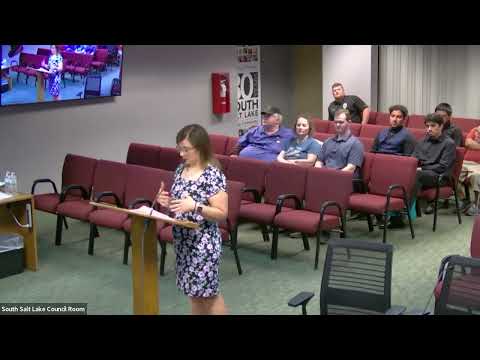
The South Salt Lake City Council on June 11 approved a package of fiscal-year 2025–26 budget ordinances across multiple funds and adopted final tax rates and a water-rate ordinance. City staff said the total proposed budget is $135,418,997.
Council members approved budgets and ordinances by roll-call votes for the general fund and several special and utility funds. The meeting record shows councilors moved and seconded each ordinance and proceeded with a roll-call vote for each.
Key items adopted (motions and seconds shown when recorded in the meeting):
- General fund budget, $29,358,498 (motion by Clarissa; second by Corey). Adopted by roll-call vote.
- Capital improvements fund budget, $12,055,500 (motion by Corey; second by Leanne). Adopted by roll-call vote.
- Insurance reserve fund budget, $1,814,100 (motion by Leanne; second by Nick). Adopted by roll-call vote.
- Debt service fund budget, $1,129,000 (motion by Nick; second by Clarissa). Adopted by roll-call vote.
- Public safety service special revenue fund budget, $30,414,800 (motion by Clarissa; second by Corey). Adopted by roll-call vote.
- Public works campus construction fund budget, $21,210,000 (bond-funded; motion by Corey; second by Leanne). Adopted by roll-call vote. Crystal, city staff, said $21,000,000 of the total budget is related to construction of a new public works campus and is covered through a bond received last year.
- Transportation utility fund (presentation and consideration; motion recorded as part of a later discussion) — council later moved further consideration to unfinished business for follow-up.
- Solid waste fund budget, $785,000 (motion by Nick; second by Clarissa). Adopted by roll-call vote.
- Stormwater utility fund budget, $808,000 (motion by Clarissa; second by Corey). Adopted by roll-call vote.
- Wastewater utility fund budget, $5,931,500 (motion by Corey; second by Leanne). Adopted by roll-call vote.
- Water utility fund budget, $11,382,282,100 (transcript contains a formatting anomaly on this line; staff presented the water utility fund for FY2025–26 and a motion by Leanne with a second by Nick was recorded). Adopted by roll-call vote.
- Final general-purpose tax rate filing and final public-safety tax rate (motions by Nick and Clarissa respectively; recorded seconders and roll-call votes). Adopted by roll-call vote.
Also during the meeting, the council approved an ordinance amending South Salt Lake Municipal Code section 3.11.100 to modify culinary water utility fees. City staff said the ordinance modifies three sections identified in a water rate study: the culinary water monthly minimum fee, the consumption charge for residential customers, and the consumption charge for nonresidential customers. According to staff, the consumption charge for nonresidential customers and the monthly minimum will be effective July 1; the revised residential consumption charge will be effective Jan. 1 of the coming year. Staff also said an Ion Water app will launch July 1 to help customers monitor consumption.
Each ordinance was passed on record by roll-call vote during the June 11 meeting; the council did not record detailed named vote tallies in the public transcript beyond the roll-call confirmations noted during each item. No further public hearings were recorded on these adopted ordinances during this session.
Votes taken at the meeting followed standard motion/second procedure and were recorded as roll-call votes for each ordinance.