Get Full Government Meeting Transcripts, Videos, & Alerts Forever!
Get email alerts on the Local Government Compensation topic
No spam. Unsubscribe anytime.
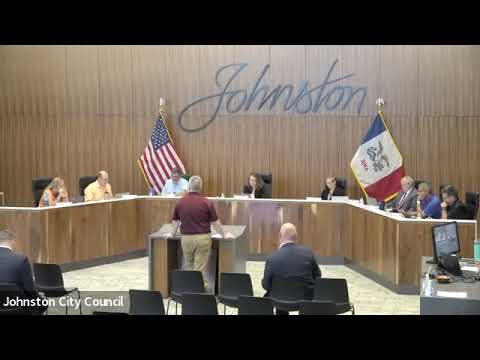
Johnston council approves first reading to raise mayor and council pay, debate centers on timing
Summary
The Johnston City Council approved the first reading of Ordinance No. 11-39 to increase mayoral and council compensation effective Jan. 1, 2026, after split remarks about timing and equity. Supporters argued the increase would broaden candidate diversity; at least one council member urged voting no given current funding pressures.
The Johnston City Council on the first reading approved an ordinance to raise mayor and city council pay, with the change slated to take effect Jan. 1, 2026.
City staff presented Ordinance No. 11-39, which would raise the mayor’s annual compensation from $3,600 to $10,000 and council members’ annual compensation from $1,200 to $5,000 beginning with the 2026 budget year. Staff said state law allows such a change only after a city general election, which is why the effective date is Jan. 1, 2026. The FY26 budget includes a half-year cost of $22,300; the full-year impact would be about $35,000 in FY27, staff noted.
Supporters told the council the increase brings Johnston closer to peer cities and could remove a barrier that prevents otherwise qualified residents from running for council because of economic constraints. One council member said low pay has kept some people from running and that the increase is intended to make officeholding more accessible.
At least one council member urged the council to reject the pay increase now, saying the city faces other pressing funding needs and that the timing is not right. That member said they had not sought compensation personally and asked colleagues to vote no.
The ordinance received a first reading after a roll-call vote. The council discussed whether to add attendance-linked language to the compensation ordinance — for example, reducing pay after multiple unexcused absences — but did not adopt such a provision at this meeting and directed staff and the city attorney to research options and sample language for a future reading.
The ordinance requires three readings before final adoption; councilmembers said there will be additional opportunities for discussion as it moves through the process.
Votes and next steps: The motion to approve first reading of Ordinance No. 11-39 carried on the floor at this meeting. The council will consider subsequent readings before any pay changes are finalized and effective Jan. 1, 2026.
For now, the FY26 budget already includes the partial-year amount staff prepared in response to council direction earlier in the budget process.