Get Full Government Meeting Transcripts, Videos, & Alerts Forever!
Get email alerts on the Trade Secrets Patient Data topic
No spam. Unsubscribe anytime.
Utah Supreme Court weighs whether patient names and insurer pairings can be trade secrets
Summary
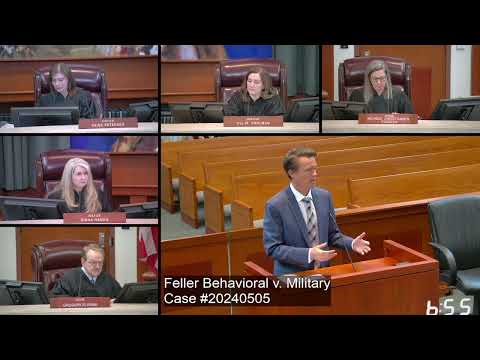
At oral argument, attorneys for Freedom Counseling and Feller Behavioral Health disputed whether emails containing client names and insurance pairings given by departing therapists are protected trade secrets under the Utah Trade Secrets Act, and whether the record supports damages tied to that alleged misappropriation.
At oral argument before the Utah Supreme Court, attorneys debated whether client names and insurer pairings disclosed by departing therapists to a new employer, Feller Behavioral Health, qualify as trade secrets under the Utah Trade Secrets Act and whether any misappropriation caused recoverable damages.
The issue arose from summary-judgment rulings in litigation between Freedom Counseling, which sued after several therapists left for Feller, and Feller Behavioral Health and its owner, Dr. Feller. Michael Judd, counsel for Feller Behavioral Health, told the justices that the record shows disputed factual issues that make summary judgment inappropriate and that the evidence does not show Feller solicited or otherwise reached out to patients. "There are some decisions that need to be made here that are either disputes of fact or inferences that should be drawn, not by the decision maker at the summary judgment stage," Judd said, arguing courts should defer such issues to a jury.
Judd challenged the plaintiff's theory that confidentiality agreements alone make the information "not readily ascertainable," and questioned the asserted economic value of the emailed pairings beyond speeding up patient onboarding. When asked whether Feller had reached out to any patients, Judd responded, succinctly, "None."
Representing Freedom Counseling, Rachel Phillips Ainskopf (with co-counsel Emily Adams) argued the emails contained client names and insurance information and that the record includes confidentiality and non‑solicit agreements, HIPAA concerns, and server protections that support the existence of a trade secret. Ainskopf said the relevant emails were exchanged before some departing therapists were hired and that the agreements and storage practices show the data were not generally known or readily ascertainable. "The client information that was disclosed in the emails... the client names and the insurance information and those pairings," Ainskopf told the court, is the asserted trade secret.
The parties disputed damages theories. Freedom Counseling's counsel said the defendant used the information to negotiate contractor rates and otherwise benefited; the plaintiff advanced both a lost‑profits theory and a narrower unjust‑enrichment/expedited-onboarding theory. Feller's counsel countered that the plaintiff's expert report recycled analyses from earlier litigation against the departing therapists and that the record lacks the causal link tying the emailed pairings to the claimed lost profits.
Several justices pressed both sides on whether the information could be "readily ascertainable" through permissible means—most notably by patients themselves calling the new provider after being told their therapist was leaving—and whether timing of disclosure matters. The court also discussed whether proving "improper means" would require expert evidence and whether a defendant must have known or reasonably should have known the disclosures violated HIPAA or contractual duties.
Both sides identified factual gaps the other must prove at trial or on remand: Feller's counsel emphasized that no evidence shows Feller solicited patients or that the emailed pairings produced the client transfers; Freedom Counseling emphasized contractual, ethical, and HIPAA constraints and pointed to emails and server controls as support for secrecy and misuse allegations.
The court took the argument under advisement and did not announce a ruling at the hearing.