
Assembly divides and amends Bogard‑Selden corridor access management plan; ultimately postpones final adoption to Aug. 5
Get AI-powered insights, summaries, and transcripts
Sign Up Free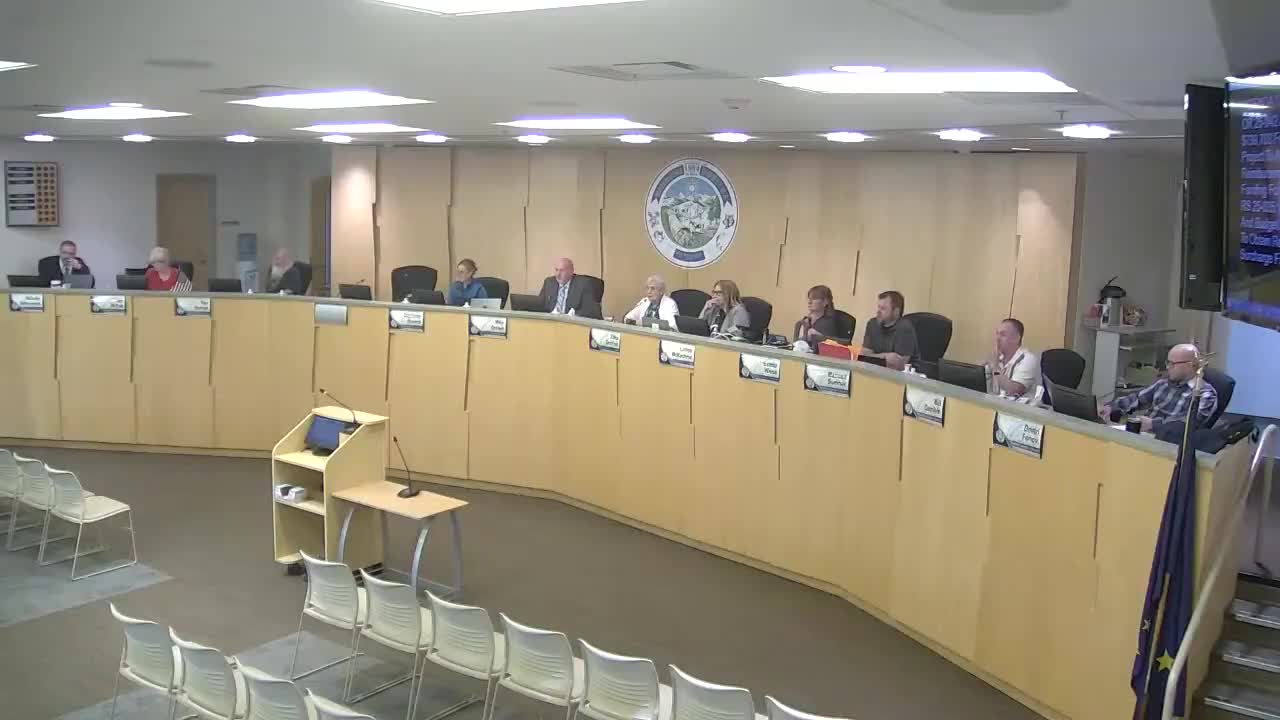
Summary
After a marathon debate over dozens of amendments, the Matanuska‑Susitna Borough Assembly adopted several targeted changes to the Bogard‑Selden corridor access management plan and postponed final adoption to Aug. 5 to allow staff to consolidate edits and publish an updated plan.
The assembly’s long‑running review of the Bogard‑Selden Corridor Access Management Plan (AM 25‑054) dominated the June 17 meeting and lasted late into the evening. Assembly members and staff considered multiple amendments affecting segments of the corridor; several amendments were adopted, others failed, and the assembly ultimately postponed final adoption until Aug. 5 to allow staff time to consolidate the changes and publish an edited version.
Planning Director Alex Tron and Public Works Director Tom Adams briefed the assembly on the ordinance and its origin. Tron said the changes were prompted in part by public reaction to a recent Matanuska Electric Association transmission project and that the amendment package clarified intent, improved notification and added an explicit appeal path to the borough’s Board of Adjustment and Appeals.
A sizable public turnout included property owners who urged specific changes to preserve local access, neighborhood groups that supported corridor principles and community councils that filed formal letters. Residents of Woodfield Park and East Village Loop asked the assembly to avoid creating new through routes into neighborhoods; the North Lakes Community Council testified in favor of the plan overall but sought targeted adjustments.
Assembly debate focused on a set of numbered amendments divided out of a larger omnibus motion. Among the actions the assembly took (selected highlights): it adopted a frontage‑road preference in part of Segment C (extending a proposed frontage connection between North Bear Street and North Grayling Street) while retaining alternative alignment options in the plan text; it added an option and map symbol to preserve a short frontage connection in Segment E (Old Squaw Loop to realigned Snow Goose) rather than opening multiple new intersections; and it made several smaller corrections and map clarifications requested by staff (naming corrections and map symbols for turn lanes).
Several amendments failed in roll calls, and a few amendments passed only after separate votes on divided questions. After substantial deliberation and a request from staff and the maker of multiple secondary amendments, the assembly voted to postpone final adoption to Aug. 5 so that staff can prepare an updated plan that incorporates all passed amendments and provide the edited documents for review. Borough staff committed to publishing the consolidated materials July 23 so assembly members will have time to review before the Aug. 5 meeting.
Why it matters: The corridor plan is intended to reduce the number of direct accesses to Selden Road, improve intersection spacing and guide the location of future right‑of‑way and projects. Assembly members stressed the balance between corridor‑scale spacing principles and neighborhood access; public commenters urged the assembly to avoid unintended impacts to existing subdivisions.
What’s next: Staff will prepare an updated plan that reflects all adopted amendments and publish it July 23. The assembly set a reconvened decision date of Aug. 5, 2025, allowing further review and a final vote.