Get Full Government Meeting Transcripts, Videos, & Alerts Forever!
Get email alerts on the Fares And Paratransit topic
No spam. Unsubscribe anytime.
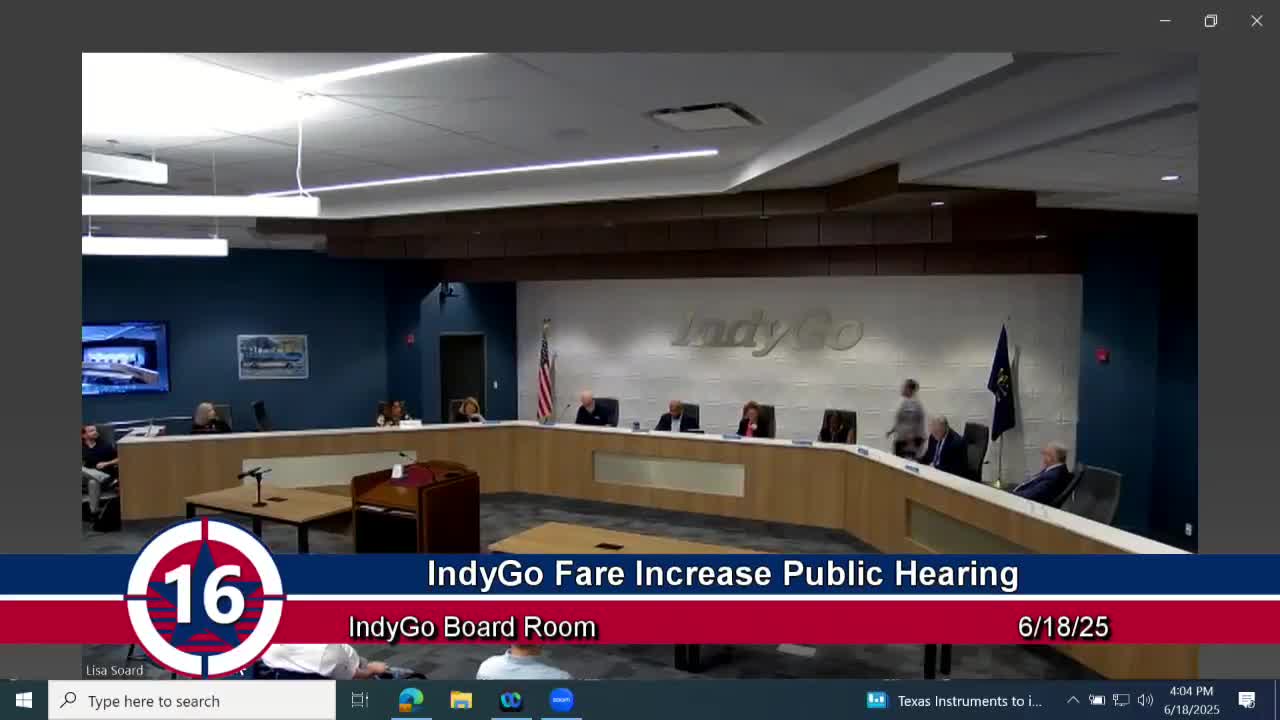
Indigo holds public hearing on proposed fare increase; riders and disability advocates urge changes
Summary
Indigo Board of Directors convened a public hearing June 18 on a proposed update to the agency’s fare policy that would raise the fixed-route base fare from $1.75 to $2.75, increase related daily and weekly caps, and adjust paratransit (Indigo Access) fares tied to the base rate.
Indigo Board of Directors convened a public hearing June 18 on a proposed update to the agency’s fare policy that would raise the fixed-route base fare from $1.75 to $2.75, increase related daily and weekly caps, and adjust paratransit (Indigo Access) fares tied to the base rate. The hearing was a listening session only; the board did not vote. Public comment and written input will be accepted through the outreach period ahead of a scheduled board vote on Aug. 21, 2025.
Indigo President and CEO Jennifer Pierce summarized the proposal and the analysis behind it, saying the agency has not raised its base local fixed-route fare since 2009 and that operating costs per vehicle revenue hour have risen substantially. Pierce said matching the 2009 purchasing power of $1.75 would require a $2.61 fare today; the board is hearing a proposal to set the base fare at $2.75, effective Jan. 1, 2026. Under the proposal the half fare would rise from 85¢ to $1.35; the daily cap would increase from $4 to $6 and the weekly cap from $15.75 to $24.75. Pierce said staff also proposes retiring several pass types (including 10-trip, 31-day and summer youth passes) and keeping Indigo Access’s pricing structure of two times the base fare for trips beginning and ending within the ADA area (within three-quarters of a mile of a fixed route) and four times the base fare for “premium” trips outside that area. Pierce noted the ADA-area trip fare under the proposal would move from $3.50 to $5.50.
Pierce also described fare-relief options Indigo plans to emphasize in outreach: bulk pass discounts for employers, MyKey fare-capping (electronic fare media that limits how much a rider pays in a day or week), and existing programs that allow veterans to ride free and certain seniors/Medicaid holders to receive half fare with verification. Pierce said the outreach process has included seven public meetings to date, 14 scheduled in total, printed and digital signage on buses, rider outreach at the Carson Transit Center and more than 7,500 views of the agency’s “Value of Transit” webpage.
Public comment focused overwhelmingly on impacts to people with disabilities, low-income riders and frequent paratransit users. Chris Hollingsworth, Indianapolis (who identified himself as “MAC chair”), said the increase “is difficult burden for many of the riders of Indigo to bear” and called the proposed change “what a 57% increase looks like.” Hollingsworth described a blind neighbor who earns roughly $10.50 an hour and would face “over $11 per day” commuting costs under the proposal, and urged phased increases and parity so paratransit riders benefit from fare capping.
Multiple commenters who identified themselves as paratransit riders or members of the disability community made similar points. Greg Meyer said riders will face “difficult decisions” about whether to take rides to the grocery store, the doctor, the pharmacy or to church, and called a single 57% increase “a crazy number.” Christopher Meyer, who identified himself as blind and living on a fixed income, said the increase “will hit my community the hardest.” Susan Jones said she supports fare increases that sustain service and wages, but emphasized that paratransit riders will bear a disproportionate burden. Tracy Jones, whose sister uses paratransit, said the hike would “lose about 50% of what she makes.”
Other speakers asked for a smaller or incremental increase tied to service improvements, restoration or retention of a predictable monthly pass for riders on fixed incomes, more streamlined cash alternatives (less reliance on broken fare boxes or clunky QR codes), and rider rewards or employer incentives. Marissa Byers, a daily commuter, urged “a more nuanced and creative approach” and proposed pilot programs and expanded payment options to preserve choices for low-income riders. Several commenters recommended extending fare capping or similar protections to paratransit fares so those riders are not excluded from weekly limits.
Indigo staff noted additional context during the hearing: the agency has received roughly 60 written comments to date and a letter from City-County Council minority leader Michael Paul Hart expressing concern about paratransit fees. Board members and staff repeatedly emphasized this hearing is for comment; staff will continue outreach and will return to the board for a formal vote on the fare policy on Aug. 21.
The hearing closed after in-person and virtual testimony. The record will include the spoken remarks and written submissions collected on indigo.net; staff said comments will be shared with all board members ahead of the August vote.