Get Full Government Meeting Transcripts, Videos, & Alerts Forever!
Get email alerts on the Parkstone Artesian Well topic
No spam. Unsubscribe anytime.
Parkstone artesian flow draws caution from Winter Springs officials over liability and permit limits
Summary
Commissioners and staff reviewed historical studies and legal obstacles around a high‑volume artesian discharge in the Parkstone subdivision. County engineers recommended not to pursue capping the feature because of construction risk; staff and the mayor warned the city would inherit unknown liabilities if it intervenes.
City of Winter Springs elected officials on Wednesday discussed a longstanding artesian discharge in the Parkstone subdivision and the technical, legal and liability concerns that have prevented the city from directly tapping the flow.
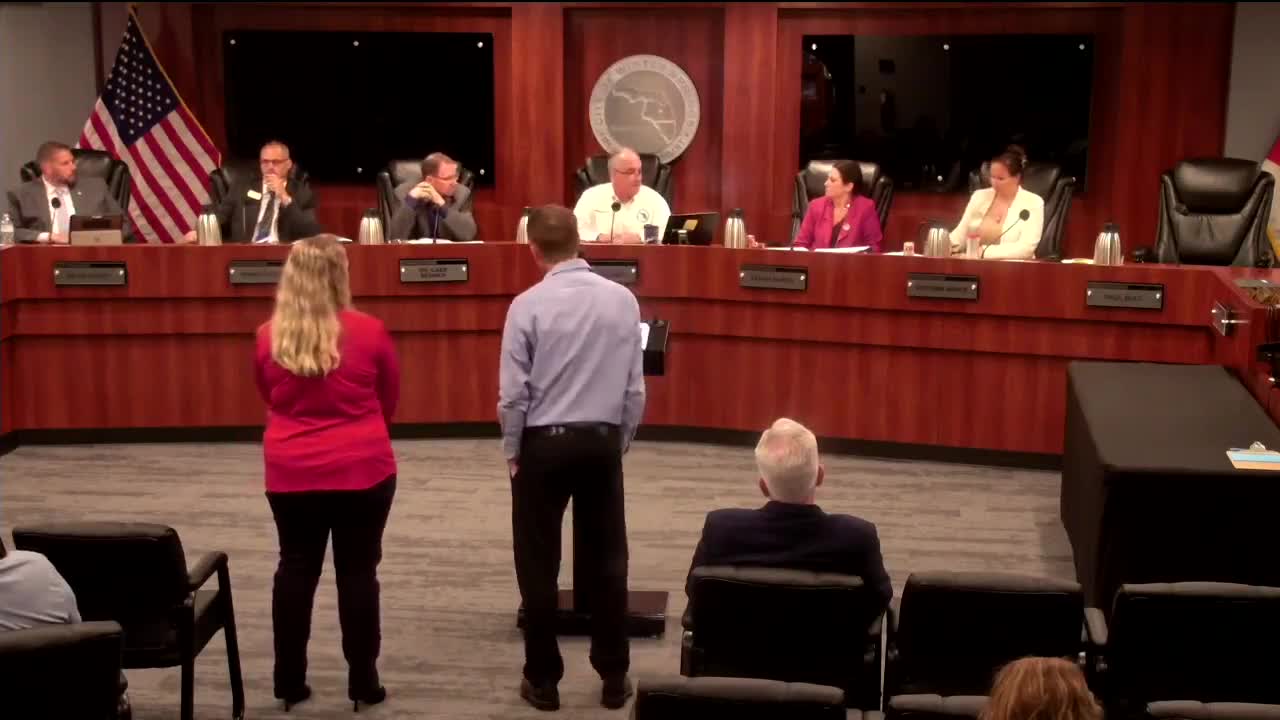
Mayor Kevin McCann read a county engineering summary and cautioned commissioners that intervening without fully understanding the feature could expose the city to major liability. “If we touch this, we own it. That is an unknown that must be resolved before we move forward,” McCann said after reading Jacobs Engineering’s recommendation that the county not pursue a project because of prior unsuccessful attempts to cap or control the discharge and the potential for impacts in the neighborhood.
What was presented and said
- Historical studies and county review: Officials said the county previously commissioned Jacobs Engineering, which recommended the county not move forward due to the risk of creating new discharge points and the history of unsuccessful attempts to plug the feature. The mayor read those recommendations aloud at the workshop.
- Measured flows and permit context: A resident, Art Gallo, told the commission he had spoken with St. John’s River Water Management District staff and cited district measurements. “District staff measured the flow of the discharge point...to be approximately 380 gallons per minute or 500,000 gallons, per day,” Gallo said during public comment, echoing a November 2021 field measurement he referenced earlier.
- Legal access and HOA resistance: City officials said the Parkstone homeowners association’s attorney had issued a cease‑and‑desist order preventing the city from conducting on‑site testing on private property at various points in earlier efforts. Commissioners and staff said that HOA opposition and the potential for property damage or displacement of flows in the neighborhood complicate any plan to capture or pipe the discharge.
- Technical and operational considerations: City engineers and consultants advised the commission that the feature’s origin is uncertain — some experts characterize it as a shallow surficial fracture while others treat it as an artesian source — and that the discharge has high sulfide concentrations that would require treatment before potable use. Staff said the feature could have limited value as a reclaimed‑water supplement for a few months of the year but would not likely eliminate the city’s need for the Lake Jessup augmentation intake during dry seasons.
Commissioner and staff positions
Commissioners expressed interest in re‑opening communications with Parkstone representatives but agreed on caution. Several commissioners noted the practical appeal of capturing a free surface source, while others emphasized the engineering and liability risks described by Jacobs and county staff. City Manager Kevin Sweet said lines of communication with Parkstone and the county are open and that staff would continue discussions but would not pursue physical intervention without clearer legal access and a technical plan to mitigate neighborhood impacts.
Ending
No formal action was taken. Staff said the city will continue outreach with SJRWMD, Parkstone representatives and county engineers and will review Jacobs’ and other historic analyses before bringing any further proposals to the commission.