Get Full Government Meeting Transcripts, Videos, & Alerts Forever!
Get email alerts on the Utilities Infrastructure topic
No spam. Unsubscribe anytime.
Winter Springs presents $34 million five‑year utilities capital improvement plan
Summary
City staff and consultants laid out a five‑year utilities capital improvement plan that identifies 31 projects totaling about $34 million, with priorities including smart meter replacement, targeted water main work and reclaimed‑water extensions; funding gaps and emerging contaminant rules remain unresolved.
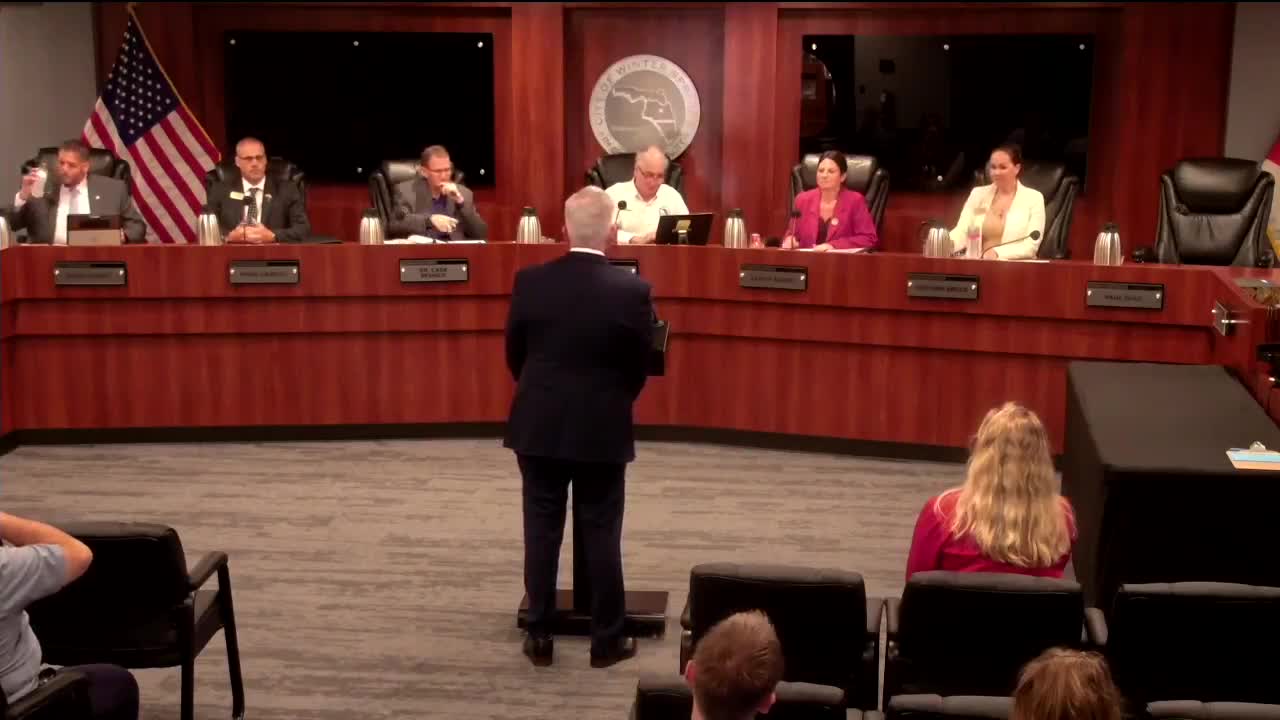
City of Winter Springs officials and consultants on Wednesday presented a five‑year Utilities Capital Improvement Plan that identifies 31 projects totaling about $34,000,000 to address water, wastewater and reclaimed‑water infrastructure needs.
The plan, presented at a City Commission workshop, lays out priorities that officials said include automated residential flow‑meter replacements, an ongoing potable water main inventory and replacements paced at roughly $1 million a year, lift‑station upgrades and selective reclaimed‑water extensions where piping already exists.
Director of Public Works and Utilities Clete Sonnier said the effort was a citywide “needs assessment” that produced the project list. “That resulted in 31 projects, totaling about $34,000,000 that we plan to approach over the next 5 years,” Sonnier said.
Why it matters
Officials said the package is intended to reduce repeated emergency repairs, improve reliability and position the city to comply with coming regulatory requirements. Staff cautioned, however, that available revenue in fiscal 2026 will not cover every priority on the list and that the schedule is contingent on outside funding, rate study outcomes and contract negotiations.
Key priorities and details
- Flow‑meter replacement: Consultants recommended converting to automated, two‑way meters (AMI) to replace drive‑by/manual reads. Staff said the replacement program was paced across multiple years to match funding and contractor capacity; the presentation shows the work staged across four fiscal years. Staff estimate improved meter accuracy could reduce annual unbilled water losses by roughly $500,000 to $1.5 million once fully implemented. Julia Felter, project manager with Horn and Associates, described the water‑main inventory and replacement plan as a continuous CIP item: “that is going to be a continuous line on the capital improvement plan. Right now it's being paced at about a million dollars a year.”
- Potable water mains and targeted replacements: The potable water inventory identifies higher‑priority mains for replacement based on material type, work orders and break history. Staff said typical funding at $1 million per year equates roughly to one large main replacement annually; some larger corridors (for example, the project on Shoewa Boulevard north of SR‑434 to Shepherd) are being advanced for design and expected construction in calendar 2026.
- Wastewater and lift stations: The CIP lists lift‑station resiliency, PLC/radio upgrades and pump replacements. City staff said some lift‑station work is tied to Hazard Mitigation Grant Program (HMGP) funding requests and to upgrades planned as part of wastewater master‑plan recommendations.
- Reclaimed‑water extensions: Consultants identified incremental reclaimed expansions that would convert selected neighborhoods from potable irrigation to reclaimed supply; staff emphasized conversion is expensive where third piping and meter changes are required and therefore the early projects are those with existing reclaim infrastructure. Estimated savings cited in the presentation for selected projects were modest in aggregate (example callouts showed about 63,000 gallons per day offset from two early projects).
- Advanced water treatment study and PFAS: Consultants flagged potential future regulatory requirements, including emerging PFAS/PFOA limits. Scott Richards of Corolla Engineers told the commission the city is participating in required monitoring and early testing rounds: “we're just completing testing for UCMR 5,” and said national rulemaking timelines have shifted, noting the EPA schedule was pushed to 2031.
Funding and near‑term constraints
Staff provided a high‑level FY‑26 revenue snapshot showing user charges as the largest source (presentation slides show roughly $18–24 million across utility funds in various projected scenarios) but also noted a multi‑million‑dollar shortfall between available operating and capital funds and the CIP’s first‑year priorities. In discussion, staff said the FY‑26 budget as drafted leaves roughly $6 million available for new projects against roughly $10 million in priority CIP items for that year, meaning several projects will be deferred or depend on state appropriations, SRF loans, grants or rate changes.
What was not decided
Commissioners did not take formal action on the CIP at the workshop. Staff said the CIP will be used to inform the city’s rate study and will be adjusted as funding becomes clearer and as specific grant/loan awards are confirmed.
Ending
Staff asked the commission for direction on pacing and on pursuing appropriations and grant applications; commissioners pressed for clearer line‑item funding scenarios and for copies of the packet for further review. Staff said the CIP will be updated annually and refined as grant and SRF loan outcomes are known.