Get Full Government Meeting Transcripts, Videos, & Alerts Forever!
Get email alerts on the Transit Brt And 0fare topic
No spam. Unsubscribe anytime.
GRTC outlines North–South BRT study, downtown transfer-station planning, stop upgrades and zero-fare fundraising
Summary
GRTC presented planning updates for a North–South BRT to open by 2031, a western Pulse extension, a permanent downtown transfer station P3 study, stop and shelter upgrades and a fundraising strategy to sustain the city—s zero-fare transit program.
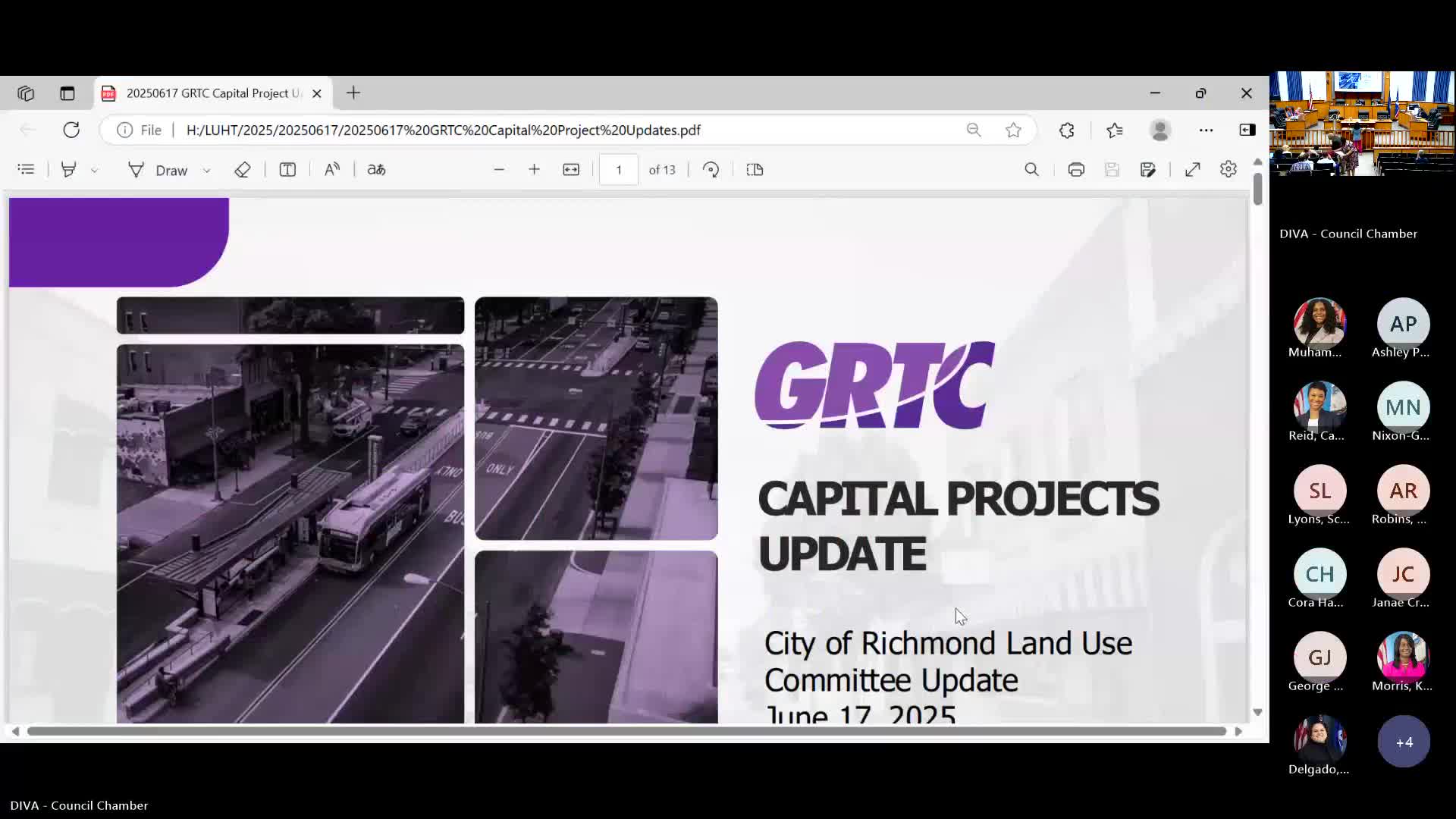
GRTC representatives briefed the committee on capital projects and the agency—s strategy to sustain the zero-fare program.
Major initiatives and timelines
- North–South Bus Rapid Transit (BRT): GRTC said it is studying a BRT corridor from Azalea (Henrico County) through Jackson Ward and Ninth Street to Manchester and Midlothian; the agency aims for operation by 2031. Environmental analysis and engineering work are underway with a construction funding need beginning in 2028.
- Transit-oriented development (TOD) study: A federally funded $750,000 study will identify up to six development sites along the North–South corridor and is expected to conclude in June 2026 with recommendations to come before council.
- Western Pulse extension (to Parham Road): A shorter study is underway with an operational target of 2029.
- Downtown transfer station: GRTC and city staff are advancing concept design for a permanent downtown transfer station on the former public safety building site between Clay and Lee streets, moving toward environmental analysis and an RFQ for a public-private partnership.
- Dedicated-lane study and transit-stop improvements: A 2024 study identified congested corridors where dedicated lanes would improve service; GRTC has an initiative to install shelters or benches at 75% of roughly 1,700 bus stops within its network and currently has 38 Richmond shelters in review or pending installation.
Zero-fare sustainability and fundraising
GRTC said its board adopted a FY26 budget that includes zero-fare and that the agency is pursuing advertising revenue (bus wraps and shelters) and a new "Transit Access Partnership" fundraising campaign. GRTC reported more than $500,000 in advertising revenue to date from bus wraps and will publicly launch the Transit Access Partnership on July 8, which will also showcase new articulated 60-foot vehicles entering service.
Why it matters: The BRT, station and dedicated-lane planning seek to improve high-frequency transit reliability and encourage transit-oriented development; sustaining zero-fare affects ridership and equity by removing fare barriers for riders.
Ending: GRTC said planning will continue, funding is the chief barrier to construction, and the agency will return as projects mature and federal/state funds are sought.