Get Full Government Meeting Transcripts, Videos, & Alerts Forever!
Get email alerts on the Zoning And Planning Policy topic
No spam. Unsubscribe anytime.
Oro Valley staff brief commission on zoning-code changes required by new state law; Jan. 1 effective date noted
Summary
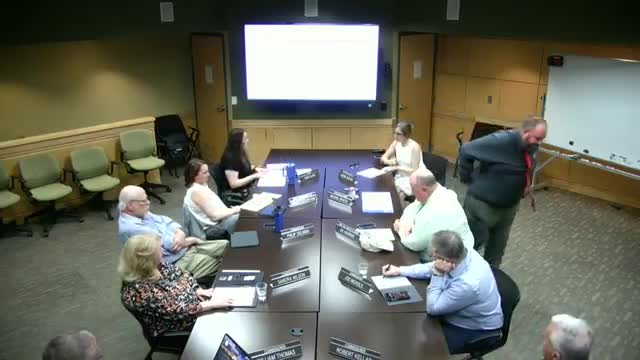
Town staff outlined planned zoning-code amendments to comply with recent Arizona legislation that requires administrative approval of many nondiscretionary development applications; staff said the law takes effect Jan. 1 and described a schedule of study sessions and hearings to update local code.
Town planning staff told the Planning and Zoning Commission that a recent change in Arizona law will require Oro Valley to amend its zoning code so certain nondiscretionary development applications are approved administratively rather than through commission and council public processes.
"The code is effective at the end of the year. So starting January 1, whether we get it adopted or not, it's the law of Arizona," staff said, warning the commission that the change will take effect statewide and obligate local code updates.
Staff said the state language requires administrative approval of many design-review, landscaping, final-plat and similar nondiscretionary applications (applications where the project meets code and the jurisdiction cannot lawfully deny the application). Those types of applications previously came to the Planning and Zoning Commission in Oro Valley for a review-level public meeting and recommendation; discretionary requests (rezonings, conditional use permits, general-plan amendments) will continue to require public hearings and commission/council review.
Staff outlined other consequences and planned responses: (1) retain neighborhood meetings and public outreach even for items that will be approved administratively, (2) draft objective approval criteria so staff decisions are defensible, (3) preserve certain expedited-review incentives in the town's Economic Expansion Zone (EEZ) while limiting some EEZ privileges to specific areas, and (4) add a conditional-use-permit requirement in the PS zoning district for building-height increases (a change prompted by a recent local application). Staff emphasized they will continue to negotiate with applicants on design items but said final administrative approvals will rest with staff for nondiscretionary applications.
Commissioners raised concerns about public transparency, the loss of some commission-level review, increased staff workload and how the town will explain the change to residents. Staff said they will hold a commission study session in September, a public hearing in October, a council study session in November and a council public hearing in December so the ordinance can be adopted by year-end. Staff also said neighborhood meetings will continue and that at-risk grading/drainage submittals may be allowed earlier in the review process (staff and the applicant bear the practical risk if earlier submittals proceed and later design changes are required).
Staff noted the town will also update development-fee schedules to reflect new expedited-review responsibilities and that some procedural components of the town's Economic Expansion Zone will be retained and refined rather than applied townwide.