Get Full Government Meeting Transcripts, Videos, & Alerts Forever!
Get email alerts on the Civilian Review Board Procedures topic
No spam. Unsubscribe anytime.
Saratoga Springs Civilian Review Board reviews policies, complaint process and communications rules; final approval deferred until training
Summary
The Civilian Review Board for Saratoga Springs City reviewed draft policies and procedures at its organizational meeting, focusing on how complaints will be filed and handled, the board’s use of executive session and Freedom of Information Law (FOIL) exemptions, secure communications for personnel matters, and the timing of required mediation training.
The Civilian Review Board for Saratoga Springs City reviewed draft policies and procedures at its organizational meeting, focusing on how complaints will be filed and handled, the board’s use of executive session and Freedom of Information Law (FOIL) exemptions, secure communications for personnel matters, and the timing of required mediation training.
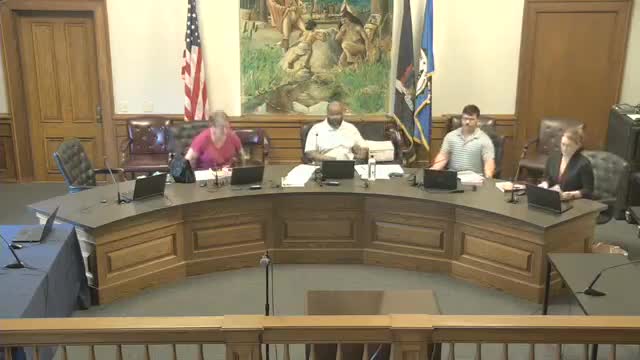
Board chair opened the meeting and asked members to confirm they had read the proposed policies and procedures. Abby Temple, Civilian Review Board member, Justin Garfel, Civilian Review Board member, and Caitlin Jurgison, Civilian Review Board member, were present; Diana Goodwin was excused and expected to receive the materials. Tony Izzo, serving as board counsel, led legal explanations.
Why it matters: the board will review complaints about police conduct and issue recommendations to the commissioner of public safety. How it collects complaints, how it preserves confidentiality, and how it communicates with complainants and the public will determine how accessible and defensible the board’s work is.
What the board discussed
- Complaint intake and the police complaint form: The board examined the existing Saratoga Springs Police Department complaint form, which participants described as a static PDF intended to be completed by department personnel. Board members said the current form asks for optional demographic data (race) “for statistical purposes” and highlighted that the public-facing PDF is not fillable online. Board members asked how the board would accept complaints that bypass the police department and whether documentation submitted directly to the board would be usable and actionable. “If we’re going to be accepting complaints directly without them going to or through the department … we need to look at that and how we’re documenting and collecting that information,” a member said.
- False-statement language and authority: Counsel noted the police form contains language about false statements to officers and that the board lacks the same immediate statutory authority to enforce false-statement penalties unless procedures are established. Counsel cautioned that the board must set up appropriate mechanisms if it intends to treat submissions the same way the department treats in-person reports.
- Confidentiality, executive session and FOIL: Tony Izzo advised the board that many complaints likely will qualify for executive session under the Open Meetings Law because the board will review personnel and conduct allegations. He summarized FOIL principles for board communication: opinion, recommendation or internal conclusions are often exempt from public release, while factual or statistical material is not. “If 2 members of the board electronically communicate and 1 makes a statement to the other, if that statement is opinion, recommendation, conclusion, observation ... it’s usually exempt,” Izzo said. He recommended limiting text messaging and using email or verbal communications while the city’s searchable archiving for texts is not yet finalized.
- Secure communications and records retention: Members discussed requesting official city email accounts for board business so records would be archived and searchable under FOIL. The board agreed to consult the city IT department about setting up a CRB-designated email and archive.
- Complaint-volume and coordination with police: Members asked the chief of police to provide counts of complaints by period so the board can assess workload. The chair said she would ask the chief for that data and also explore how other municipalities structure parallel complaint routes so that simultaneous filings to the board and police department do not cause confusion.
- Training and timing: Members received materials for mandatory mediation training and discussed the 30-day completion window described by the training provider. Several members preferred to begin training before the summer event season to ensure the board would be able to take action when the city is busiest. Counsel advised there is no immediate legal urgency to finalize the policies before training; he recommended revising the draft after members complete training and then voting on a revised version. The board agreed to pursue that approach.
Board directions and next steps
- Staff (Mitch) or the chair will request from the police chief the number of complaints received and the department’s complaint-processing data for presentation at a future meeting.
- The chair will contact the Schenectady Civilian Review Board chair (contact provided by a commissioner) to learn how that city coordinates parallel complaint routes and to invite interested members to participate in that conversation.
- The board will ask the city IT department to create official CRB email accounts and archival access to ensure secure, FOIL-searchable records for board business.
- The board will revise the draft policies and procedures on the points raised (electronic intake, the complaint form’s structure and penalties language, communications protocol, and recusal language) and schedule a vote after members complete mediation training.
What was not decided
There was no formal vote recorded on the policies or any final adoption of procedures, and no enforcement mechanism for false-statement penalties was established at the meeting. The board did not adopt a new complaint form at this meeting.
Quotes
“People realize that you're a member of a board, and sometimes they'll come up to you in public and ask you for a comment about a matter that is currently before your board … if anybody comes to you and tries to share information with you about a matter that is before the board, the best way to deal with that is … tell the individual calmly but sincerely that you're not able to take this information in this context,” Tony Izzo, board counsel, said, advising members on ex parte contacts.
“If we're going to be accepting complaints directly … we need to look at that and how we're documenting and collecting that information so that we are collecting it in a way that it is actually actionable for us as a board,” Abby Temple, Civilian Review Board member, said during the complaint-form discussion.
Ending
Members agreed to continue refining the draft policies and to return with proposed revisions after mediation training and follow-up research from staff on IT options, complaint volumes and comparative practices in other municipalities. No formal adoption occurred at the meeting.