Get Full Government Meeting Transcripts, Videos, & Alerts Forever!
Get email alerts on the Facilities It topic
No spam. Unsubscribe anytime.
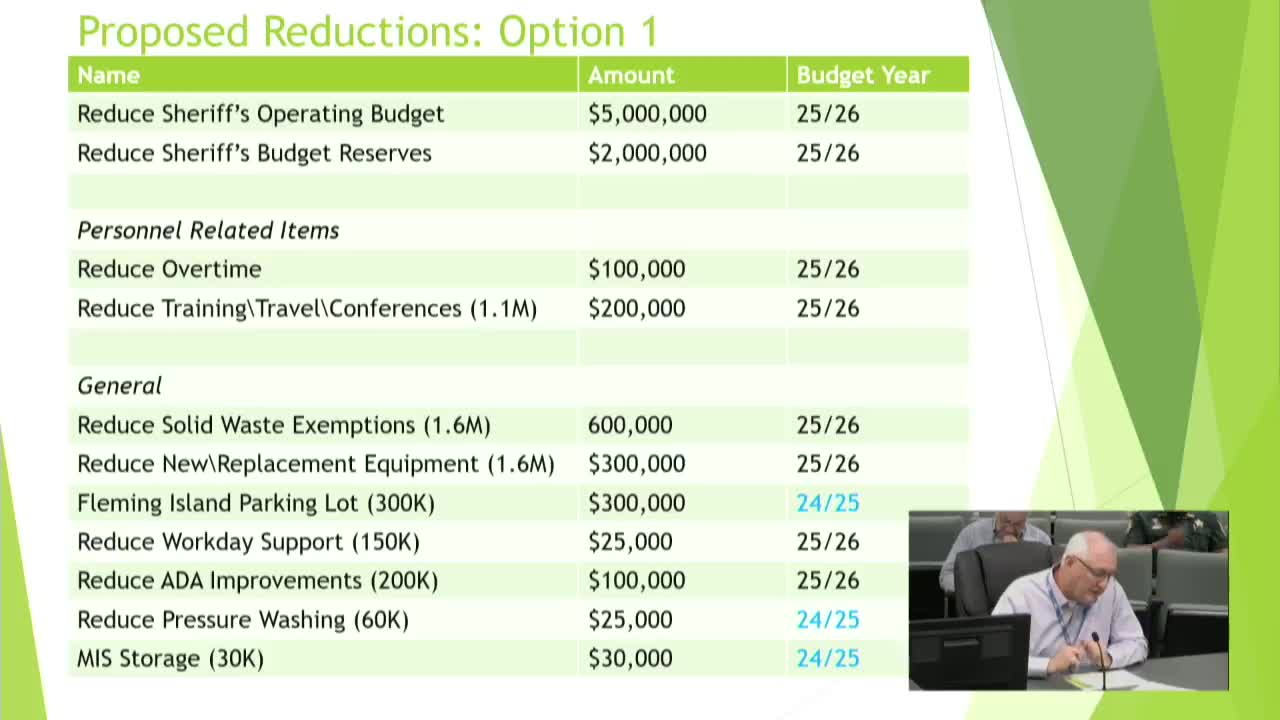
County to defer some facility and IT capital items; EOC air‑conditioning and video storage flagged for later replacement
Summary
Staff proposed postponing an MIS storage array replacement and several facility projects including EOC air‑conditioning and building controls; staff warned deferral increases future replacement risk and could complicate operations in the EOC during activations.
Clay County facilities and information‑technology staff asked commissioners June 17 to consider deferring several capital purchases as part of the budget‑reduction options, while noting the tradeoffs of pushing replacement work into later years.
MIS director Dean Hain told the board that the storage array in question is the county’s video storage array that holds camera footage and that deferring replacement will keep current services running but increase supportability and cybersecurity risk over time. "It'll still work, but as Troy mentioned, we just have to defer its replacement," Hain said.
Facilities staff also described a longstanding issue in the county EOC building: an aging central air‑conditioning system that has required auxiliary units and has produced wide temperature swings during activations. Staff placed the EOC AC replacement in the list of items proposed for deferral, while warning that the system has shown increasing operational problems and that a recent auxiliary unit may be unrepairable.
Other facility items under consideration included programmable building controls for energy efficiency (an ROI over 3–5 years), a lightweight arbor lift to reduce exterior maintenance lead times, and several library roof and restroom projects. Staff recommended finishing only high‑value design work and seeking sponsorships or alternate funding sources for construction.
Ending Commissioners asked MIS and facilities staff to identify the operational risks and expected service‑life impacts of deferring each item and to return with more detailed ROI estimates for proposed energy‑control investments.