Get Full Government Meeting Transcripts, Videos, & Alerts Forever!
Get email alerts on the Land Use And Short Term Rentals topic
No spam. Unsubscribe anytime.
Strongsville residents seek clarity on short‑term rental ban and potential rezoning for historic barn
Summary
A property owner told council she operates a bed-and-breakfast and wants to expand event and rental uses; the city attorney said a short-term rental ordinance bans Airbnb-style rentals without exceptions and that zoning and building-code compliance are required.
Two residents described plans for a historic property and asked whether current city rules would allow short-term rentals and event uses; the law director said zoning, building codes and an existing short-term rental ordinance limit what is permitted.
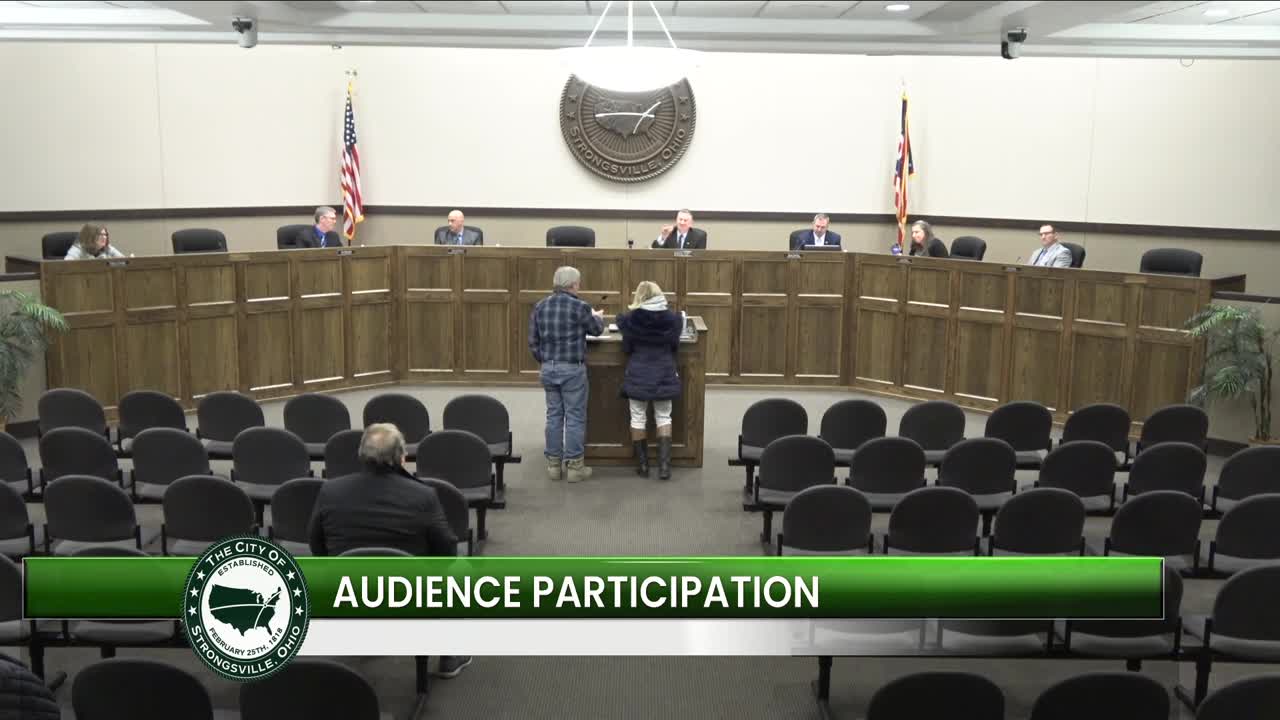
Deborah Thomas Lemmers told the council she and her husband operate a rental portion of a house built in 1830 at 9160 Albion Road as a bed-and-breakfast and that they live on the property. She said they would not use the property as an owner-absent short-term rental and that guests had been “very interested” in the historic building. Lemmers also said she had interest from local theater and music groups to use a barn on the property for events and community programs.
City Law Director Jamieson responded that the property owners had been instructed to contact the building department before pursuing short-term rentals or event uses. Jamieson said the city has passed an ordinance that does not allow short-term rentals and that the ordinance contains no exception permitting owner-occupied B&B‑style rentals. He added that some of the activities the owners described would be prohibited under the property’s current zoning and that neighbors would have input on any rezoning request. Jamieson also noted a high‑pressure gas line runs through the property, which limits certain building options.
Why it matters: The exchange illustrates how city land‑use rules, building and safety codes and special infrastructure constraints (the gas main) can limit private plans to operate short-term rentals or host events. Property owners who seek to change use or host larger events typically must obtain building-department approvals and, where required, a zoning change.
What speakers said - “We were running an Airbnb…we're always there. We're trying to run it as an actual B and B,” Deborah Thomas Lemmers said, explaining the owners live on-site and operate only part of the house for guests. - “That's correct. We passed an ordinance that does not allow short term rentals. And there's no provision in there for exceptions,” Jamieson said, advising the owners to contact zoning and the building department and noting the property’s constraints.
Next steps: Jamieson and city planning staff said they had already spoken with the owners and would continue to help them, but that the owners must bring the facility into code compliance before pursuing short-term rental activities or event uses. For rezoning, Jamieson directed the owners to Planning, Zoning & Engineering for the formal process and noted neighbors would have an opportunity to weigh in.
Background: The council’s meeting packet did not list a specific short-term rental ordinance number in the public comment exchange; Jamieson referenced the city’s existing short‑term rental prohibition during his remarks. The building department and planning staff were identified as the offices that must be contacted to assess code compliance and zoning changes.