Get Full Government Meeting Transcripts, Videos, & Alerts Forever!
Get email alerts on the Medicaid Expansion topic
No spam. Unsubscribe anytime.
Idaho committee advances bill to reshape Medicaid expansion after hours of testimony
Summary
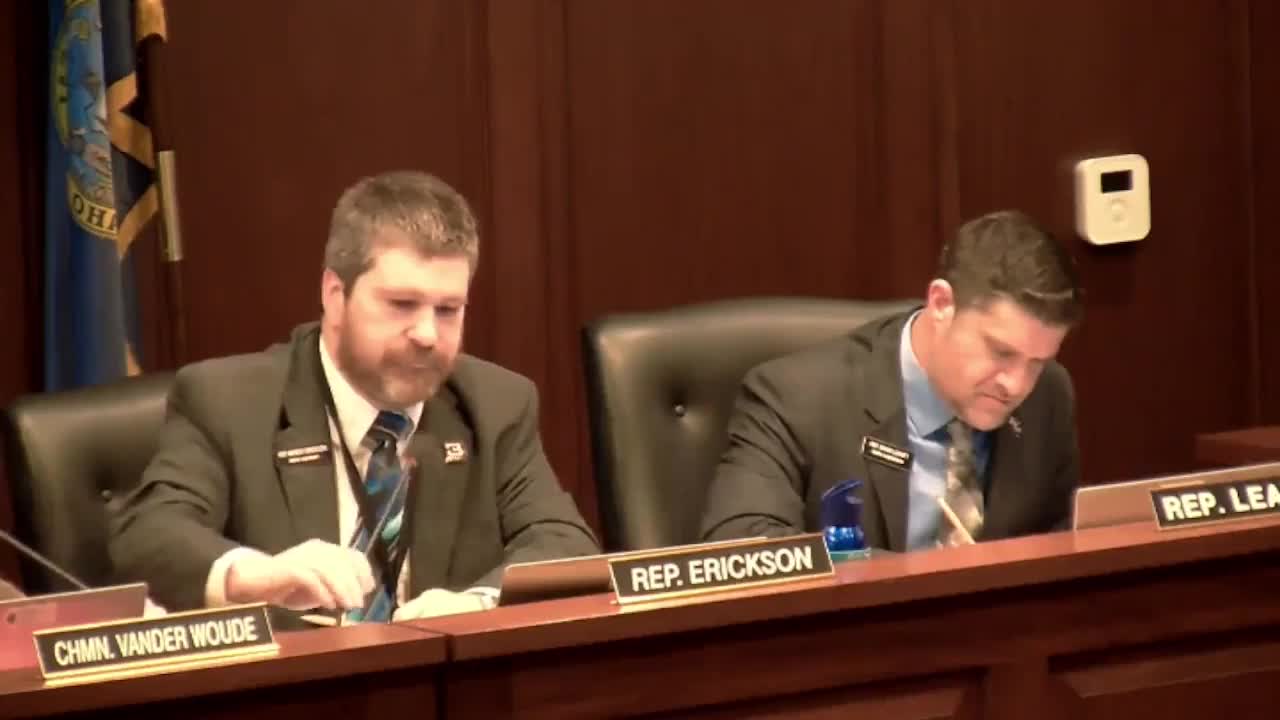
Representative Jordan Redmond, R‑District 3, presented House Bill 138 to the House Health and Welfare Committee, proposing enrollment caps, a 36‑month limit and work requirements for the able‑bodied Medicaid expansion population while seeking multiple federal waivers to reshape the program.
Lawmakers advanced a proposal that would impose work, time and enrollment limits on Idaho’s Medicaid expansion population while seeking federal waivers to reshape the program.
Representative Jordan Redmond, R‑District 3 of Kootenai County, presented House Bill 138 to the House Health and Welfare Committee and said the measure “is a common sense bill to restore integrity, fiscal responsibility, and self‑sufficiency back into our Medicaid program.” Redmond told the committee he wants to keep expansion but add “safeguards” including caps on enrollment, a 36‑month limit for able‑bodied adults, and work or community‑engagement requirements.
The bill would require the state to obtain multiple federal approvals (including Section 1115 and Section 1332 demonstration waivers discussed in testimony) to implement waivers and other changes. Redmond said the waivers are intended to let Idaho move expansion enrollees to private silver plans with advanced premium tax credits in some cases, cap or limit able‑bodied enrollment, and impose a 36‑month time limit for that population. He told the committee the measure is not a repeal: “This bill does not repeal Medicaid expansion. It keeps it and makes it work better.”
Why it matters: Committee members and dozens of public witnesses framed the bill as a trade‑off between fiscal control and access to care. Supporters argued the expansion’s cost trajectory is unsustainable and cited improper payment rates they said must be reduced. Opponents — including rural physicians, hospital leaders, behavioral‑health providers and patient advocates — warned that the bill would reduce coverage for tens of thousands of Idahoans, threaten rural hospitals and treatment capacity, and shift costs to counties, emergency care and criminal‑justice systems.
Key details and figures presented
- Sponsor’s fiscal context: Redmond said the state Medicaid expansion projected appropriation for FY2026 in the governor’s budget was $1,361,100,400 and contrasted that with an earlier Milliman projection of roughly $510.7 million for a similar year. He told the committee the program’s share of the state budget has grown substantially.
- Population counts and caps: Redmond testified the expansion (able‑bodied) population is “right around 90,000” and proposed capping able‑bodied enrollment at the lower of 50,000 or the aggregate number of elderly and disabled enrollees (a figure several members identified in testimony as roughly 35,000).
- Improper payments and administration: The sponsor cited an “almost 19% improper payment” rate within the expansion population; supporters of reform said the sponsor seeks to lower improper payments toward 5% as in other states. The committee also heard differing cost estimates for the waiver application work: Redmond’s fiscal note included a $3 million one‑time implementation appropriation; the Department of Health and Welfare and outside briefings referenced a higher number (one estimate in testimony put one‑time costs at about $3.8 million and ongoing costs around $3.0 million, plus system and contract costs and multiple full‑time staff to manage waivers).
- Waivers discussed: Witnesses and lawmakers discussed Section 1115 demonstration waivers (commonly used for Medicaid program changes) and Section 1332 innovation waivers related to the exchange. Testimony noted prior waiver attempts in other states were rejected and that several of the waivers as written in HB138 resemble earlier submissions that were not approved.
Committee questions and public testimony
Committee members pressed the sponsor on details the bill leaves to administrative design: how a cap would be implemented, what happens to people who “graduate” in and out of eligibility, caregiver exemptions for work requirements, the interaction with the Affordable Care Act’s waiver rules, and the state’s fallback if federal waivers are denied. Representative Fernum and others asked how Idaho’s proposal compares to Georgia’s and Utah’s waivers and whether federal courts or agencies would approve Idaho’s specific package.
More than 40 members of the public and organizational representatives testified. Opposition came from doctors and hospital leaders (Idaho Academy of Family Physicians, Idaho Hospital Association), behavioral‑health providers, AARP Idaho, NAMI Idaho, the Idaho Council on Developmental Disabilities, and many individual Idahoans who described relying on expansion for care. Supporters included free‑market and fiscal groups urging stronger state controls and reforms.
Representative Brandon Mickelson, a family physician, told the committee a repeal or material reduction of expansion would increase uncompensated care and threaten rural hospitals. Brian Whitlock, president of the Idaho Hospital Association, said the state’s hospital provider tax and the upper payment limit produce funds used to pay the state’s share of expansion and warned that removing expansion would shift costs to hospitals and communities.
Actions and outcome
After extended questioning and public testimony, the committee considered several procedural motions. A motion to hold the bill in committee (an amended substitute motion to hold subject to the chair) failed on a recorded voice vote. A subsequent roll‑call vote approved sending House Bill 138 to the House floor with a due‑pass recommendation by a final roll call that returned 8 in favor and 7 opposed. The committee record shows multiple substitute motions were offered before the final floor referral.
Discussion, direction, and next steps
- Discussion: Committee debate emphasized both fiscal stewardship and the risk of reducing access to care; members disagreed about the likelihood that federal waivers would be approved and about how best to protect rural providers and families.
- Direction: Members who voted to refer signaled intent to allow full‑chamber consideration and additional deliberation by all legislators. Members who voted against referral urged more study of waiver feasibility, fiscal offsets and the community impacts before sending a bill to the floor.
- Next steps: HB138 will appear on the House floor for further debate where the full membership will consider the bill and any floor amendments. If the bill were enacted and waivers were required but not granted, the bill’s language ties program changes to federal approvals; several committee members and witnesses warned that contingency language could produce unintended coverage losses if waivers are denied.
Sources and provenance
This article summarizes testimony, sponsor remarks, committee questioning and recorded motions and votes during the House Health and Welfare Committee’s hearing on House Bill 138. Representative Jordan Redmond presented the bill and multiple named public witnesses provided testimony; the committee completed a recorded roll call and sent the bill to the floor with a due‑pass recommendation.
Ending note: The committee advance does not alter coverage immediately. Any program changes that depend on federal approvals would also be contingent on federal action, implementation planning and a future appropriations process.