Get Full Government Meeting Transcripts, Videos, & Alerts Forever!
Get email alerts on the K12 Education Budget topic
No spam. Unsubscribe anytime.
Idaho education budget hearing highlights special-education staffing, career-ready grants and testing costs
Summary
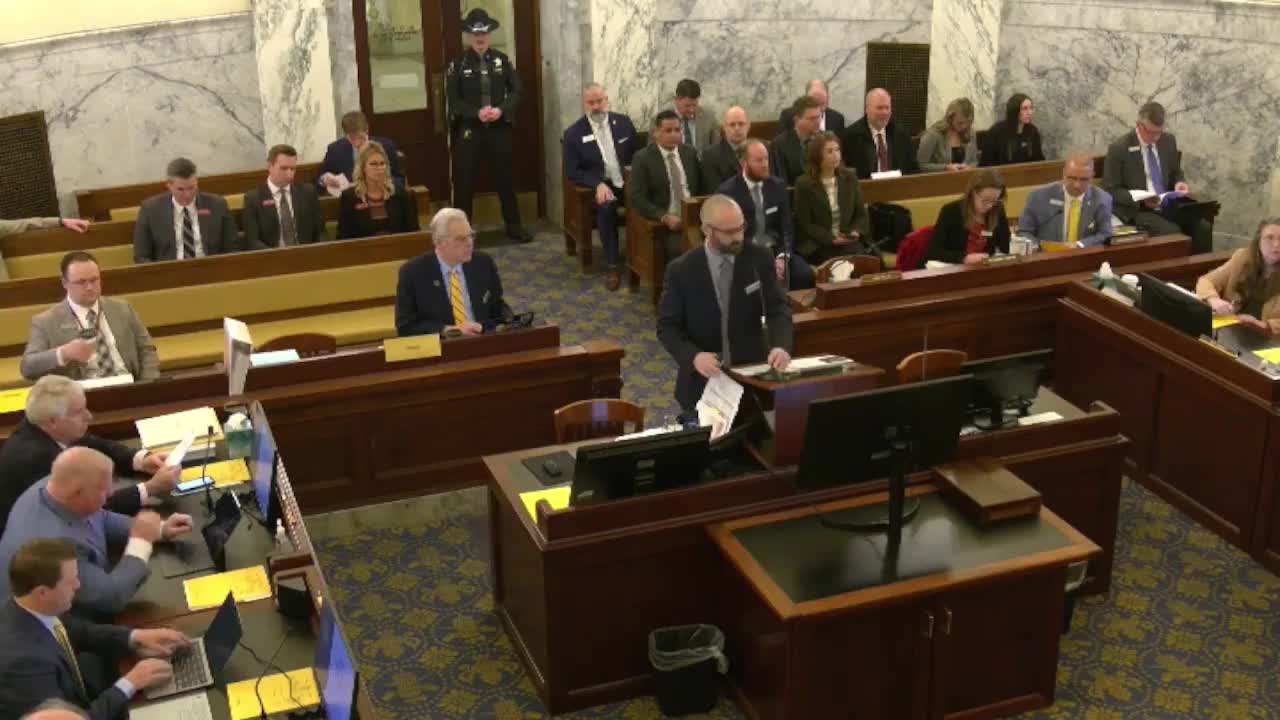
The Joint Finance-Appropriations Committee on Wednesday reviewed the State Department of Education’s budget request, which includes new full-time positions to address rising special-education caseloads, a request to increase drivers-education reimbursements, ongoing support for career-technical grants and one-time funds to replace the statewide student assessment platform.
The Joint Finance-Appropriations Committee on Wednesday reviewed the State Department of Education’s budget request, which includes new full-time positions to address rising special-education caseloads, a request to increase drivers-education reimbursements, ongoing support for career-technical grants and one-time funds to replace the statewide student assessment platform.
The hearing matters because lawmakers must decide how to allocate state and federal funds for K‑12 operations, special education and assessment systems that determine compliance with federal Title I and Every Student Succeeds Act requirements.
Deputy Division Manager Jared Tetrolt of the Legislative Services Office opened the hearing with an overview of the department’s finances and staff levels, saying the department is organized into administration (39 full‑time equivalent positions) and schools services (87.5 FTE) and that the department was authorized 126.5 FTE in the current year with 9.5 vacancies at the time of the budget submission.
State Superintendent Debbie Critchfield told the committee the department is seeing a sharp increase in special-education disputes and due-process hearings, and she described the proposed dispute-resolution specialist position as a response to rising workload. “We have a 65% increase in requests for mediation, a 77% increase in complaints and a 1,200% increase in hearings,” Superintendent Critchfield said, adding that the department’s role is to ensure federal procedures were followed and to help districts and parents resolve impasses.
Committee members pressed for more detail on the special-education requests and related costs. The department asked for three personnel enhancements tied to special education and charter oversight: a dispute-resolution specialist (1 FTE), a charter-school special-education specialist (1 FTE) to support monitoring and technical assistance for new charter schools, and a second Indian education coordinator (1 FTE) to assist tribal relations and related travel and outreach.
On career-technical education, Critchfield and Tetrolt described the Career Ready Student program as a multiyear grant effort. The department reported $65 million appropriated across recent cycles, with roughly 152 applications submitted. The Millennium Fund and the board-led grant process have obligated about $62.7 million across 72 awarded grants; the department said approximately $16 million has been reimbursed to districts to date and additional reimbursements have occurred since the budget book print date.
Lawmakers asked about cash balances and specific funds. Tetrolt noted the driver-training fund grew from about $3.8 million (2022) to an estimated $7.4 million, and the department proposed increasing the statutory reimbursement for driver education from $150 to $300 per student (pending legislation). Gideon Tolman, the department’s chief financial officer, explained that the driver-training appropriation authority is separate from the cash balance and that the request would provide spending authority to reduce the fund balance and send more dollars to districts and charter providers.
On testing and reporting, the department asked for $2.7 million in one-time federal spending authority to transition away from the Smarter Balanced assessment platform used for the Idaho Standards Achievement Test (ISAT) and to pilot a new assessment platform. Tolman said that the $2.7 million would fund the transition and that department base funding would likely cover ongoing costs, but he agreed to provide the committee additional detail on whether the request covers a full new assessment contract or primarily transition/pilot costs.
Other items discussed included: a $1.5 million supplemental tied to the Idaho Reading Indicator/Performance Report Card (federal Title I reporting requirements), $3 million from the Millennium Fund for youth prevention programs, a $300,000 annual recommendation from the charter school authorizer’s fund to support underperforming charters, and a four‑year Child Nutrition Technology grant of $746,300 to support MyIdahoCNP software.
Committee members requested follow-up information on: (1) a school-by-school accounting of private-school COVID supports (ARPA/CAREs allocations), (2) a list of obligated Career Ready Student grants and current reimbursement status, and (3) whether the $2.7 million assessment request is sufficient to acquire a new assessment or only to pilot a platform and implement a transition.
The department emphasized that several requests are tied to federal requirements (Title I/ESSA and IDEA) and federal grant phasing; where federal money is unavailable, the department said state funds would be required to maintain federally mandated reporting and systems.
The committee did not take formal votes during the hearing and directed staff to provide the requested follow-up materials.
Looking ahead, the department’s personnel requests and the assessment transition will be key budget decisions for the committee as it weighs ongoing costs versus one-time federal spending authority and the state’s responsibilities under federal law.