Get Full Government Meeting Transcripts, Videos, & Alerts Forever!
Get email alerts on the Juvenile Justice Budget topic
No spam. Unsubscribe anytime.
Idaho juvenile corrections director flags rising mental‑health needs, requests targeted budget items
Summary
Director Ashley Dowell and analysts briefed the Joint Finance-Appropriations Committee on the Department of Juvenile Corrections budget, citing higher mental‑health needs, rising residential treatment costs and several one‑time and ongoing requests including radio upgrades, substance‑use disorder funding and IT replacements.
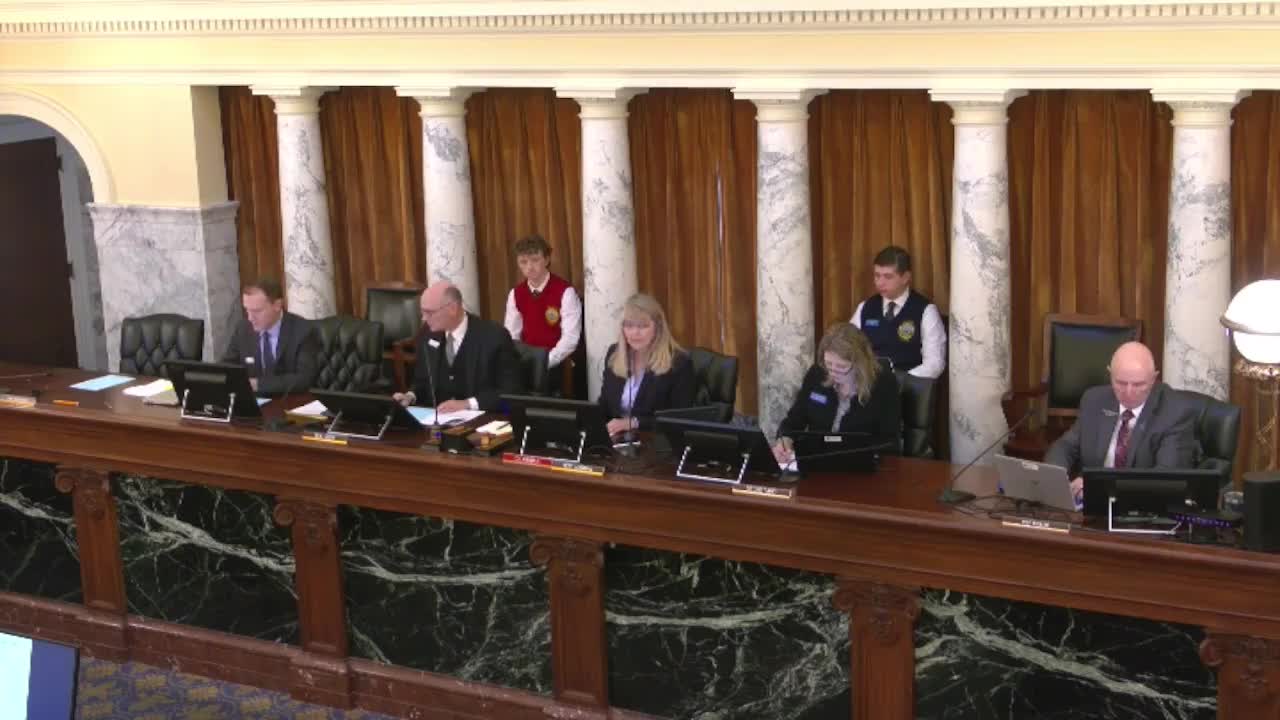
Ashley Dowell, director of the Idaho Department of Juvenile Corrections, told the Joint Finance‑Appropriations Committee on Feb. 18 that the agency is seeing increases in youth mental‑health needs and some growth in facility census that are reflected in its budget request.
The department requested one‑time and ongoing items including a $380,000 one‑time radio upgrade from the Juvenile Corrections Endowment Income Fund, a $300,000 ongoing general‑fund request to cover higher costs for a residential substance‑use disorder (SUD) treatment contract, $232,500 for IT replacement items, and personnel/operating reclassifications described by the agency as net‑zero.
Dowell said staff in the agency are “amazing, passionate [and] dedicated,” and stressed partnerships with counties and community providers. Budget analyst Noah Peterson (Legislative Budget Office) summarized program structure, funds the department uses, and the agency’s recent expenditure trends to explain the requests.
Committee members pressed for more data. Representative Tanner asked for historical population figures and for evidence explaining whether the department’s census and service demand are rising or tapering; Peterson and Dowell said the department would provide time‑series population data and follow‑up information on youth crisis center outcomes.
The SUD request was explained as replacing one‑time federal ARPA funds previously used by the Department of Health and Welfare to cover higher costs. Peterson said daily residential treatment costs rose from about $198 per day in 2021 to $399 per day in August 2021, and average length of stay increased from 31 to 67 days; total SUD program costs rose from roughly $1.26 million in FY2021 to about $2.7 million in FY2024. Health and Welfare had provided short‑term ARPA support that is no longer available, creating the current gap.
The proposed $380,000 radio upgrade would standardize “man down” functionality across the three juvenile corrections centers in Lewiston, Nampa and St. Anthony; the agency said some radios in Lewiston and Nampa already have the capability but have not been programmed, and St. Anthony currently lacks the equipment.
Peterson described a $675,100 net zero shift from personnel to operating to consolidate IT positions with the Office of Information Technology Services and an agency request to reduce 7.0 FTP in that process. He also noted a $350,000 net‑zero program transfer to move ongoing youth assessment center costs into the community operations program.
Committee members sought clarity about the drivers of rising treatment costs and whether community treatment providers’ placement decisions are consistent with clinical standards. Director Dowell and committee members noted placement decisions are made by community treatment providers using American Society of Addiction Medicine (ASAM) criteria; the department said it does not directly control those providers’ clinical placement decisions but can bring proposals back to the committee on possible utilization review approaches.
Several members asked for more detailed performance and outcome data: Representative Handy and others requested multi‑year diversion and census data to track whether the department’s all‑time low census (137 in May 2024) is reversing; Dowell confirmed census had risen to 176 at the time of the hearing. Senators and representatives also asked for data on how youth crisis centers are diverting children from the juvenile justice system; Dowell said anecdotal evidence shows crisis centers have helped some children under age 10 avoid detention and she committed to providing available data.
The department described its three state correctional centers, its community operations, and funding sources including the Juvenile Corrections Fund, Cigarette and Tobacco Tax Fund (county probation pass‑through), miscellaneous revenue, and the Juvenile Corrections Endowment Income Fund. Analyst Peterson noted prior supplemental and reappropriation activity (case management software, safety and reception centers, youth crisis and assessment center funds) that produced expenditure spikes in FY2022–FY2023 and later declines as those one‑time or reappropriated items left base budgets.
Dowell closed by thanking the committee for its support and emphasized the department’s goals to treat youth and reduce recidivism while prioritizing public safety.
Closing and next steps: staff and analysts agreed to assemble requested follow‑up material for the committee including facility‑level SUD cost breakdowns, juvenile population trends, and available data on youth crisis center outcomes.